Gross Domestic Product: Your Complete Personal Finance Guide
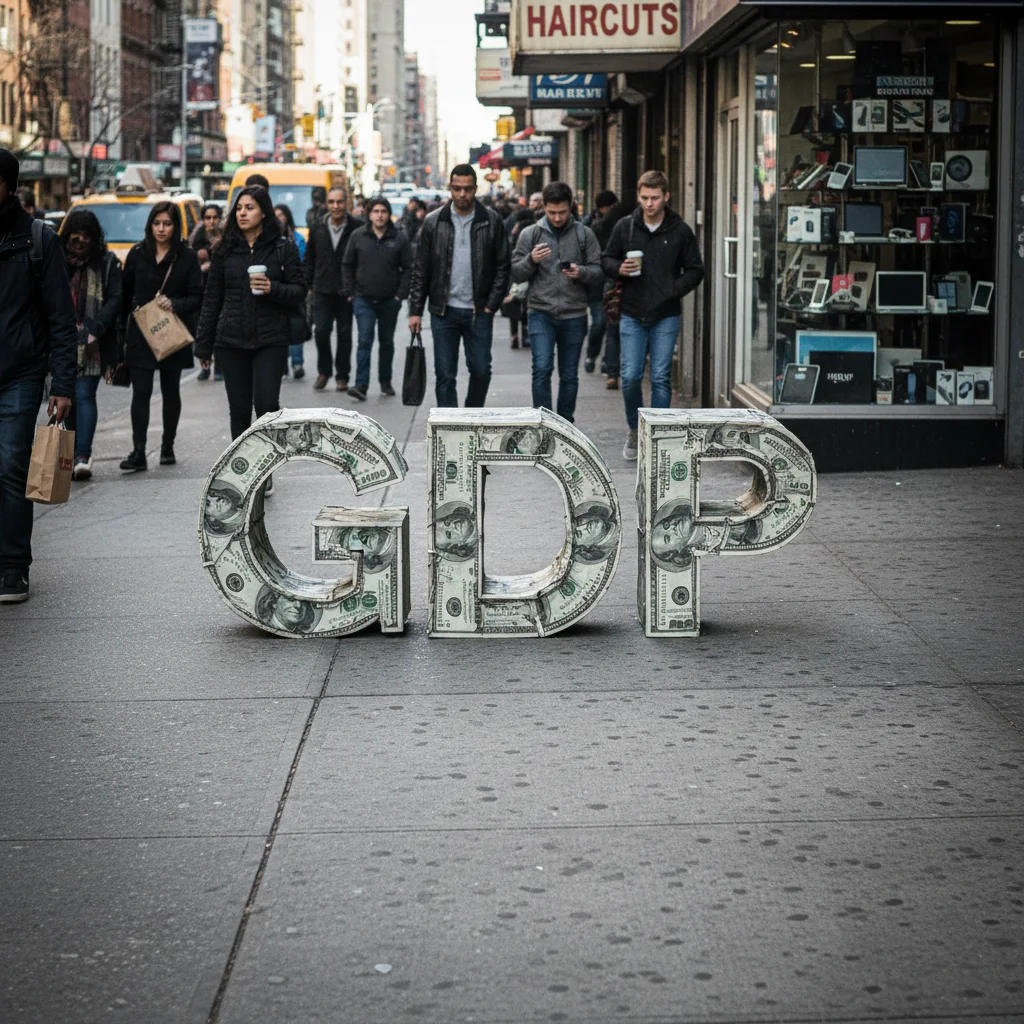
Understanding the broader economic landscape is crucial for making informed personal finance decisions. While terms like "inflation" and "interest rates" often grab headlines, Gross Domestic Product (GDP) is a foundational economic indicator that quietly influences nearly every aspect of your financial life. From job prospects and investment returns to the cost of living and housing prices, GDP growth or contraction sends ripple effects through the economy. Knowing how GDP works and what it signals can empower you to anticipate economic shifts, protect your assets, and plan for a more secure financial future. This comprehensive guide will demystify GDP, explain its components, and illustrate its direct relevance to your personal finances in 2026 and beyond.
Gross Domestic Product (GDP) Definition: GDP is the total monetary value of all finished goods and services produced within a country's borders in a specific time period, typically a quarter or a year. It serves as a comprehensive measure of economic activity and a key indicator of a nation's economic health and growth.
Understanding Gross Domestic Product (GDP)
Gross Domestic Product, or GDP, is the most widely used measure of a country's economic output. It represents the total market value of all final goods and services produced within a nation's borders during a specific period. Think of it as the grand scorecard for an economy, tallying up everything from the cars manufactured and houses built to the haircuts given and software developed. A growing GDP generally signals a healthy, expanding economy, while a shrinking GDP can indicate a recession.
GDP is reported by government agencies, such as the Bureau of Economic Analysis (BEA) in the United States, on a quarterly basis. These reports often include initial estimates, which are then revised as more complete data becomes available. Investors, businesses, and policymakers closely watch these figures to gauge economic performance and make strategic decisions. Understanding GDP helps individuals contextualize broader economic trends that directly impact their personal financial well-being.
What GDP Measures
GDP provides a holistic view of economic activity by capturing the value of goods and services produced. It focuses on final goods and services, meaning products sold to the end-user, not intermediate goods used in the production process. For example, the value of a finished car is counted, but not the steel or tires used to make it, to avoid double-counting. This ensures an accurate representation of the economy's output.
The measurement of GDP is typically done in two ways: nominal GDP and real GDP. Nominal GDP measures the total value of goods and services at current market prices. This means it includes the effects of inflation. Real GDP, on the other hand, adjusts for inflation, providing a more accurate picture of economic growth by comparing output using constant prices from a base year. Real GDP is generally the preferred metric for assessing economic health because it reflects actual production changes, not just price changes.
How GDP is Calculated: The Expenditure Approach
Economists use several methods to calculate GDP, but the expenditure approach is the most common and intuitive. This method sums up all spending on final goods and services in an economy. It's often represented by the formula:
GDP = C + I + G + (X - M)
Let's break down each component:
- C (Consumption): This is the largest component of GDP, representing all spending by households on goods and services. It includes everything from groceries and clothing to healthcare and entertainment. In 2025, personal consumption expenditures accounted for approximately 68% of U.S. GDP, highlighting its significant role in driving economic activity.
- I (Investment): This refers to business spending on capital goods, such as new machinery, factories, and software, as well as residential construction. It also includes changes in business inventories. Investment is crucial for future economic growth and productivity.
- G (Government Spending): This includes all government consumption and investment expenditures, such as military spending, infrastructure projects, and salaries for government employees. It does not include transfer payments like Social Security or unemployment benefits, as these do not represent direct production of goods or services.
- X (Exports): This represents the value of goods and services produced domestically and sold to foreign countries. Exports add to a nation's economic output.
- M (Imports): This is the value of goods and services produced abroad and purchased by domestic consumers, businesses, or the government. Imports are subtracted from GDP because they represent spending on foreign production, not domestic production. The term net exports refers to (X - M).
This formula provides a comprehensive way to track the total demand for goods and services produced within a country. When any of these components increase, assuming others remain constant, GDP rises, signaling economic expansion.
GDP's Direct Impact on Your Personal Finances
The seemingly abstract concept of GDP has very real and tangible effects on your everyday financial life. From the stability of your job to the growth of your retirement savings, GDP trends act as a powerful undercurrent. A strong, growing GDP generally creates a favorable environment for personal finance, while a declining GDP can signal tougher times ahead.
Understanding this connection allows you to make more informed decisions about your career, investments, and spending. It helps you anticipate potential changes in the economic climate and adjust your financial strategy accordingly. Ignoring GDP trends is akin to sailing without checking the weather forecast; you might be caught unprepared.
Employment and Income
One of the most direct impacts of GDP on individuals is through employment and income. When the economy is growing rapidly (high GDP growth), businesses typically expand, increase production, and hire more workers. This leads to:
- Lower Unemployment Rates: As demand for labor rises, more people find jobs, and fewer are unemployed. For example, the U.S. unemployment rate tends to fall during periods of sustained GDP growth. In early 2026, with moderate GDP growth projected, the unemployment rate is expected to remain relatively low, around 3.8%, according to the Congressional Budget Office (CBO) projections.
- Higher Wages: A tight labor market, characterized by low unemployment, often gives workers more bargaining power, leading to wage increases. Businesses compete for talent, pushing salaries upward. This translates to more disposable income for households.
Conversely, during periods of slow or negative GDP growth (economic contraction or recession), businesses tend to cut costs, which can include layoffs or hiring freezes. This results in higher unemployment and stagnant or declining wages. Job security becomes a greater concern, and finding new employment can be challenging. Your ability to earn, save, and spend is fundamentally linked to the overall health of the economy as measured by GDP.
Investments and Savings
GDP growth significantly influences investment performance and the value of your savings. A robust economy, indicated by strong GDP, generally correlates with a healthy stock market.
- Stock Market Performance: Companies typically see higher profits during periods of economic expansion. This increased profitability often translates to higher stock prices, benefiting investors in mutual funds, ETFs, and individual stocks. For instance, strong corporate earnings tied to GDP growth often drive positive returns in major indices like the S&P 500.
- Interest Rates: Central banks, like the Federal Reserve, often respond to GDP trends. During periods of strong growth and potential inflation, they may raise interest rates to cool the economy. Higher interest rates can be good for savers, as they earn more on savings accounts and certificates of deposit (CDs). However, they can also increase the cost of borrowing for mortgages, car loans, and credit cards. Conversely, during economic downturns, central banks might lower rates to stimulate growth, which can reduce savings returns but make borrowing cheaper.
- Real Estate Values: A growing economy with rising incomes and job creation typically fuels demand for housing, leading to appreciating real estate values. This benefits homeowners and real estate investors. A contracting economy, however, can lead to job losses, reduced demand, and potentially falling home prices.
Your investment portfolio and the value of your assets are thus closely tied to the nation's economic performance as reflected in GDP. Diversifying your investments and understanding economic cycles can help mitigate risks during downturns.
Inflation and Purchasing Power
GDP growth can also influence inflation, which directly affects your purchasing power. Inflation is the rate at which the general level of prices for goods and services is rising, and subsequently, the purchasing power of currency is falling.
- Demand-Pull Inflation: When GDP grows rapidly, consumer demand often outpaces the supply of goods and services. This can lead to demand-pull inflation, where prices rise because too much money is chasing too few goods. For example, if everyone has a job and higher wages, they might spend more, driving up prices for popular products.
- Cost-Push Inflation: While less directly tied to GDP growth, supply chain disruptions or increased production costs can also lead to inflation. However, sustained high GDP growth often creates an environment where businesses can pass on higher costs to consumers more easily.
When inflation is high, your money buys less than it did before. This erodes the value of your savings and reduces your real income, even if your nominal income remains the same or increases slightly. For example, if inflation is 3.5% in 2026 (as projected by some economists) and your salary only increases by 2%, your purchasing power has effectively decreased. Understanding how GDP growth can contribute to inflationary pressures helps you plan for budgeting and protecting your savings.
Factors Influencing Gross Domestic Product
GDP is not a static number; it's a dynamic indicator influenced by a multitude of factors. These factors interact in complex ways, and changes in one area can ripple through the entire economy, affecting GDP. Understanding these drivers helps to predict economic trends and their potential impact on personal finance.
The components of the GDP expenditure formula (C, I, G, X, M) are themselves influenced by various underlying economic forces. Policymakers often try to stimulate or cool the economy by targeting these factors.
Consumer Spending and Confidence
Consumer spending (C) is the largest component of GDP, making it a critical driver of economic growth. When consumers feel confident about their job security and future income, they are more likely to spend on goods and services, from everyday necessities to big-ticket items like cars and home renovations.
- Consumer Confidence Indexes: Surveys like the Consumer Confidence Index (CCI) or the University of Michigan Consumer Sentiment Index measure how optimistic consumers are about the economy. High confidence generally translates to increased spending, boosting GDP. Conversely, low confidence can lead to reduced spending and economic slowdown.
- Disposable Income: The amount of money households have left after taxes and mandatory payments directly impacts their spending capacity. Policies that increase disposable income, such as tax cuts or wage growth, can stimulate consumption. According to the Bureau of Economic Analysis (BEA), personal consumption expenditures rose by 3.1% in 2025, reflecting a resilient consumer base.
- Household Debt Levels: High levels of household debt can constrain future spending, as a larger portion of income goes towards debt repayment rather than new purchases. Monitoring consumer debt trends provides insight into future spending capacity.
Business Investment and Innovation
Business investment (I) is another crucial component of GDP, representing spending by companies on capital goods, research and development, and new construction. This type of spending is vital for increasing productivity and driving long-term economic growth.
- Technological Advancements: Innovation leads to new products, more efficient production methods, and entirely new industries. Investments in technology, such as artificial intelligence, renewable energy, and biotechnology, can significantly boost productivity and GDP. For example, the continued investment in AI technologies is expected to contribute substantially to GDP growth in the coming years.
- Business Confidence: Similar to consumer confidence, when businesses are optimistic about the future economic outlook, they are more likely to invest in expansion, hire more employees, and innovate. Factors like stable regulatory environments, low interest rates, and strong consumer demand contribute to business confidence.
- Access to Capital: Businesses need access to funding for investment. Favorable lending conditions, such as lower interest rates and available credit, encourage companies to borrow and invest. Conversely, tight credit markets can stifle investment.
Government Policies and Fiscal Stimulus
Government spending (G) and fiscal policies play a significant role in influencing GDP. Governments can use their spending power and tax policies to stimulate or cool down the economy.
- Fiscal Policy: This involves government decisions regarding taxation and spending. During economic downturns, governments might implement fiscal stimulus, such as increased infrastructure spending or tax cuts, to boost demand and encourage economic activity. For example, the U.S. government's infrastructure bill, enacted in 2021, continues to inject funds into the economy, supporting construction and related industries through 2026 and beyond.
- Monetary Policy: While not a direct component of GDP, monetary policy set by central banks (like the Federal Reserve) heavily influences interest rates and the money supply. Lower interest rates can encourage borrowing and investment, stimulating economic growth, while higher rates can curb inflation and slow growth. The Federal Reserve's interest rate decisions in 2025 and early 2026 have been closely watched for their impact on economic activity.
- Regulation: Government regulations can impact business costs and investment decisions. A stable and predictable regulatory environment generally fosters business confidence and investment.
International Trade and Global Economy
The net export component (X-M) of GDP highlights the importance of international trade and the global economic environment. A country's economic health is increasingly intertwined with that of its trading partners.
- Exchange Rates: The value of a country's currency relative to others affects its exports and imports. A weaker domestic currency makes exports cheaper and imports more expensive, potentially boosting net exports and GDP. A stronger currency has the opposite effect.
- Global Economic Growth: When major trading partners experience strong economic growth, their demand for a country's exports increases, positively impacting its GDP. Conversely, a global slowdown can reduce export demand. For instance, economic performance in Europe and Asia significantly influences U.S. export volumes.
- Trade Agreements and Tariffs: International trade agreements can reduce barriers to trade, fostering increased exports and imports. Tariffs, on the other hand, can restrict trade, potentially leading to higher costs for consumers and reduced export opportunities.
How GDP Influences Your Financial Decisions
Understanding GDP isn't just for economists; it's a powerful tool for personal financial planning. By observing GDP trends and projections, you can make more strategic decisions about your career, investments, and overall financial health. This proactive approach can help you capitalize on opportunities during economic expansions and protect your assets during downturns.
Ignoring GDP signals can leave you vulnerable to unexpected economic shifts. Integrating GDP analysis into your financial decision-making process provides a valuable layer of foresight.
Career Planning and Job Security
GDP trends are a strong indicator of the overall health of the job market. When GDP is growing robustly, the job market is typically strong, offering more opportunities and better compensation.
- Sector-Specific Growth: High GDP growth often translates to expansion across many sectors. However, some industries might grow faster than others. For example, in an economy driven by technological innovation, tech-related jobs might see higher demand and wages. Keeping an eye on which sectors contribute most to GDP growth can inform your career choices or skill development.
- Job Market Resilience: During periods of economic slowdown or recession (indicated by declining GDP), job security becomes a primary concern. Industries that are less cyclical, such as healthcare or essential services, tend to be more resilient. If you anticipate a slowdown, focusing on acquiring skills in these sectors or building a strong emergency fund can provide a buffer.
- Negotiating Power: In a strong economy with low unemployment (a common outcome of sustained GDP growth), workers generally have more leverage to negotiate higher salaries, better benefits, and more flexible work arrangements. Being aware of these conditions can help you maximize your earning potential.
Investment Strategy Adjustments
GDP is a critical factor in shaping your investment strategy. Different asset classes perform differently depending on the economic cycle.
- Equity Investments (Stocks): During periods of strong GDP growth, corporate earnings typically increase, leading to higher stock prices. This is often a good time for growth-oriented investments. However, if GDP growth is expected to slow, shifting towards more defensive stocks (companies that perform relatively well regardless of the economic cycle, like utilities or consumer staples) might be prudent.
- Fixed Income Investments (Bonds): Bonds often perform well during economic slowdowns or when interest rates are expected to fall, as their fixed payments become more attractive. During periods of rapid GDP growth and rising inflation, central banks might raise interest rates, which can negatively impact existing bond values.
- Real Estate: A booming economy with strong GDP growth often drives demand for housing and commercial properties, leading to appreciation. Conversely, a contracting economy can lead to job losses and reduced demand, potentially causing real estate values to decline. Consider GDP forecasts when evaluating real estate purchases or sales.
- Diversification: Regardless of GDP trends, maintaining a diversified portfolio across various asset classes, industries, and geographies is always a sound strategy. This helps to mitigate risks associated with any single economic factor or sector. Regularly rebalancing your portfolio based on economic outlook and personal goals is key.
Budgeting and Debt Management
GDP trends can also impact your budgeting and debt management strategies, particularly concerning interest rates and job security.
- Interest Rates: As mentioned, central banks often adjust interest rates in response to GDP and inflation. If GDP is growing rapidly and inflation is a concern, interest rates may rise. This means:
- Higher borrowing costs: Variable-rate loans (like some mortgages or credit cards) become more expensive. It might be a good time to consider refinancing to a fixed rate or accelerating debt payments.
- Better savings returns: Savings accounts and CDs might offer higher yields, making it more attractive to save.
- Emergency Fund: During periods of economic uncertainty or anticipated slowdowns (indicated by weakening GDP), it becomes even more critical to build and maintain a robust emergency fund. Having 3-6 months (or more) of living expenses saved can provide a crucial safety net if your job security is threatened.
- Discretionary Spending: When the economic outlook is strong, you might feel more comfortable with discretionary spending. However, if GDP forecasts suggest a slowdown, it might be wise to tighten your belt, reduce non-essential spending, and prioritize saving. Being mindful of the economic cycle helps you align your spending habits with the broader financial climate.
Limitations and Nuances of GDP
While Gross Domestic Product is an indispensable tool for economic analysis, it's not without its limitations. Relying solely on GDP can sometimes provide an incomplete or even misleading picture of a nation's true economic well-being or the quality of life of its citizens. Acknowledging these nuances is crucial for a more balanced understanding.
Economists and policymakers often look at a basket of indicators alongside GDP to get a more comprehensive view. For individuals, understanding these limitations helps in interpreting economic news and making personal finance decisions that go beyond just headline numbers.
What GDP Doesn't Measure
GDP is a measure of economic output, but it doesn't capture everything that contributes to a society's prosperity or an individual's financial health.
- Income Inequality: A high GDP can mask significant disparities in wealth distribution. A country might have a strong overall economy, but if the benefits are concentrated among a small percentage of the population, the average citizen might not experience improved living standards. GDP doesn't tell us how the economic pie is divided.
- Quality of Life and Well-being: GDP doesn't account for factors like environmental quality, leisure time, education levels, healthcare access, or happiness. A country could have high GDP growth due to increased industrial production, but if that growth comes at the cost of severe pollution and deteriorating public health, the overall quality of life might decline.
- Non-Market Activities: Many valuable activities are not included in GDP because they don't involve market transactions. This includes unpaid household work (e.g., childcare, cooking, cleaning), volunteer work, and the informal economy. These activities contribute significantly to societal well-being but remain outside the GDP calculation.
- Sustainability: GDP doesn't differentiate between economic activities that are sustainable and those that deplete natural resources or cause long-term environmental damage. For example, logging a rainforest contributes to GDP in the short term but is unsustainable.
Revisions and Volatility
GDP figures are often subject to revisions, which can sometimes be substantial. The initial "advance" estimate of GDP is based on incomplete data and can be revised multiple times as more comprehensive information becomes available.
- Data Collection Challenges: Collecting accurate and timely data for an entire economy is a massive undertaking. The Bureau of Economic Analysis (BEA) constantly refines its methodologies and data sources, leading to revisions. For example, the advance estimate for Q4 2025 GDP might be revised upward or downward in the second or third estimates released in early 2026.
- Impact of Revisions: These revisions can sometimes change the narrative of economic performance. An initial report of weak growth might later be revised to show stronger growth, or vice-versa. This volatility means that it's important to look at GDP trends over several quarters rather than reacting to a single, preliminary report.
- Short-term vs. Long-term Trends: Short-term fluctuations in GDP can be influenced by temporary factors like weather events or one-off government spending programs. It's more important for personal financial planning to focus on long-term, sustained GDP growth trends rather than quarterly blips.
Alternative Measures of Economic Health
Given GDP's limitations, economists and organizations have developed alternative or supplementary measures to provide a more comprehensive view of economic and societal well-being.
- Gross National Product (GNP): While GDP measures production within a country's borders, GNP measures the total value of goods and services produced by a country's residents, regardless of where they are located. This includes income earned by domestic residents from overseas investments and excludes income earned by foreign residents within the country.
- Gross National Income (GNI): Similar to GNP, GNI is the sum of a nation's gross domestic product plus the net income received from abroad. It's often used by international organizations like the World Bank.
- Human Development Index (HDI): Developed by the United Nations, the HDI is a composite index that measures a country's average achievements in three basic dimensions of human development: health (life expectancy), education (years of schooling), and standard of living (GNI per capita). It provides a broader perspective than just economic output.
- Genuine Progress Indicator (GPI): The GPI attempts to measure economic growth that benefits the environment and society. It starts with personal consumption expenditures (a component of GDP) but then adjusts for factors like income inequality, environmental degradation, and the value of unpaid work. While not widely adopted as an official metric, it represents an effort to create a more holistic measure of progress.
By considering GDP alongside these alternative measures, individuals can gain a more nuanced understanding of economic health and its implications for their personal finances.
Navigating Economic Cycles with GDP Insights
The economy moves in cycles, characterized by periods of expansion, peak, contraction, and trough. Gross Domestic Product is the primary indicator used to identify these phases. Understanding these economic cycles and how GDP signals them can be immensely beneficial for your personal financial planning. It allows you to anticipate shifts and position your finances strategically, rather than reacting impulsively to market volatility.
Being proactive in response to economic cycles can help you protect your wealth, seize investment opportunities, and maintain financial stability through various economic climates.
Identifying Economic Cycles
Economic cycles, also known as business cycles, are the natural ebb and flow of economic activity. They are defined by changes in GDP.
- Expansion: This phase is characterized by increasing GDP, rising employment, higher consumer spending, and growing business profits. It's a period of optimism and prosperity. For example, the U.S. economy experienced a strong expansion phase from 2010 to 2020, marked by consistent GDP growth.
- Peak: The peak is the highest point of the expansion phase, where GDP growth starts to slow, and inflationary pressures may begin to build. It's often difficult to identify a peak until after it has passed.
- Contraction (Recession): A recession is officially defined as two consecutive quarters of negative real GDP growth. During a contraction, employment falls, consumer spending declines, and business profits shrink. The most recent significant recession was the brief but sharp downturn in early 2020 due to the COVID-19 pandemic.
- Trough: The trough is the lowest point of the contraction phase, after which the economy begins to recover and enter a new expansion phase.
Monitoring GDP reports, especially real GDP, helps economists and individuals identify which phase of the cycle the economy is in. The National Bureau of Economic Research (NBER) is the official arbiter of U.S. business cycles.
Personal Finance Strategies for Different Cycles
Your financial strategy should ideally adapt to the prevailing economic cycle, guided by GDP trends.
| Economic Cycle Phase | GDP Trend | Personal Finance Strategy |
|---|---|---|
| Expansion | Rising | - Invest in growth stocks and real estate. |
| - Consider career advancement/salary negotiation. | ||
| - Pay down high-interest debt while income is strong. | ||
| - Build emergency savings. | ||
| Peak | Slowing | - Rebalance portfolio, consider defensive assets. |
| - Increase emergency fund to 6+ months. | ||
| - Evaluate debt levels, prioritize repayment. | ||
| - Consolidate debt if interest rates are rising. | ||
| Contraction | Falling | - Prioritize job security and essential spending. |
| - Maintain emergency fund, avoid new debt. | ||
| - Look for undervalued investment opportunities (long-term). | ||
| - Reassess budget, cut discretionary spending. | ||
| Trough | Stabilizing | - Prepare for recovery, look for early investment opportunities. |
| - Consider career retraining or skill development. | ||
| - Evaluate fixed-rate debt if rates are low. | ||
| - Slowly increase discretionary spending if stable. |
Long-Term Financial Planning with GDP in Mind
Beyond short-term adjustments, GDP insights are vital for long-term financial planning, especially for retirement and major life goals.
- Retirement Planning: Your retirement savings will be invested across multiple economic cycles. Understanding that periods of low GDP growth or recession are inevitable helps you avoid panic selling during downturns. Instead, you can view them as opportunities to buy assets at lower prices, which can yield significant returns during subsequent expansions. A diversified portfolio, regularly rebalanced, is crucial for navigating these cycles.
- Major Purchases: Decisions about buying a home, starting a business, or funding education can be influenced by GDP. During strong growth, job security and rising asset values might make large investments more comfortable. During slowdowns, caution is warranted, though lower interest rates might present opportunities for those with stable finances.
- Inflation Protection: Persistent GDP growth can lead to inflation. Incorporating inflation-hedging assets into your portfolio, such as Treasury Inflation-Protected Securities (TIPS) or real estate, can help protect your purchasing power over the long term. Financial advisors often recommend a diversified approach that accounts for various economic scenarios.
By integrating GDP analysis into your financial decision-making, you move beyond reactive responses to a proactive, informed approach. This empowers you to build a more resilient and prosperous financial future, regardless of the economic winds.
Frequently Asked Questions
What is Gross Domestic Product (GDP) and why is it important?
Gross Domestic Product (GDP) is the total monetary value of all finished goods and services produced within a country's borders in a specific time period. It's important because it serves as the primary indicator of a nation's economic health, growth, and overall productivity, influencing everything from job markets to investment returns.
How does GDP growth affect my job security and income?
Strong GDP growth typically leads to increased business activity, more job creation, and lower unemployment rates. This often results in higher wages and better job security. Conversely, declining GDP can lead to layoffs, hiring freezes, and stagnant wages, making job security a greater concern.
Should I change my investments based on GDP reports?
While GDP reports provide valuable context, it's generally not advisable to make drastic, short-term investment changes based on a single report. Instead, use GDP trends to inform your long-term investment strategy. During strong growth, consider growth-oriented investments, and during slowdowns, prioritize defensive assets and diversification.
What is the difference between nominal GDP and real GDP?
Nominal GDP measures economic output at current market prices, including the effects of inflation. Real GDP adjusts for inflation, providing a more accurate picture of actual economic growth by comparing output using constant prices from a base year. Real GDP is generally preferred for assessing true economic expansion.
Does GDP measure the quality of life or well-being of citizens?
No, GDP is a measure of economic output, not overall quality of life or well-being. It does not account for factors like income inequality, environmental quality, education levels, healthcare access, or happiness. While a higher GDP can enable improvements in these areas, it doesn't directly measure them.
How often is GDP reported and by whom?
In the United States, GDP is typically reported quarterly by the Bureau of Economic Analysis (BEA). They release an "advance" estimate, followed by second and third estimates as more complete data becomes available. These reports are closely watched by economists, businesses, and investors.
What are the main components of GDP calculation?
The main components of GDP, using the expenditure approach, are: Consumption (C) by households, Investment (I) by businesses, Government Spending (G), and Net Exports (X-M), which is exports minus imports. These components represent the total spending on domestically produced final goods and services.
Key Takeaways
- GDP is the Economy's Scorecard: Gross Domestic Product (GDP) is the total value of all goods and services produced in a country, serving as the primary measure of economic health and growth.
- Direct Impact on Your Wallet: GDP trends directly influence job security, wage growth, investment returns, interest rates, and the cost of living, making it crucial for personal finance.
- Key Components Drive Growth: Consumer spending, business investment, government spending, and net exports are the main drivers of GDP, each responding to various economic factors.
- Informs Financial Decisions: Understanding GDP helps you make informed choices about career planning, investment strategies, budgeting, and debt management across different economic cycles.
- Limitations Exist: While powerful, GDP doesn't measure income inequality, quality of life, or non-market activities, and its figures are subject to revisions, requiring a nuanced interpretation.
Conclusion
Gross Domestic Product is far more than just an abstract economic statistic; it's a fundamental indicator that profoundly shapes your personal financial landscape. From the job opportunities available to the returns on your investments and the purchasing power of your savings, GDP growth or contraction sends ripples through every aspect of your financial life. By understanding what GDP measures, how it's influenced, and its limitations, you gain a powerful tool for navigating the complexities of the economy.
Armed with this knowledge, you can move beyond simply reacting to financial news. You can proactively adjust your career strategy, optimize your investment portfolio, and fine-tune your budget to align with the prevailing economic winds. Integrating GDP insights into your personal finance planning empowers you to make more strategic decisions, build greater financial resilience, and work towards a more secure and prosperous future. Stay informed, adapt your strategies, and let GDP be your guide in the ever-evolving world of personal finance.
Disclaimer: This article is for informational and educational purposes only and does not constitute financial, investment, or tax advice. Always consult a qualified financial advisor before making investment decisions.
The information provided in this article is for educational purposes only and does not constitute financial, investment, or legal advice. Always consult with a qualified financial advisor, tax professional, or legal counsel for personalized guidance tailored to your specific situation before making any financial decisions.
Comments
No comments yet. Be the first to comment!
More from Personal Finance


Explore Related Guides
Expert reviews of Gold IRA companies, rollover guides, fees, and IRS rules.
Comprehensive investment strategies covering stocks, bonds, ETFs, crypto, and real estate.
Compare banking products, interest rates, and strategies to maximize your savings.