Investment Grade: Your Complete Personal Finance Guide

Navigating the world of personal finance can feel like a daunting task. With countless investment options, budgeting strategies, and financial products available, it's easy to become overwhelmed. In fact, a recent survey by the National Financial Educators Council (NFEC) in 2026 revealed that over 70% of Americans feel anxious about their personal finances, highlighting a significant need for clear, actionable guidance. This comprehensive guide aims to cut through the complexity, providing you with the knowledge and tools to achieve "investment grade" personal finance. We will break down essential concepts, offer practical strategies, and empower you to build a robust financial future, from managing debt to strategic investing and retirement planning.
Investment Grade Personal Finance Definition: Achieving "investment grade" personal finance means establishing a robust financial foundation characterized by sound budgeting, effective debt management, strategic savings, and diversified investments, leading to long-term financial security and growth.
Building Your Financial Foundation: Budgeting and Debt Management
A strong financial foundation is the bedrock of any successful personal finance strategy. Without a clear understanding of your income and expenses, and a plan to manage debt, achieving your financial goals will remain a distant dream. This section focuses on establishing that crucial base.
Mastering Your Budget: The 50/30/20 Rule
Budgeting is not about restriction; it's about control and intentional spending. The 50/30/20 rule is a popular and straightforward budgeting framework that helps allocate your after-tax income effectively. This rule suggests dividing your income into three main categories: needs, wants, and savings/debt repayment. It provides a clear roadmap for where your money should go each month.
- 50% for Needs: This category includes essential expenses that you cannot live without. Think housing (rent or mortgage), utilities, groceries, transportation, insurance premiums, and minimum loan payments. These are the non-negotiable costs that keep your life running smoothly.
- 30% for Wants: Wants are discretionary expenses that improve your quality of life but are not strictly necessary. This might include dining out, entertainment, subscriptions, hobbies, vacations, and shopping for non-essential items. This category allows for flexibility and enjoyment, preventing your budget from feeling too restrictive.
- 20% for Savings & Debt Repayment: This crucial portion of your income is dedicated to building your financial future. It covers contributions to an emergency fund, retirement accounts (like a 401(k) or IRA), and accelerating debt repayment beyond the minimums. Prioritizing this category is key to long-term financial health.
For example, if your after-tax income is $4,000 per month, you would allocate $2,000 to needs, $1,200 to wants, and $800 to savings and debt repayment. This framework offers flexibility while ensuring you're making progress toward your financial goals. Many financial apps and spreadsheets can help you track these categories.
Conquering Debt: Strategies for Financial Freedom
Debt can be a significant obstacle to financial freedom. High-interest debt, in particular, can erode your income and prevent you from saving or investing effectively. Developing a clear strategy to tackle debt is paramount for achieving investment grade status.
There are several effective methods for debt repayment:
- Debt Snowball Method: This strategy involves paying off your smallest debt first, while making minimum payments on all other debts. Once the smallest debt is paid off, you take the money you were paying on it and apply it to the next smallest debt. This creates a "snowball" effect, building momentum and psychological wins as each debt is eliminated. The primary benefit is the motivation derived from quick successes.
- Debt Avalanche Method: With this method, you prioritize paying off the debt with the highest interest rate first, while making minimum payments on all other debts. Once the highest-interest debt is gone, you move on to the next highest. This approach saves you the most money in interest over time, making it mathematically superior, though it may take longer to see the first debt disappear.
- Balance Transfers: For high-interest credit card debt, a balance transfer to a new card with a 0% introductory APR can provide a temporary reprieve. This allows you to pay down the principal without accruing additional interest for a set period (often 12-21 months). Be mindful of balance transfer fees (typically 3-5% of the transferred amount) and ensure you can pay off the balance before the promotional period ends, as interest rates can jump significantly afterward.
- Debt Consolidation Loans: A debt consolidation loan combines multiple debts into a single loan, often with a lower interest rate and a single monthly payment. This can simplify your finances and potentially reduce your overall interest costs. However, it's crucial to ensure the new loan's interest rate is genuinely lower and to avoid accumulating new debt once your old accounts are paid off.
According to the Federal Reserve's 2026 report, average credit card interest rates hovered around 22.6%, emphasizing the urgency of tackling this type of high-cost debt. Eliminating these burdens frees up cash flow for savings and investments.
Strategic Savings: Fueling Your Future
Once your budget is in order and high-interest debt is under control, the next critical step is to build robust savings. Savings provide financial security, enable future goals, and serve as the foundation for investment.
Emergency Fund: Your Financial Safety Net
An emergency fund is a dedicated savings account designed to cover unexpected expenses, such as job loss, medical emergencies, or major home repairs. It acts as a crucial buffer, preventing you from going into debt when life throws a curveball. Financial experts universally recommend having a well-funded emergency savings.
- How Much to Save: The general rule of thumb is to save 3 to 6 months' worth of essential living expenses. For those with less stable income or dependents, aiming for 6 to 12 months might be more prudent. This amount should cover your rent/mortgage, utilities, food, insurance, and transportation costs.
- Where to Keep It: Your emergency fund should be held in an easily accessible, liquid account. A high-yield savings account (HYSA) is an ideal choice. These accounts offer higher interest rates than traditional savings accounts, allowing your money to grow slightly while remaining readily available. As of March 2026, some top-tier HYSAs offer annual percentage yields (APYs) ranging from 3.75% to 4.75%, significantly outpacing inflation for short-term savings, though rates vary significantly by institution. Avoid investing your emergency fund in volatile assets like stocks, as you might need the money quickly and cannot risk market fluctuations.
Building an emergency fund takes discipline. Start small, perhaps by setting up an automatic transfer of $50 or $100 from each paycheck to your HYSA. Gradually increase this amount until you reach your target.
Short-Term and Mid-Term Savings Goals
Beyond your emergency fund, it's important to save for other specific goals that are not retirement-related. These might include a down payment for a house, a new car, a vacation, or a child's education. Categorizing these goals helps you allocate funds appropriately.
- Short-Term Goals (1-3 years): For goals within this timeframe, such as a vacation or a new appliance, your money should remain in low-risk, liquid accounts. A high-yield savings account or a money market account are suitable options. Money market accounts are similar to savings accounts but may offer slightly higher interest rates and check-writing privileges, though they often have higher minimum balance requirements.
- Mid-Term Goals (3-10 years): For goals like a down payment on a home or a significant home renovation, you might consider slightly higher-yielding, yet still relatively safe, options. Certificates of Deposit (CDs) are a good choice. CDs offer a fixed interest rate for a specified term (e.g., 1, 3, or 5 years). While your money is locked in for the term, they typically offer better returns than standard savings accounts. Laddering CDs (investing in CDs with staggered maturity dates) can help maintain some liquidity. You could also explore conservative bond funds, though these carry more market risk than HYSAs or CDs.
The key is to align the risk level of your savings vehicle with the timeframe of your goal. The longer your timeframe, the more comfortable you might be taking on a little more risk for potentially higher returns.
Investing for Growth: Becoming an Investment Grade Investor
Once you've established a solid financial foundation and built up your emergency savings, you're ready to move into the realm of investing. This is where your money truly starts to work for you, building wealth over the long term and helping you achieve significant financial milestones like retirement.
Understanding Investment Vehicles
To become an investment grade investor, you need to understand the various tools at your disposal. Each investment vehicle comes with its own risk and return profile.
- Stocks: When you buy a stock, you are purchasing a small ownership stake in a company. Stocks offer the potential for significant capital appreciation (the stock price going up) and dividends (a portion of the company's profits paid to shareholders). However, stocks are also subject to market volatility and carry higher risk than bonds or cash. Historically, stocks have provided the best long-term returns, averaging around 10% annually.
- Bonds: A bond is essentially a loan made to a government or corporation. In return for your loan, the issuer promises to pay you regular interest payments and return your principal at maturity. Bonds are generally considered less risky than stocks and provide a more stable income stream. They are often used to balance out a portfolio's risk. Corporate bonds, municipal bonds, and U.S. Treasury bonds are common types.
- Mutual Funds: A mutual fund is a professionally managed portfolio of stocks, bonds, or other securities. When you invest in a mutual fund, you are pooling your money with other investors, and a fund manager makes investment decisions on your behalf. Mutual funds offer diversification and professional management but typically come with management fees (expense ratios).
- Exchange-Traded Funds (ETFs): Similar to mutual funds, ETFs are baskets of securities. However, unlike mutual funds, ETFs trade like individual stocks on exchanges throughout the day. They often have lower expense ratios than actively managed mutual funds and can offer broad market exposure (e.g., an S&P 500 ETF). They are a popular choice for passive investors seeking diversification and low costs.
- Real Estate: Investing in real estate can take many forms, from owning rental properties to investing in Real Estate Investment Trusts (REITs). Direct property ownership can provide rental income and potential appreciation but requires significant capital and management. REITs allow you to invest in real estate without directly owning property, offering liquidity and diversification.
- Cryptocurrency: While offering high potential returns, cryptocurrencies like Bitcoin and Ethereum are highly volatile and speculative. They are generally considered a high-risk investment and should only constitute a small portion of a well-diversified portfolio, if at all. Their regulatory landscape is also still evolving.
Diversification and Asset Allocation
Diversification is the strategy of spreading your investments across various asset classes, industries, and geographies to reduce risk. The old adage, "Don't put all your eggs in one basket," perfectly encapsulates this principle. If one investment performs poorly, others may perform well, cushioning the impact on your overall portfolio.
Asset allocation refers to the strategic distribution of your investment portfolio among different asset classes, such as stocks, bonds, and cash equivalents. Your ideal asset allocation depends on several factors:
- Age: Younger investors with a longer time horizon can typically afford to take on more risk, meaning a higher allocation to stocks. As you approach retirement, you might shift towards a more conservative allocation with a higher percentage of bonds.
- Risk Tolerance: How comfortable are you with market fluctuations? If you tend to panic during downturns, a more conservative portfolio might be better for your peace of mind, even if it means potentially lower returns.
- Financial Goals: What are you saving for? A short-term goal might warrant a more conservative approach than a long-term retirement goal.
A common rule of thumb for stock allocation is to subtract your age from 110 or 120. For example, a 30-year-old might have 80-90% in stocks and 10-20% in bonds. A 60-year-old might have 50-60% in stocks and 40-50% in bonds. These are general guidelines, and personalized advice from a financial advisor is always recommended.
| Asset Class | Typical Risk Level | Typical Return Potential | Role in Portfolio |
|---|---|---|---|
| Stocks | High | High | Growth, Capital Appreciation |
| Bonds | Low to Medium | Low to Medium | Stability, Income, Risk Reduction |
| Real Estate | Medium to High | Medium to High | Diversification, Income, Inflation Hedge |
| Cash | Very Low | Very Low | Liquidity, Emergency Fund |
| Crypto | Very High | Very High | Speculative, High Growth Potential (with high risk) |
The Power of Compound Interest
Compound interest is often called the "eighth wonder of the world." It's the process where the interest you earn on your initial investment also earns interest. Over time, this compounding effect can lead to substantial wealth growth. The earlier you start investing, the more time compound interest has to work its magic.
For instance, if you invest $10,000 today at an average annual return of 7%, after 10 years it would grow to approximately $19,671. After 30 years, it would be over $76,000. If you add just $100 per month to that initial investment, the growth accelerates dramatically. This illustrates why starting early, even with small amounts, is so powerful for long-term wealth accumulation.
Retirement Planning: Securing Your Golden Years
Retirement planning is a cornerstone of investment grade personal finance. It involves strategically saving and investing throughout your working life to ensure you have sufficient funds to maintain your desired lifestyle once you stop working.
Understanding Retirement Accounts
Choosing the right retirement accounts is crucial for maximizing your savings and minimizing your tax burden.
- 401(k) and 403(b): These are employer-sponsored retirement plans. A 401(k) is common in for-profit companies, while a 403(b) is for non-profit organizations, schools, and hospitals. Both allow you to contribute pre-tax dollars, reducing your taxable income in the contribution year. Your investments grow tax-deferred until retirement, when withdrawals are taxed as ordinary income. Many employers offer a matching contribution, which is essentially free money and should be maximized if available. For 2026, the employee contribution limit for 401(k)s and 403(b)s is $24,500 ($31,000 if age 50 or older, and $34,750 for ages 60-63).
- Traditional IRA: An Individual Retirement Arrangement (IRA) is a personal retirement account. Contributions to a traditional IRA may be tax-deductible, and investments grow tax-deferred. Withdrawals in retirement are taxed as ordinary income. For 2026, the IRA contribution limit is $7,500 ($8,500 if age 50 or older).
- Roth IRA: A Roth IRA is funded with after-tax dollars, meaning your contributions are not tax-deductible. However, qualified withdrawals in retirement are completely tax-free. This makes it an excellent option if you expect to be in a higher tax bracket in retirement than you are now. There are income limitations for contributing directly to a Roth IRA, but backdoor Roth conversions are an option for high-income earners. The contribution limits for Roth IRAs are the same as traditional IRAs.
- SEP IRA and SIMPLE IRA: These are retirement plans designed for self-employed individuals and small business owners. A SEP IRA allows for significant contributions (up to 25% of compensation, capped at $73,500 for 2026). A SIMPLE IRA is easier to set up for small businesses and has lower contribution limits but requires employer contributions.
Estimating Your Retirement Needs
Determining how much you need to save for retirement is a complex calculation, but several rules of thumb can provide a starting point.
- The 4% Rule: This widely cited rule suggests that you can safely withdraw 4% of your initial retirement portfolio balance each year, adjusted for inflation, without running out of money over a 30-year retirement. To use this rule, you would aim to accumulate 25 times your desired annual retirement expenses. For example, if you need $60,000 per year in retirement, you would aim for a $1.5 million portfolio ($60,000 x 25).
- Income Replacement Ratio: Many financial planners suggest aiming to replace 70-80% of your pre-retirement income. This accounts for reduced expenses in retirement (e.g., no more commuting costs, mortgage potentially paid off).
- Fidelity's Age-Based Multiples: Fidelity suggests having certain multiples of your salary saved at different ages:
- By 30: 1x salary
- By 40: 3x salary
- By 50: 6x salary
- By 60: 8x salary
- By 67: 10x salary (for retirement)
These are general guidelines. Your actual needs will depend on your desired retirement lifestyle, health, and other income sources like Social Security or pensions. It's crucial to regularly review your progress and adjust your savings strategy as needed.
Protecting Your Assets: Insurance and Estate Planning
An investment grade financial plan isn't just about accumulating wealth; it's also about protecting it. Unexpected events can derail even the best-laid plans, making insurance and estate planning essential components of your financial strategy.
Essential Insurance Coverage
Insurance acts as a financial safety net, protecting you and your loved ones from significant financial losses due to unforeseen circumstances.
- Health Insurance: This is non-negotiable. Quality health insurance protects you from devastating medical bills. The Affordable Care Act (ACA) ensures access to coverage, and employer-sponsored plans are often the most cost-effective. Even a single major medical event can wipe out years of savings without adequate coverage.
- Auto Insurance: Required by law in most states, auto insurance protects you financially in case of an accident. It covers damages to your vehicle, other vehicles, and medical expenses for injuries. Minimum coverage is often insufficient; consider higher liability limits and comprehensive/collision coverage.
- Homeowners/Renters Insurance: Homeowners insurance protects your home and belongings from perils like fire, theft, and natural disasters. It also provides liability coverage. If you rent, renters insurance is equally important, covering your personal belongings and offering liability protection, often for a very low monthly premium.
- Life Insurance: If you have dependents who rely on your income, life insurance is critical. Term life insurance provides coverage for a specific period (e.g., 20 or 30 years) and is generally more affordable. Whole life insurance provides lifelong coverage and includes a cash value component, but it's significantly more expensive and often not the best choice for pure income replacement. A common rule of thumb is to have coverage equal to 10-12 times your annual income.
- Disability Insurance: This often overlooked insurance replaces a portion of your income if you become unable to work due to illness or injury. Your most valuable asset is your ability to earn an income, and disability insurance protects that. Both short-term and long-term disability policies are available, often through employers.
Estate Planning Basics
Estate planning involves making decisions about how your assets will be managed and distributed after your death, as well as how your financial and medical affairs will be handled if you become incapacitated. It's not just for the wealthy; everyone with assets and loved ones should have a basic plan.
- Will: A Last Will and Testament is a legal document that specifies how your assets should be distributed, names guardians for minor children, and appoints an executor to manage your estate. Without a will, your assets will be distributed according to state law, which may not align with your wishes.
- Trusts: A trust is a legal arrangement where a third party (the trustee) holds assets on behalf of a beneficiary. Trusts can avoid probate (the legal process of validating a will), provide privacy, and offer greater control over how and when assets are distributed. Common types include revocable living trusts and irrevocable trusts.
- Power of Attorney (POA): A Durable Power of Attorney designates someone to make financial decisions on your behalf if you become incapacitated. A Healthcare Power of Attorney (or Medical Proxy) designates someone to make medical decisions. These documents are vital for ensuring your affairs are managed according to your wishes.
- Beneficiary Designations: For accounts like retirement plans (401(k)s, IRAs) and life insurance policies, beneficiary designations supersede your will. Ensure these are up-to-date and reflect your current wishes. This is often the easiest and most direct way to transfer these specific assets.
Ignoring estate planning can lead to significant stress and financial burdens for your loved ones during an already difficult time. Reviewing your estate plan every few years or after major life events (marriage, birth of a child, divorce) is crucial.
Advanced Strategies for Investment Grade Finance
Once you've mastered the fundamentals, you can explore more advanced strategies to optimize your financial position and achieve even greater wealth. These strategies often involve tax optimization, strategic debt, and continuous learning.
Tax-Efficient Investing
Minimizing taxes on your investments can significantly boost your net returns over time. Tax-efficient investing involves strategically using different account types and investment vehicles.
- Tax-Advantaged Accounts: Prioritize contributions to tax-advantaged accounts like 401(k)s, IRAs (Traditional and Roth), and Health Savings Accounts (HSAs).
- HSAs are triple-tax advantaged: contributions are tax-deductible, investments grow tax-free, and qualified withdrawals are tax-free. They are available to those with high-deductible health plans (HDHPs). For 2026, the individual contribution limit is $4,400, and $8,750 for families.
- Asset Location: This strategy involves placing certain types of investments in specific account types to minimize taxes. For example, place highly taxed assets (like bonds or actively managed funds with high turnover) in tax-deferred accounts (401(k), Traditional IRA), and place tax-efficient assets (like low-cost index funds or ETFs) in taxable brokerage accounts. Growth stocks, which generate capital gains only when sold, are often suitable for taxable accounts.
- Tax-Loss Harvesting: If you hold investments in a taxable brokerage account, tax-loss harvesting allows you to sell investments at a loss to offset capital gains and potentially up to $3,000 of ordinary income each year. You can then reinvest in a similar, but not identical, asset. This strategy can reduce your current tax bill.
Staying informed about current tax laws and working with a tax professional can help you optimize your tax strategy.
Leveraging Debt Strategically
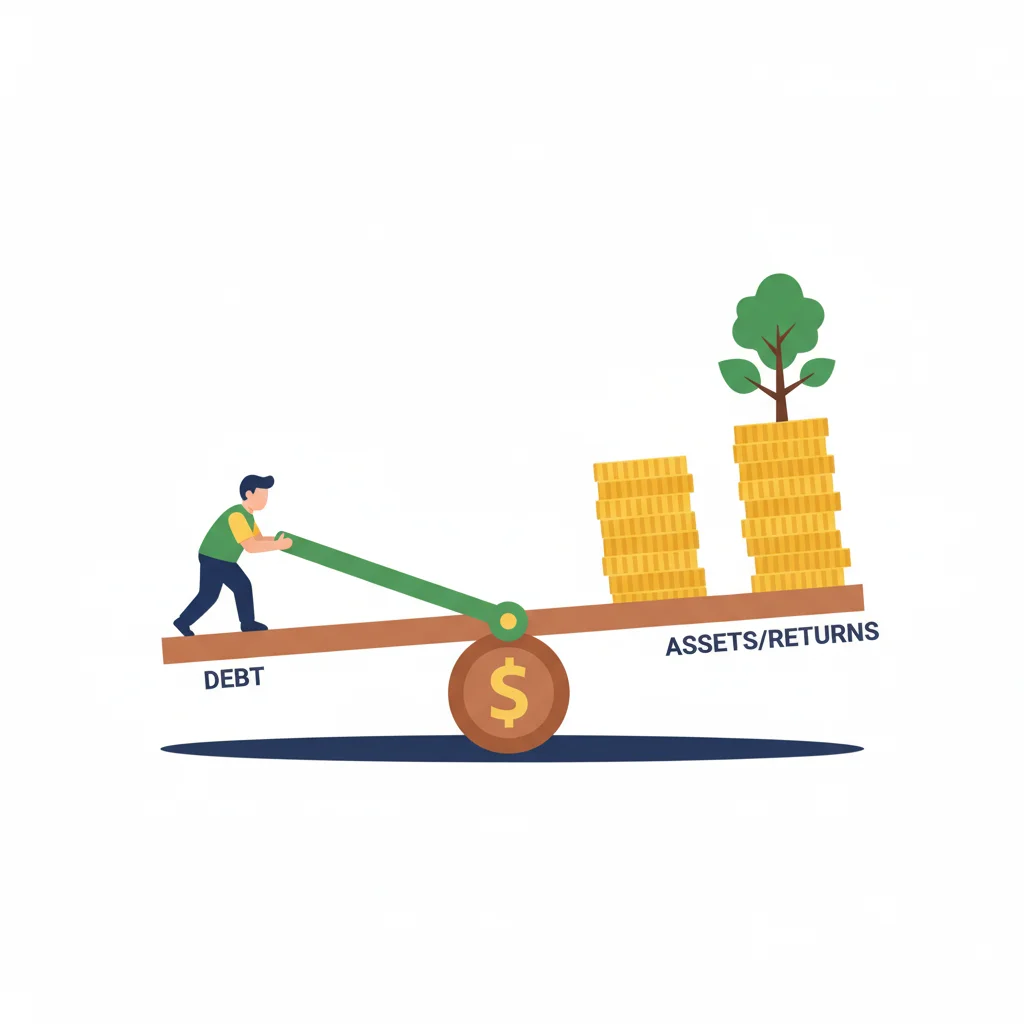
While high-interest consumer debt is detrimental, not all debt is bad. Strategic debt can be a powerful tool for wealth creation, particularly when the cost of borrowing is less than the return you can generate from the investment.
- Mortgage Debt: A mortgage allows you to purchase a home, an asset that typically appreciates over time. The interest paid on a mortgage is often tax-deductible, and the long-term appreciation can build significant equity. As of March 2026, average 30-year fixed mortgage rates are around 6.8%, making it a relatively low-cost form of debt compared to credit cards.
- Investment Property Loans: Similar to a primary residence, loans for investment properties can generate rental income and capital appreciation. However, these carry higher risk and require careful analysis of market conditions and rental yields.
- Business Loans: For entrepreneurs, a business loan can provide the capital needed to start or expand a venture, potentially generating returns far exceeding the loan's interest rate.
- Student Loans (Low Interest): While student loans are a burden for many, federal student loans often have relatively low, fixed interest rates. If you have a low-interest student loan and can earn a higher return by investing, it might make sense to prioritize investing over aggressive repayment, after addressing higher-interest debts.
The key is to differentiate between "good debt" (debt used to acquire appreciating assets or generate income) and "bad debt" (debt for depreciating assets or consumption). Always ensure your expected return on investment exceeds the cost of borrowing.
Continuous Financial Education and Review
The financial landscape is constantly evolving. To maintain your investment grade status, continuous learning and regular review of your financial plan are essential.
- Stay Informed: Read reputable financial news sources, follow economic trends, and understand how global events might impact your investments. Reputable financial websites and resources provide up-to-date articles and guides to help you stay informed.
- Review Your Plan Annually: At least once a year, sit down and review your entire financial situation.
- Budget: Are your allocations still appropriate? Have your income or expenses changed?
- Debt: Are you on track with your repayment plans?
- Savings Goals: Are you meeting your targets for short-term and mid-term goals?
- Investments: Is your asset allocation still aligned with your risk tolerance and time horizon? Are your beneficiaries up to date? Are you maximizing contributions to retirement accounts?
- Insurance: Do you have adequate coverage? Have your needs changed (e.g., new child, new home)?
- Estate Plan: Does your will and other documents reflect your current wishes?
- Adjust as Needed: Life happens. Your financial plan should be flexible enough to adapt to major life events like marriage, divorce, career changes, starting a family, or unexpected expenses. Don't be afraid to adjust your strategy to reflect your current circumstances and goals.
By committing to ongoing education and periodic reviews, you ensure your financial plan remains robust, relevant, and responsive to your changing life.
Frequently Asked Questions
What does "investment grade" mean in personal finance?
"Investment grade" in personal finance refers to achieving a high standard of financial health and stability. This includes having a solid budget, managing debt effectively, building substantial savings, and investing strategically for long-term growth and security.
How much should I have in my emergency fund?
Financial experts generally recommend having 3 to 6 months' worth of essential living expenses saved in an easily accessible, high-yield savings account. For greater security or less stable income, 6 to 12 months may be more appropriate.
What is the best way to pay off high-interest debt?
The two most popular methods are the debt snowball (paying smallest debt first for psychological wins) and the debt avalanche (paying highest interest debt first to save the most money). Mathematically, the debt avalanche is superior for saving on interest.
Should I prioritize saving for retirement or paying off debt?
Generally, you should prioritize paying off high-interest debt (e.g., credit cards with rates over 10-15%) first. However, if your employer offers a 401(k) match, contribute enough to get the full match, as this is often considered a guaranteed return that outweighs most debt interest. After that, tackle high-interest debt before contributing more to retirement.
What is the difference between a Roth IRA and a Traditional IRA?
A Traditional IRA allows for pre-tax contributions, meaning you get a tax deduction now, and your withdrawals in retirement are taxed. A Roth IRA uses after-tax contributions, so there's no upfront tax deduction, but qualified withdrawals in retirement are completely tax-free.
How often should I review my financial plan?
You should review your entire financial plan at least once a year. Additionally, major life events such as marriage, divorce, job changes, having children, or buying a home should prompt an immediate review and adjustment of your plan.
What is diversification in investing?
Diversification is the strategy of spreading your investments across various asset classes (stocks, bonds, real estate), industries, and geographic regions. This helps to reduce overall risk, as poor performance in one area can be offset by better performance in others.
Key Takeaways
- Foundation First: Establish a solid financial base with effective budgeting (like the 50/30/20 rule) and aggressive high-interest debt repayment.
- Emergency Fund is Crucial: Build an emergency fund covering 3-6 months of essential expenses in a high-yield savings account before significant investing.
- Invest Early and Consistently: Leverage the power of compound interest by starting to invest for retirement and other long-term goals as early as possible.
- Diversify Your Investments: Spread your investments across various asset classes and types to mitigate risk and optimize returns.
- Protect Your Assets: Ensure you have adequate insurance coverage (health, auto, home, life, disability) and a basic estate plan (will, POAs) in place.
- Optimize for Taxes: Utilize tax-advantaged accounts like 401(k)s, IRAs, and HSAs, and consider strategies like asset location and tax-loss harvesting.
- Continuous Learning: Stay informed about financial markets and regularly review and adjust your financial plan to adapt to life changes and economic conditions.
Conclusion
Achieving investment grade personal finance is not a destination but an ongoing journey. It requires discipline, education, and a proactive approach to managing your money. By systematically building a strong financial foundation, strategically saving, investing wisely, and protecting your assets, you can gain control over your financial future. Remember, every small step you take today contributes to a more secure and prosperous tomorrow. Start by implementing one or two strategies from this guide, review your progress regularly, and commit to continuous improvement. Your financial health is within your control; empower yourself to make it "investment grade."
Disclaimer: This article is for informational and educational purposes only and does not constitute financial, investment, or tax advice. Always consult a qualified financial advisor before making investment decisions.
The information provided in this article is for educational purposes only and does not constitute financial, investment, or legal advice. Always consult with a qualified financial advisor, tax professional, or legal counsel for personalized guidance tailored to your specific situation before making any financial decisions.
Comments
No comments yet. Be the first to comment!
More from Personal Finance


Explore Related Guides
Expert reviews of Gold IRA companies, rollover guides, fees, and IRS rules.
Comprehensive investment strategies covering stocks, bonds, ETFs, crypto, and real estate.
Compare banking products, interest rates, and strategies to maximize your savings.