
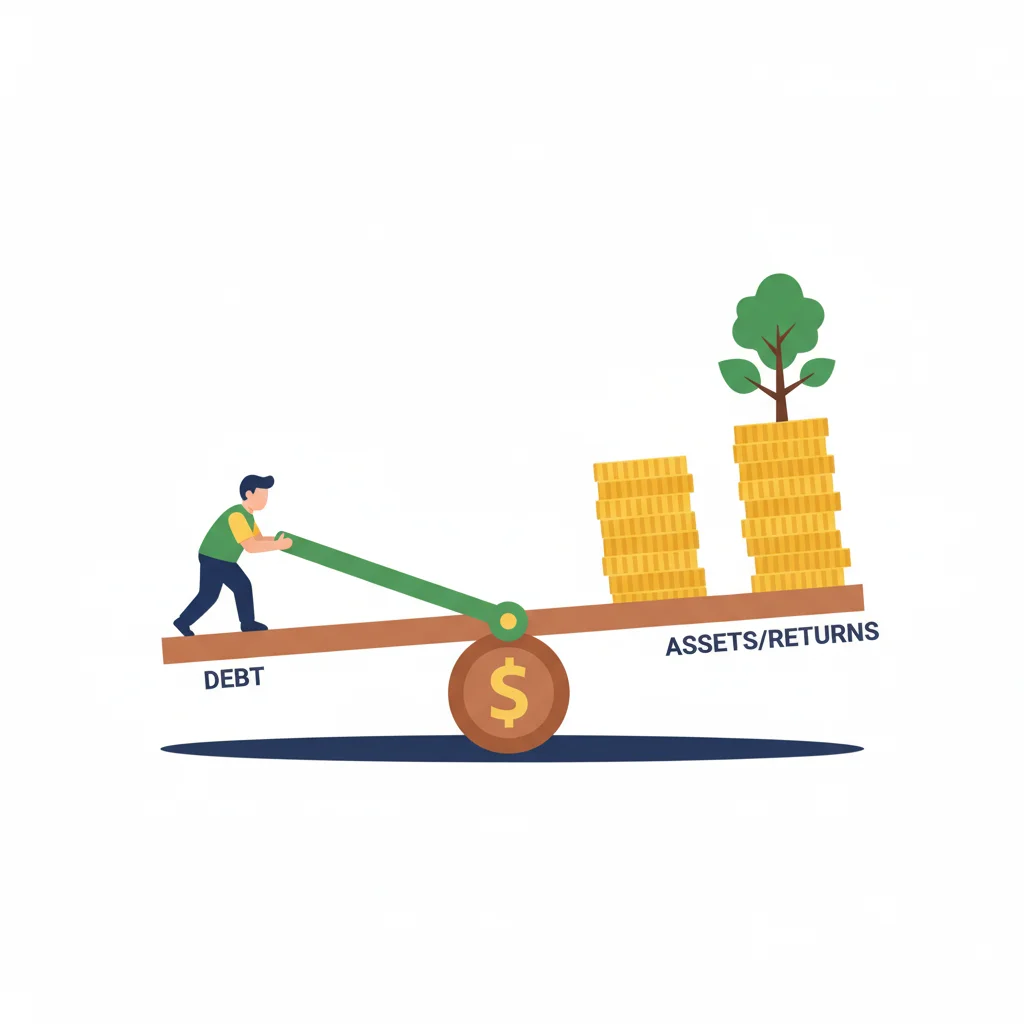
In personal finance, the concept of leverage often conjures images of high-stakes investments and significant risk. However, leverage is a fundamental tool that, when understood and applied judiciously, can be a powerful accelerator for wealth building and financial goal attainment. Misunderstanding or misusing it, conversely, can lead to substantial financial distress. Many individuals struggle to differentiate between productive and destructive forms of leverage, often shying away from it entirely or, worse, embracing it recklessly.
This comprehensive guide will demystify personal finance leverage, exploring its various forms, benefits, and inherent risks. We will provide practical strategies for utilizing leverage wisely, helping you understand how to borrow intelligently, invest strategically, and make informed financial decisions to amplify your returns and achieve your long-term financial objectives. By the end of this article, you will have a clear roadmap for harnessing the power of leverage responsibly to build a more secure and prosperous financial future.
Leverage Definition: In personal finance, leverage refers to using borrowed capital to increase the potential return of an investment or to fund an asset, effectively multiplying the impact of one's own capital.
Understanding Leverage in Personal Finance
Leverage is a double-edged sword. It can magnify gains, but it can also amplify losses. At its core, leverage means using someone else's money to control an asset or investment larger than what your own capital would allow. This borrowed money can come in many forms, from mortgages and student loans to margin accounts and business loans. The key is that you are using debt to enhance your financial position.
For instance, when you buy a home with a mortgage, you are leveraging the bank's money to acquire a valuable asset. You put down a small percentage (your equity), and the bank covers the rest. If the home appreciates in value, your percentage return on your initial equity can be significantly higher than if you had paid cash for the entire property. This section will delve into the fundamental mechanics of leverage and its pervasive presence in our financial lives.
What is Financial Leverage?
Financial leverage is the use of borrowed funds to increase the potential return on investment. It's not just for sophisticated investors; it's a concept most people encounter regularly. Think about buying a car with a loan or financing a college education with student loans. In each case, you're using borrowed money to acquire an asset or invest in your future. The goal is that the asset or investment will generate a return (or provide a benefit) that outweighs the cost of borrowing.
The leverage ratio is a common metric used to quantify leverage, often calculated as total debt divided by total assets or equity. A higher ratio indicates greater reliance on borrowed funds. While a high ratio can mean greater potential returns, it also signals higher risk. For example, if you borrow $90,000 to buy a $100,000 asset, your leverage ratio is 9:1 (debt to equity). If the asset increases by 10% to $110,000, your $10,000 equity has now grown to $20,000 (after repaying the $90,000 loan), representing a 100% return on your initial investment, minus interest costs.
How Leverage Works: The Mechanics
The mechanics of leverage involve an initial investment (your capital), borrowed funds (the debt), and an asset or investment. When the asset generates a return greater than the cost of borrowing (interest rates and fees), your return on your initial capital is amplified. Conversely, if the asset's return is less than the borrowing cost, or if its value declines, your losses are also amplified.
Consider a simple example: You have $10,000.
- Scenario A (No Leverage): You invest $10,000 directly. If the investment grows by 10%, you have $11,000, a $1,000 profit.
- Scenario B (With Leverage): You borrow an additional $10,000 at 5% interest and invest a total of $20,000. If the investment grows by 10%, it becomes $22,000. After repaying the $10,000 loan plus $500 interest, you are left with $11,500. Your initial $10,000 has grown to $11,500, a $1,500 profit. This is a 15% return on your initial capital, compared to 10% without leverage.
This example highlights the power of leverage to boost returns. However, if the investment had declined by 10%, in Scenario B, your $20,000 investment would be worth $18,000. After repaying the $10,000 loan and $500 interest, you would have $7,500, a $2,500 loss on your initial $10,000. This demonstrates the magnified risk. Interest rates play a crucial role, as they are the direct cost of using borrowed money.
Types of Leverage in Everyday Life
Leverage isn't confined to Wall Street. It's woven into the fabric of personal finance. Understanding these common forms is the first step to managing them effectively.
- Mortgage Leverage: This is perhaps the most common form. When you buy a home, you typically put down a fraction of the home's value (e.g., 5-20%) and borrow the rest from a bank. This allows you to control a significant asset with relatively little upfront capital. For example, if you buy a $400,000 home with a $40,000 down payment, you are using 10x leverage on your equity. In 2025, the average fixed mortgage rate for a 30-year loan was around 6.5-7.0%, making the cost of borrowing a significant factor in total homeownership costs.
- Student Loan Leverage: Investing in education through student loans is a form of leverage. You borrow money today to acquire skills and knowledge, with the expectation that this investment will lead to higher future income and career opportunities. While not a direct investment in an asset, it's an investment in your human capital. The average student loan debt per borrower in the U.S. reached approximately $37,000 in 2025, highlighting the widespread use of this type of leverage.
- Business Loan Leverage: If you start a small business, you might take out a loan to fund operations, purchase equipment, or expand. This leverage is used to generate business revenue and profits that, ideally, far exceed the loan's interest payments.
- Investment Leverage (Margin Accounts): More sophisticated investors might use margin accounts to borrow money from their brokerage to buy more securities. This amplifies both potential gains and losses. The Federal Reserve's Regulation T currently allows investors to borrow up to 50% of the purchase price of eligible securities.
- Credit Card Leverage: While often seen as a trap, credit cards also offer a form of leverage. They allow you to make purchases today that you might not have the cash for, with the expectation of paying them back later. However, with average annual percentage rates (APRs) often exceeding 20% in 2026, credit card leverage is typically very expensive and should be used with extreme caution, primarily for short-term needs or emergencies.
Strategic Uses of Personal Finance Leverage
Leverage, when used strategically, can be a powerful tool for wealth creation and achieving significant financial milestones. It's about making debt work for you, rather than against you. This involves careful planning, understanding your risk tolerance, and ensuring the potential returns outweigh the costs and risks of borrowing. Smart leverage focuses on acquiring appreciating assets or investing in opportunities that generate income or long-term growth.
The goal is to use borrowed capital to increase your net worth over time. This section will explore the most common and effective ways individuals can employ leverage to their financial advantage, from real estate to education and business ventures.
Real Estate Investment
Real estate is arguably the most common and accessible avenue for leveraging borrowed money to build wealth. A mortgage allows you to control a property worth significantly more than your down payment. As the property value appreciates, your return on the initial down payment can be substantial.
For example, if you buy a $300,000 property with a $60,000 down payment (20% equity) and the property value increases by 5% to $315,000, your equity has grown to $75,000 (ignoring principal payments and closing costs). This represents a 25% return on your $60,000 investment, even though the property only increased by 5%. This magnified return is the essence of real estate leverage. Moreover, rental income from investment properties can help cover mortgage payments and generate positive cash flow, further enhancing returns. However, property taxes, maintenance costs, and potential vacancies are significant considerations.
Investing in Education and Career
Investing in your human capital through education is a form of leverage with potentially high returns. Student loans enable individuals to pursue higher education or specialized training that can lead to higher-paying jobs and increased earning potential over their lifetime. While student loan debt can be substantial, the long-term financial benefits often outweigh the costs.
According to data from the Bureau of Labor Statistics, individuals with a bachelor's degree earn a median of $1,304 per week in 2025, significantly more than the $801 per week earned by those with only a high school diploma. This wage premium demonstrates the powerful leverage of education. Strategic educational choices, such as degrees in high-demand fields, can further maximize this return on investment. The key is to choose programs that offer a strong return and manage student loan debt responsibly.
Business and Entrepreneurship
For entrepreneurs, leverage is often essential for starting and growing a business. Small business loans, lines of credit, or even personal loans can provide the capital needed to launch a startup, purchase inventory, or expand operations. This borrowed capital is leveraged against the potential for future business profits.
A successful business can generate returns far exceeding the interest paid on a loan. For instance, a small business loan of $50,000 might enable a startup to develop a product that generates hundreds of thousands in revenue. The loan acts as the fuel for growth. However, business leverage comes with significant risk, as business ventures are inherently uncertain. A well-researched business plan, conservative financial projections, and a clear understanding of the market are crucial for successful business leverage.
Strategic Debt Consolidation
While often viewed negatively, debt consolidation can be a strategic use of leverage. By taking out a new loan (often with a lower interest rate) to pay off multiple higher-interest debts (like credit card balances), you are leveraging the new loan to reduce your overall interest payments and simplify your financial obligations.
This strategy can free up cash flow and accelerate debt repayment. For example, consolidating multiple credit cards with an average APR of 22% into a personal loan with a 10% interest rate can save thousands of dollars in interest over the repayment period. The average interest rate for a 24-month personal loan was around 11.5% in early 2026, making it an attractive option compared to high-interest credit card debt. However, it requires discipline to avoid accumulating new debt on the old credit lines.
Risks and Downsides of Leverage
While leverage offers the potential for amplified returns, it also comes with significant risks. Just as it can magnify gains, it can equally magnify losses, leading to severe financial distress if not managed carefully. Understanding these downsides is crucial for anyone considering using borrowed money to achieve financial goals. The primary risk is that the investment or asset acquired with borrowed funds does not perform as expected, or that the cost of borrowing increases unexpectedly.
Mismanaging leverage can lead to a debt spiral, asset forfeiture, and long-term damage to one's credit and financial health. This section will detail the critical risks associated with personal finance leverage, ensuring you approach it with a clear understanding of the potential pitfalls.
Magnified Losses
The most significant risk of leverage is the magnification of losses. If an asset purchased with borrowed money declines in value, the percentage loss on your initial equity can be far greater than the percentage decline of the asset itself. In some cases, you could lose more than your initial investment.
Consider the real estate example again: You buy a $400,000 home with a $40,000 down payment. If the market turns and the home's value drops by just 10% to $360,000, your equity is completely wiped out. You still owe the bank $360,000, but your initial $40,000 investment is gone. This illustrates how a relatively small percentage drop in asset value can lead to a complete loss of equity when highly leveraged. This risk is particularly acute in volatile markets or with speculative investments.
Interest Rate Risk
The cost of leverage is the interest you pay on borrowed funds. If interest rates rise, the cost of your debt increases, which can erode your returns or even turn a profitable venture into a losing one. This is particularly relevant for variable-rate loans, such as adjustable-rate mortgages (ARMs) or lines of credit.
For instance, if you have an ARM with a rate that adjusts annually, and the Federal Reserve raises its benchmark interest rate, your monthly mortgage payment could increase significantly. This unexpected increase in expenses can strain your budget and make it harder to service the debt. Even fixed-rate loans carry interest rate risk in the sense that if rates drop significantly after you've locked in a higher rate, you might be paying more than the current market rate, though refinancing can mitigate this. In 2026, with inflation concerns still present, there's always a potential for interest rate fluctuations.
Liquidity Risk and Margin Calls
Leverage can also expose you to liquidity risk, especially in investment scenarios. If you use a margin account to buy stocks and the market experiences a sharp downturn, your brokerage firm might issue a margin call. A margin call is a demand for you to deposit additional funds or securities into your account to bring your equity back up to the required maintenance margin.
If you cannot meet a margin call, the brokerage has the right to sell your securities, often at a loss, to cover the debt. This forced selling can lock in losses and prevent you from holding onto your investments until the market recovers. This risk highlights the importance of maintaining sufficient cash reserves and not over-leveraging investment portfolios.
Debt Overload and Financial Stress
Taking on too much debt, even for potentially productive purposes, can lead to debt overload. This occurs when your debt payments consume a disproportionate amount of your income, leaving little for other expenses, savings, or emergencies. High debt-to-income ratios can lead to significant financial stress, impacting mental and physical well-being.
The average American household's debt, excluding mortgages, was approximately $17,000 in credit card debt and $37,000 in student loan debt in 2025, according to various financial reports. While these figures represent averages, they underscore the potential for individuals to accumulate substantial debt. Over-leveraging can make you vulnerable to unexpected financial shocks, such as job loss or medical emergencies, as you have less financial flexibility to absorb these blows.
Managing Leverage Responsibly
Leverage is a powerful financial tool, but its effective use hinges on responsible management. Approaching leverage with caution, a clear strategy, and a robust understanding of your financial situation is paramount. The goal is to maximize potential gains while minimizing the inherent risks. This involves careful planning, continuous monitoring, and a commitment to financial discipline.
Responsible leverage isn't about avoiding debt entirely; it's about using debt intelligently to achieve specific, well-defined financial goals. This section will outline practical strategies and best practices for managing leverage effectively, helping you harness its power without falling victim to its downsides.
Assess Your Risk Tolerance
Before taking on any form of leverage, it's crucial to honestly assess your personal risk tolerance. How comfortable are you with potential losses? Can you handle market volatility, or would significant fluctuations cause undue stress? Your risk tolerance should guide your leverage decisions.
- Conservative: You prefer stability and minimal risk. You might use leverage sparingly, primarily for essential assets like a primary residence, and maintain a low debt-to-income ratio.
- Moderate: You are willing to take on some calculated risks for potentially higher returns. You might consider leverage for a well-researched investment property or a stable business venture.
- Aggressive: You are comfortable with higher risk in pursuit of substantial returns. You might use more significant leverage in investments, understanding the potential for magnified losses.
Understanding your risk tolerance helps you determine the appropriate level of debt and the types of leveraged investments suitable for your financial personality. Financial advisors often use questionnaires to help clients quantify their risk tolerance.
Maintain a Healthy Debt-to-Income Ratio
One of the most critical metrics for managing leverage is your debt-to-income (DTI) ratio. This ratio compares your total monthly debt payments to your gross monthly income. Lenders use DTI to assess your ability to manage monthly payments and repay debts.
Generally, a DTI of 36% or lower is considered healthy by most lenders and financial experts. Some lenders may go up to 43% for certain loan types, but exceeding this can indicate financial strain. A low DTI provides flexibility and reduces financial stress. To calculate your DTI:
Sum all your monthly debt payments (mortgage/rent, car loans, student loans, credit card minimums, personal loans).
Divide this sum by your gross monthly income (before taxes and deductions).
Multiply by 100 to get a percentage.
Keeping your DTI in check ensures you have sufficient disposable income to cover living expenses, save for emergencies, and absorb unexpected costs without defaulting on your obligations.
Build an Emergency Fund
An emergency fund is a non-negotiable component of responsible leverage management. It acts as a financial buffer, providing cash reserves to cover unexpected expenses or income loss without having to incur more debt or default on existing obligations.
Financial experts recommend having at least 3 to 6 months' worth of essential living expenses saved in an easily accessible, liquid account, such as a high-yield savings account. For those with significant leverage, a larger emergency fund (e.g., 6-12 months) might be prudent. This fund protects you from having to sell leveraged assets at a loss or falling behind on debt payments during unforeseen circumstances like job loss, medical emergencies, or major home repairs.
Diversify Your Investments
When using leverage for investments, diversification is key to mitigating risk. Don't put all your leveraged capital into a single asset or investment type. Spreading your investments across different asset classes, industries, and geographies can help cushion the blow if one particular investment performs poorly.
For instance, if you use leverage to invest in real estate, consider diversifying across different types of properties (residential, commercial) or locations, rather than concentrating all your capital in one single-family home. Similarly, if using margin for stocks, diversify your portfolio across various sectors to avoid overexposure to any single company or industry. Diversification reduces the impact of any single negative event on your overall financial health.
Understand Loan Terms and Costs
Before signing any loan agreement, thoroughly understand all the terms and associated costs. This includes the interest rate (fixed vs. variable), annual percentage rate (APR), repayment schedule, fees (origination fees, closing costs), and any prepayment penalties.
- Interest Rate vs. APR: The interest rate is the cost of borrowing, but the APR includes all fees and charges, providing a more accurate picture of the total cost of the loan.
- Fixed vs. Variable Rates: Fixed rates offer predictability, while variable rates can fluctuate, introducing interest rate risk.
- Loan Duration: Longer loan terms often mean lower monthly payments but higher total interest paid over the life of the loan.
Being fully informed about your loan terms allows you to compare different options, negotiate better rates, and avoid hidden surprises that could derail your financial plan. Always read the fine print and ask questions until you fully understand everything.
| Aspect | Responsible Leverage | Irresponsible Leverage |
|---|---|---|
| Purpose | Acquiring appreciating assets, education, business | Funding consumption, speculative investments |
| Debt-to-Income | Below 36% | Above 43%, causing financial strain |
| Emergency Fund | 3-12 months of expenses saved | Little to no emergency savings |
| Risk Assessment | Aligned with personal risk tolerance | Ignoring or underestimating risks |
| Loan Terms | Fully understood, favorable rates | Ignored details, high rates, hidden fees |
| Investment Focus | Diversified, long-term growth | Concentrated, short-term speculation |
| Financial Health | Improved net worth, reduced stress | Magnified losses, debt spiral, high stress |
Specific Applications of Leverage
Leverage manifests in various forms across personal finance, each with its unique characteristics, benefits, and risks. Understanding these specific applications is crucial for making informed decisions about when and how to employ borrowed capital. From the long-term commitment of a mortgage to the short-term flexibility of a credit card, each type of leverage serves a different purpose and requires a distinct approach to management.
This section will delve into the practical details of common leverage tools, providing insights into their typical use cases, associated costs, and best practices for responsible utilization.
Mortgages and Homeownership
A mortgage is the most significant form of leverage for most individuals, enabling them to purchase a home that would otherwise be unaffordable. As of early 2026, the median home price in the U.S. hovers around $420,000, making a mortgage almost a necessity for homeownership.
- Benefits:
- Wealth Building: Home equity typically appreciates over time, building significant net worth. The average annual home appreciation has been around 4-5% historically.
- Tax Advantages: Mortgage interest deductions (for eligible homeowners) can reduce taxable income.
- Stability: Owning a home provides stability and can be a hedge against inflation.
- Risks:
- Market Fluctuations: Home values can decline, leading to negative equity.
- Interest Rate Risk: Variable-rate mortgages can see payment increases.
- Illiquidity: Real estate is not easily converted to cash, making it a less liquid asset.
- Responsible Use: Aim for a down payment of at least 20% to avoid Private Mortgage Insurance (PMI), choose a fixed-rate mortgage for payment stability, and ensure your housing payment (PITI: Principal, Interest, Taxes, Insurance) is no more than 28% of your gross monthly income.
Student Loans for Education
Student loans are a common way to finance higher education, acting as an investment in future earning potential. Federal student loans offer benefits like income-driven repayment plans and potential forgiveness programs, while private loans typically have fewer protections.
- Benefits:
- Increased Earning Potential: Higher education often leads to significantly higher lifetime earnings.
- Career Opportunities: Opens doors to professions requiring specific degrees or certifications.
- Human Capital Investment: Investing in oneself is often considered one of the best investments.
- Risks:
- High Debt Burden: Average student loan debt is substantial, potentially delaying other financial goals.
- Job Market Uncertainty: No guarantee of employment or high-paying job post-graduation.
- Interest Accumulation: Interest can accrue rapidly, especially if payments are deferred.
- Responsible Use: Borrow only what you need, prioritize federal loans over private loans, research potential career earnings for your chosen field, and explore scholarships and grants first to minimize borrowing.
Investment Margin Accounts
Margin accounts allow investors to borrow money from their brokerage firm to purchase securities. This increases the purchasing power of an investor, but also amplifies both potential gains and losses.
- Benefits:
- Amplified Returns: Can significantly increase profits if investments perform well.
- Increased Purchasing Power: Allows control over a larger portfolio with less capital.
- Flexibility: Can be used for short-term trading strategies or to avoid selling existing holdings.
- Risks:
- Magnified Losses: Losses are also amplified, potentially exceeding your initial investment.
- Margin Calls: Brokerages can demand additional funds, forcing sales at a loss.
- Interest Costs: Interest on borrowed funds eats into potential profits.
- Responsible Use: Use margin sparingly and only for well-researched, stable investments. Maintain a substantial cash buffer in your account to avoid margin calls. Understand the maintenance margin requirements and the interest rates charged on margin loans. Avoid using margin for highly volatile or speculative investments.
Credit Cards and Personal Loans
Credit cards and personal loans are forms of unsecured debt that can provide short-term leverage for purchases or consolidation. While credit cards are often associated with high interest rates, they offer convenience and can be useful for building credit history. Personal loans typically have lower fixed interest rates than credit cards and are used for specific purposes like debt consolidation or home improvements.
- Benefits (Credit Cards):
- Convenience: Easy access to funds for purchases.
- Rewards: Cash back, travel points, and other perks.
- Credit Building: Responsible use builds a strong credit score.
- Benefits (Personal Loans):
- Lower Fixed Rates: Often lower than credit cards, with predictable payments.
- Debt Consolidation: Can simplify debt and reduce overall interest.
- Specific Projects: Useful for financing home repairs or other large expenses.
- Risks:
- High Interest Rates: Credit card APRs can be very high (e.g., 20%+ in 2026).
- Debt Spiral: Easy to accumulate unmanageable debt if not paid off monthly.
- Impact on Credit Score: Missed payments severely damage credit.
- Responsible Use: Pay credit card balances in full every month to avoid interest. Use personal loans only for productive purposes or debt consolidation, and ensure the interest rate is significantly lower than existing debt. Always have a clear repayment plan.
The Psychology of Leverage
Beyond the numbers and financial mechanics, the use of leverage in personal finance also has a significant psychological component. Our emotions, biases, and perceptions of risk play a crucial role in how we approach borrowing and investing. Understanding these psychological factors can help individuals make more rational and disciplined decisions about leverage, preventing common pitfalls driven by fear or greed.
The allure of quick gains can lead to over-leveraging, while fear of debt can cause individuals to miss out on valuable opportunities. Navigating these emotional landscapes is just as important as understanding the financial calculations.
Overconfidence and Risk Perception
One of the most dangerous psychological traps when using leverage is overconfidence. When investments are performing well, or the economy is booming, individuals may become overly optimistic about future returns and underestimate the potential for downside risk. This can lead to taking on excessive debt, believing that "this time is different" or that they possess superior investing skills.
This overconfidence can distort risk perception, making highly leveraged positions seem less risky than they truly are. It can also lead to ignoring warning signs or failing to adequately prepare for market downturns. A balanced perspective, acknowledging both potential rewards and inherent risks, is vital.
Fear of Missing Out (FOMO)
The Fear of Missing Out (FOMO) is another powerful psychological driver that can influence leverage decisions. When friends, family, or the media highlight significant gains from certain investments (e.g., a booming stock market or real estate sector), individuals may feel pressured to participate, even if it means taking on more debt than they are comfortable with.
This desire to not be left behind can lead to irrational decisions, such as investing in speculative assets with borrowed money, chasing trends, or abandoning a well-thought-out financial plan. Resisting FOMO requires discipline and a commitment to your own financial goals and risk tolerance, rather than succumbing to external pressures.
Cognitive Biases
Several cognitive biases can impact leverage decisions:
- Anchoring Bias: Over-relying on the first piece of information encountered (e.g., a low initial interest rate) and not fully exploring other options or potential future rate increases.
- Confirmation Bias: Seeking out information that confirms existing beliefs about an investment and ignoring contradictory evidence, leading to a skewed view of risk.
- Loss Aversion: The psychological tendency to prefer avoiding losses over acquiring equivalent gains. This can lead to holding onto losing leveraged positions for too long, hoping for a recovery, rather than cutting losses.
Recognizing these biases is the first step toward mitigating their influence. Making decisions based on objective data, a clear financial plan, and, if necessary, advice from a trusted financial professional can help counteract these psychological tendencies.
The Role of Financial Discipline
Ultimately, responsible leverage management boils down to financial discipline. This means adhering to a budget, consistently saving, making timely debt payments, and resisting the urge to overspend or take on excessive risk. Discipline helps maintain a healthy debt-to-income ratio, ensures emergency funds are robust, and prevents impulsive decisions driven by emotion.
A disciplined approach to leverage involves:
- Setting Clear Goals: Understanding why you are using leverage and what you aim to achieve.
- Conservative Planning: Stress-testing your financial plan against potential adverse scenarios (e.g., job loss, market downturns).
- Regular Review: Periodically reviewing your debt levels, investment performance, and overall financial health.
- Avoiding Lifestyle Creep: Not allowing increased income or perceived wealth from leveraged assets to lead to unsustainable spending habits.
By cultivating strong financial discipline, individuals can harness the power of leverage effectively and avoid its potential pitfalls, moving closer to their long-term financial aspirations.
Frequently Asked Questions
What is financial leverage in simple terms?
Financial leverage is using borrowed money to increase the potential return on an investment or to acquire an asset. For example, when you take out a mortgage to buy a home, you're using the bank's money to control a much larger asset than your own down payment would allow.
Is leverage always a bad thing in personal finance?
No, leverage is not always bad. When used responsibly and strategically, such as for a mortgage on an appreciating asset, investing in education, or funding a profitable business, it can be a powerful tool for wealth creation and achieving financial goals. However, it carries significant risks if misused.
What are the main risks of using leverage?
The main risks of using leverage include magnified losses if the investment performs poorly, increased costs due to rising interest rates, liquidity risk (like margin calls), and the potential for debt overload and financial stress if too much debt is taken on.
How can I use leverage responsibly for wealth building?
To use leverage responsibly, assess your risk tolerance, maintain a healthy debt-to-income ratio (ideally under 36%), build a robust emergency fund, diversify your investments, and thoroughly understand all loan terms and costs. Focus on using leverage for appreciating assets or investments in your human capital.
What is a good debt-to-income ratio when considering leverage?
A good debt-to-income (DTI) ratio is generally considered to be 36% or lower. This indicates that your monthly debt payments consume a manageable portion of your gross income, leaving enough for other expenses and savings. Lenders often use this ratio to assess your ability to take on new debt.
How does a mortgage act as leverage?
A mortgage acts as leverage by allowing you to purchase a home with only a fraction of its total cost as a down payment. The bank provides the rest of the funds. If the home's value increases, your percentage return on your initial down payment (equity) is significantly amplified, as you benefit from the appreciation of the entire property value.
Should I use a margin account for investing?
Using a margin account for investing is a higher-risk strategy suitable only for experienced investors with a high risk tolerance and a clear understanding of the risks involved. It can amplify gains but also magnify losses, potentially leading to margin calls. It's crucial to have a substantial cash buffer and only use margin for well-researched, stable investments.
Key Takeaways
- Leverage Amplifies Returns and Risks: Using borrowed money can significantly boost investment gains but also magnify losses, making careful management essential.
- Productive vs. Destructive Debt: Leverage is productive when used for appreciating assets (like real estate), education, or business growth, and destructive when used for consumption or speculative investments.
- Mortgages are Common Leverage: Homeownership through a mortgage is the most widespread form of personal leverage, allowing individuals to control a valuable asset with a smaller upfront investment.
- Manage Your Debt-to-Income Ratio: Maintaining a DTI below 36% is crucial for financial health and indicates responsible leverage.
- Emergency Funds are Critical: A robust emergency fund (3-6 months of expenses) acts as a buffer against unforeseen financial shocks, preventing forced sales or defaults on leveraged assets.
- Understand All Loan Terms: Always know the interest rates, fees, repayment schedules, and any penalties associated with borrowed funds to avoid surprises.
- Psychology Plays a Role: Be aware of cognitive biases like overconfidence and FOMO, which can lead to irrational leverage decisions. Financial discipline is key.
Conclusion
Leverage is a fundamental concept in personal finance, offering both immense opportunity and significant risk. When wielded with knowledge, discipline, and a clear understanding of its mechanics, it can be a powerful catalyst for wealth creation, enabling individuals to achieve financial milestones like homeownership, higher education, and successful entrepreneurship. However, the allure of amplified gains can easily lead to over-leveraging, magnifying losses and causing severe financial distress.
By responsibly assessing your risk tolerance, maintaining a healthy debt-to-income ratio, building a robust emergency fund, and thoroughly understanding the terms of any borrowed capital, you can harness the power of leverage to your advantage. Remember that financial success isn't about avoiding debt entirely, but about using debt intelligently and strategically. Embrace financial discipline, make informed decisions, and leverage will become a valuable tool in your journey toward a secure and prosperous financial future. Start by evaluating your current debt levels and identifying opportunities to use leverage wisely to build your wealth.
Disclaimer: This article is for informational and educational purposes only and does not constitute financial, investment, or tax advice. Always consult a qualified financial advisor before making investment decisions.
The information provided in this article is for educational purposes only and does not constitute financial, investment, or legal advice. Always consult with a qualified financial advisor, tax professional, or legal counsel for personalized guidance tailored to your specific situation before making any financial decisions.
Comments
No comments yet. Be the first to comment!
More from Personal Finance



Explore Related Guides
Expert reviews of Gold IRA companies, rollover guides, fees, and IRS rules.
Comprehensive investment strategies covering stocks, bonds, ETFs, crypto, and real estate.
Compare banking products, interest rates, and strategies to maximize your savings.