Compound Interest: Complete Personal Finance Guide
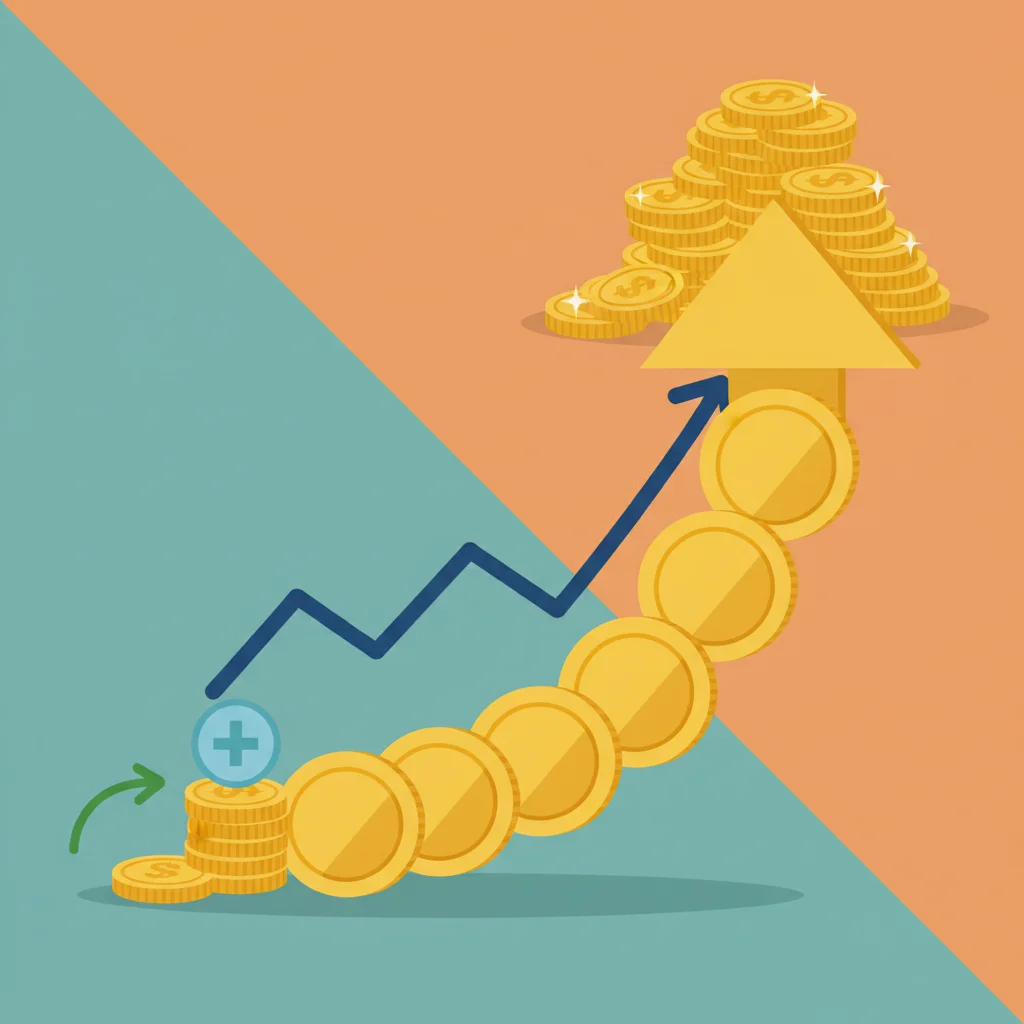
Imagine planting a tiny seed that not only grows into a magnificent tree but also produces seeds of its own, which then grow and produce more seeds, exponentially expanding your orchard. This powerful, self-replicating growth is a perfect analogy for compound interest, one of the most fundamental and impactful concepts in personal finance. While often called the "eighth wonder of the world" by Albert Einstein, many people still underestimate its profound ability to build wealth over time. Understanding and harnessing compound interest is not just for seasoned investors; it's a critical skill for anyone looking to achieve financial independence, from saving for retirement to paying off debt.
The challenge for many is that compound interest isn't always intuitive. We're used to simple, linear growth, but compounding works geometrically, often starting slowly before accelerating dramatically. This guide will demystify compound interest, explain how it works, illustrate its incredible power with real-world examples, and show you exactly how to leverage it to achieve your financial goals. By the end of this article, you'll have a clear roadmap to make compound interest work for you, not against you, in 2026 and beyond.
Compound Interest Definition: Compound interest is the interest calculated on the initial principal and also on the accumulated interest from previous periods, leading to exponential growth of an investment or debt over time.
Understanding the Mechanics of Compound Interest
Compound interest is often contrasted with simple interest. While simple interest is calculated only on the initial principal amount, compound interest is calculated on the principal amount and on the accumulated interest from previous periods. This "interest on interest" effect is what makes compounding so powerful. It creates a snowball effect, where your money grows at an accelerating rate.
Simple Interest vs. Compound Interest
To truly grasp the power of compounding, it's essential to understand the difference between simple and compound interest. Simple interest is straightforward: you earn interest only on the original amount you invested or loaned. For example, if you invest $1,000 at a 5% simple interest rate, you'll earn $50 each year, and your balance will grow linearly. After 10 years, you'd have $1,500 ($1,000 principal + $500 interest).
Compound interest, however, takes a different path. Using the same example, if your interest compounds annually, in the first year, you'd earn $50, bringing your total to $1,050. In the second year, you'd earn 5% on $1,050, which is $52.50, bringing your total to $1,102.50. This extra $2.50 might seem small, but over many years, these small additions accumulate rapidly. The frequency of compounding also plays a crucial role; interest can compound annually, semi-annually, quarterly, monthly, daily, or even continuously. The more frequently interest compounds, the faster your money grows.
The Compound Interest Formula Explained
While you don't need to calculate compound interest by hand every time, understanding the formula can deepen your appreciation for its mechanics. The most common formula for compound interest is:
A = P (1 + r/n)^(nt)
Where:
- A = the future value of the investment/loan, including interest
- P = the principal investment amount (the initial deposit or loan amount)
- r = the annual interest rate (as a decimal)
- n = the number of times that interest is compounded per year
- t = the number of years the money is invested or borrowed for
Let's break down each component. P is your starting capital. The (1 + r/n) part represents the growth factor per compounding period. r/n is the interest rate applied in each compounding period. For example, if your annual rate is 5% (0.05) and it compounds monthly (n=12), then each month your money grows by 0.05/12. The exponent (nt) tells you how many total compounding periods occur over the investment horizon. A longer time horizon (larger 't') and more frequent compounding (larger 'n') significantly amplify the final amount 'A'. This formula clearly illustrates how time and compounding frequency are critical multipliers for your wealth.
The Power of Time: Starting Early with Compound Interest
The most significant factor in harnessing compound interest is time. The longer your money has to compound, the more dramatic the results will be. This principle underscores the importance of starting to save and invest as early as possible, even with small amounts. Delaying your investments, even by a few years, can cost you hundreds of thousands of dollars in potential earnings over a lifetime.
The "Snowball Effect" of Early Investing
Consider two individuals, Sarah and Mark, both investing for retirement at an annual return of 7%.
- Sarah starts investing $200 per month at age 25. She continues for 10 years, then stops contributing, letting her money grow until age 65.
- Mark waits until age 35 to start investing. He contributes $200 per month for 30 years, until age 65.
Here's how their investments might look:
| Investor | Age Started | Monthly Contribution | Years Contributed | Total Contributed | Value at Age 65 (approx.) |
|---|---|---|---|---|---|
| Sarah | 25 | $200 | 10 | $24,000 | $350,000 |
| Mark | 35 | $200 | 30 | $72,000 | $280,000 |
This example, often cited by financial advisors, strikingly demonstrates the snowball effect. Sarah contributed significantly less ($24,000 vs. Mark's $72,000) but ended up with more money because her investments had an extra decade to compound. Her initial contributions had 40 years to grow, while Mark's had a maximum of 30 years. This phenomenon highlights that the earlier you start, the less you have to save overall to reach your financial goals.
The Rule of 72: Estimating Doubling Time
The Rule of 72 is a quick, mental math shortcut to estimate how long it will take for an investment to double in value, given a fixed annual rate of return. It's a powerful tool for understanding the long-term implications of different interest rates.
To use the Rule of 72, you simply divide 72 by the annual interest rate. The result is the approximate number of years it will take for your investment to double.
For example:
- If you earn a 6% annual return, your money will double in approximately 72 / 6 = 12 years.
- If you earn an 8% annual return, your money will double in approximately 72 / 8 = 9 years.
- If you earn a 12% annual return, your money will double in approximately 72 / 12 = 6 years.
This rule also works in reverse: if you want to double your money in a certain number of years, you can estimate the required rate of return. For instance, to double your money in 10 years, you'd need an approximate return of 72 / 10 = 7.2%. The Rule of 72 is a simplified approximation, but it provides excellent insight into the relationship between interest rates, time, and investment growth.
Leveraging Compound Interest for Wealth Building
Understanding compound interest is one thing; actively using it to build wealth is another. There are several key strategies and financial vehicles that maximize the benefits of compounding, helping you achieve significant financial milestones like retirement, a down payment on a home, or funding your children's education.
Retirement Accounts: Your Best Compounding Friends
Retirement accounts are specifically designed to leverage compound interest over long periods, often offering tax advantages that further boost your growth.
- 401(k)s and 403(b)s: These employer-sponsored plans allow you to contribute pre-tax dollars, reducing your taxable income in the current year. Your investments grow tax-deferred, meaning you don't pay taxes on gains until retirement. Many employers offer a matching contribution, which is essentially free money and an instant, guaranteed return on your investment. For example, if your employer matches 50% of your contributions up to 6% of your salary, contributing at least 6% means you're getting an immediate 50% return on that portion of your savings, which then compounds for decades. As of 2026, the elective deferral limit for employees participating in 401(k), 403(b), most 457 plans, and the Thrift Savings Plan is expected to be $23,000, with an additional catch-up contribution of $7,500 for those age 50 and over.
- IRAs (Traditional and Roth): Individual Retirement Accounts offer similar tax benefits. A Traditional IRA allows pre-tax contributions that grow tax-deferred, with withdrawals taxed in retirement. A Roth IRA uses after-tax contributions, but qualified withdrawals in retirement are entirely tax-free. The choice between Traditional and Roth often depends on your current income and expected future tax bracket. For 2026, the IRA contribution limit is expected to be $7,000, with an additional catch-up contribution of $1,000 for those age 50 and over. Both types of IRAs provide a powerful environment for your investments to compound without annual taxation on gains.
- Health Savings Accounts (HSAs): Often called the "triple-tax advantage" account, HSAs are available to those with high-deductible health plans. Contributions are tax-deductible, investments grow tax-free, and qualified withdrawals for medical expenses are also tax-free. If you don't use the funds for medical expenses, they can function like a retirement account after age 65, with withdrawals taxed as ordinary income. The contribution limits for 2026 are expected to be $4,300 for individuals and $8,550 for families, with an additional catch-up contribution of $1,000 for those age 55 and over. Maxing out an HSA is a highly recommended strategy for long-term compounding.
Investment Vehicles for Compounding Growth
Beyond dedicated retirement accounts, various investment vehicles allow you to harness compound interest in taxable brokerage accounts.
- Stocks and Stock Mutual Funds/ETFs: Historically, the stock market has provided the highest long-term returns, averaging around 10% annually over many decades. When you invest in stocks, you benefit from capital appreciation (the stock price going up) and dividends. If you reinvest these dividends, they buy more shares, which then generate more dividends and further capital appreciation, creating a powerful compounding loop. Exchange-Traded Funds (ETFs) and mutual funds offer diversified exposure to stocks, reducing risk while still providing significant growth potential. For example, an S&P 500 index fund allows you to invest in the 500 largest U.S. companies, benefiting from the overall growth of the market.
- Bonds and Bond Funds: While generally offering lower returns than stocks, bonds provide a more stable income stream through regular interest payments. Reinvesting these interest payments allows for compounding. Bond funds, which hold a diversified portfolio of bonds, are a popular way to invest in this asset class. They can be a good choice for balancing a portfolio, especially as you approach retirement.
- Real Estate: Investing in real estate can also benefit from compounding. Rental income can be reinvested into property improvements or additional properties, and property values tend to appreciate over time. If you use leverage (a mortgage), you're essentially compounding your returns on a much larger asset than your initial down payment. This can lead to substantial wealth growth, though it comes with higher risk and management responsibilities.
The Role of Reinvesting Dividends and Interest
A critical component of maximizing compound interest is reinvesting your earnings. When you receive dividends from stocks or interest from bonds, choosing to automatically reinvest them means that those earnings are used to buy more shares or increase your principal. These new shares or increased principal then generate their own dividends and interest, accelerating the compounding process.
Many brokerage accounts and mutual funds offer automatic dividend reinvestment plans (DRIPs). This hands-off approach ensures that every penny of your earnings is put back to work, continuously increasing your asset base and fueling exponential growth. Without reinvestment, your growth would be linear, similar to simple interest, significantly diminishing the power of compounding.
Compound Interest and Debt: The Double-Edged Sword
While compound interest is a powerful ally for wealth creation, it can be a formidable foe when it comes to debt. Just as your investments can grow exponentially, so too can your outstanding balances on loans and credit cards if not managed effectively. Understanding this inverse relationship is crucial for maintaining a healthy financial life.
How Compound Interest Works Against You with Debt
When you borrow money, you pay interest on the principal amount. If you don't pay off the full balance, the unpaid interest gets added to the principal, and then you start paying interest on that new, larger amount. This is how compound interest can lead to a rapidly escalating debt burden, especially with high-interest loans.
- Credit Card Debt: Credit cards are perhaps the most notorious example of compound interest working against you. With average interest rates often exceeding 20% APR (Annual Percentage Rate) in 2026, carrying a balance means your debt can quickly spiral out of control. If you only make minimum payments, a significant portion of that payment often goes towards interest, leaving very little to reduce the principal. This means your debt can compound monthly, making it incredibly difficult to pay off. For instance, a $5,000 credit card balance at 22% APR, making only minimum payments, could take decades to pay off and cost thousands in interest.
- Personal Loans and Mortgages: While generally having lower interest rates than credit cards, personal loans and mortgages also involve compound interest. With mortgages, interest typically compounds daily or monthly. Early in a mortgage, a larger portion of your payment goes towards interest. Overpaying your mortgage principal, even by a small amount, can significantly reduce the total interest paid and shorten the loan term because you are reducing the principal on which future interest is calculated.
Strategies to Minimize the Impact of Compounding Debt
The key to managing debt effectively is to reverse the compounding effect. Here are several strategies:
Prioritize High-Interest Debt: Focus on paying off debts with the highest interest rates first. This is often referred to as the debt avalanche method. By eliminating the most expensive debt, you stop its rapid compounding and free up more money to tackle other debts. Credit card balances should almost always be the top priority.
Make More Than Minimum Payments: Even a small extra payment towards principal can make a big difference over time. This reduces the amount on which interest is calculated in subsequent periods, effectively shrinking the base for compounding.
Debt Consolidation: For multiple high-interest debts, consolidating them into a single loan with a lower interest rate can be beneficial. This might involve a personal loan, a balance transfer credit card (with a 0% introductory APR), or a home equity loan. Be cautious with balance transfer cards; ensure you can pay off the balance before the promotional period ends, or you could face high deferred interest.
Automate Payments: Setting up automatic payments ensures you never miss a due date, avoiding late fees and potential increases in interest rates. It also helps you consistently chip away at your principal.
Avoid New Debt: The simplest way to prevent compound interest from working against you is to avoid taking on unnecessary debt, especially high-interest consumer debt. Live within your means and build an emergency fund to cover unexpected expenses instead of relying on credit cards.
Practical Steps to Maximize Compound Interest
Now that you understand the mechanics and importance of compound interest, let's look at actionable steps you can take to harness its power in your personal finance journey. These steps focus on consistency, optimization, and long-term vision.
1. Start Saving and Investing Early
This is the golden rule of compound interest. As illustrated by the Sarah and Mark example, time is your greatest asset. Even if you can only start with a small amount, the earlier you begin, the more time your money has to grow exponentially.
- Automate Savings: Set up automatic transfers from your checking account to your investment accounts immediately after you get paid. This "pay yourself first" strategy removes the temptation to spend the money and ensures consistent contributions.
- Small Amounts Add Up: Don't underestimate the power of small, regular contributions. $50 a week saved and invested consistently can turn into a substantial sum over decades due to compounding.
2. Maximize Contributions to Tax-Advantaged Accounts
As discussed, retirement accounts like 401(k)s, IRAs, and HSAs offer significant tax benefits that supercharge compounding.
- Employer Match: Always contribute at least enough to get your full employer match in a 401(k) or similar plan. This is an immediate, risk-free return on your investment.
- Max Out Limits: If possible, aim to contribute the maximum allowed to these accounts each year. For 2026, this means up to $23,000 for 401(k)s and $7,000 for IRAs (plus catch-up contributions if applicable).
- Understand Tax Implications: Consult a financial advisor to determine whether pre-tax (Traditional) or after-tax (Roth) contributions are best for your current and projected financial situation.
3. Choose Investments with Growth Potential
While guaranteed returns are rare, historical data shows that certain asset classes offer better long-term growth potential, which is crucial for maximizing compounding.
- Diversify: Don't put all your eggs in one basket. A diversified portfolio typically includes a mix of stocks, bonds, and potentially other assets, tailored to your risk tolerance and time horizon.
- Low-Cost Index Funds/ETFs: These are excellent choices for most investors. They offer broad market exposure, are passively managed (meaning lower fees), and historically track market returns effectively. For example, an S&P 500 index fund provides exposure to 500 large U.S. companies.
- Reinvest Dividends: Ensure that any dividends or interest payments from your investments are automatically reinvested. This is a passive yet powerful way to accelerate the compounding process.
4. Be Patient and Avoid Market Timing
Compound interest works best over the long term. Short-term market fluctuations are normal, but trying to time the market (buying low, selling high) is incredibly difficult and often counterproductive.
- Stay Invested: Resist the urge to pull your money out during market downturns. These periods often present opportunities for long-term investors, as assets can be purchased at lower prices, which then compound more significantly during recovery.
- Focus on the Long-Term: Remember your financial goals and the power of compounding over decades. A balanced portfolio and consistent contributions will generally outperform attempts at market timing.
5. Regularly Review and Rebalance Your Portfolio
While a long-term strategy is essential, it doesn't mean setting it and forgetting it entirely.
- Annual Review: At least once a year, review your portfolio to ensure it still aligns with your financial goals, risk tolerance, and time horizon.
- Rebalancing: Over time, some assets in your portfolio may grow faster than others, shifting your asset allocation. Rebalancing involves selling some of the outperforming assets and buying more of the underperforming ones to bring your portfolio back to your target allocation. This helps manage risk and ensures you're not overexposed to any single asset class.
By consistently applying these steps, you can effectively harness the extraordinary power of compound interest to build substantial wealth and achieve your financial aspirations.
Compound Interest in Everyday Financial Decisions
The principles of compound interest extend far beyond investment accounts and into many aspects of our daily financial lives. Recognizing its influence can help you make smarter decisions, whether you're saving for a short-term goal or planning for major life events.
Emergency Funds and Savings Accounts
Even for short-term savings, compound interest plays a role. While traditional savings accounts often offer modest interest rates (e.g., 0.5% to 1.5% APY in 2026 for many brick-and-mortar banks), high-yield savings accounts (HYSAs) can offer significantly more, often ranging from 4.0% to 5.5% APY in today's market, depending on the institution and economic conditions.
- Building an Emergency Fund: An emergency fund, typically 3-6 months of living expenses, should be kept in a liquid, easily accessible account. A high-yield savings account allows this money to grow, albeit slowly, rather than sitting stagnant. The interest earned, no matter how small, compounds and helps your fund grow faster than inflation might erode its value in a zero-interest account.
- Short-Term Goals: Saving for a down payment on a car, a vacation, or a new appliance also benefits from a high-yield account. While you won't see dramatic compounding over a few years, every dollar earned through interest is a dollar you don't have to save from your paycheck.
College Savings Plans (529 Plans)
For parents planning to fund their children's education, 529 plans are a powerful tool that leverages compound interest with significant tax advantages.
- Tax-Advantaged Growth: Contributions to 529 plans grow tax-deferred, and qualified withdrawals for educational expenses are tax-free. This allows your money to compound without being eroded by annual taxes on gains, similar to a Roth IRA.
- Investment Options: Most 529 plans offer a range of investment options, from age-based portfolios (which automatically become more conservative as the child approaches college age) to individual mutual funds and ETFs. Choosing growth-oriented options early on maximizes the compounding potential over the 10-18 years until college.
- Early Start: Just like retirement savings, starting a 529 plan when your child is young gives the investments the longest possible time to compound, potentially accumulating a substantial sum for tuition, room, board, and other qualified expenses.
Business Investments and Reinvestment
For entrepreneurs and business owners, the concept of compound interest is central to growth. Reinvesting profits back into the business allows those profits to generate further profits, creating a powerful compounding effect on the business's valuation and revenue.
- Growth Capital: When a business retains earnings and reinvests them into new equipment, marketing, research and development, or expanding operations, it's essentially compounding its capital. These reinvested funds aim to generate a higher return than simply distributing them as dividends.
- Scaling Operations: Successful businesses use compounding to scale. Each successful expansion or product launch provides more capital and market share, which can then be used for even larger expansions, leading to exponential growth in revenue and profitability over time.
By recognizing where compound interest impacts your finances, you can make more informed choices that align with your long-term goals, whether personal or professional. It's a universal principle that, once understood, can be applied to almost any financial decision.
Frequently Asked Questions
What is the difference between simple and compound interest?
Simple interest is calculated only on the original principal amount, leading to linear growth. Compound interest is calculated on the principal and on the accumulated interest from previous periods, resulting in exponential growth where your money earns "interest on interest."
How does the frequency of compounding affect my returns?
The more frequently interest is compounded (e.g., daily vs. annually), the faster your money will grow. This is because interest is added to the principal more often, allowing subsequent interest calculations to be based on a larger sum.
What is the "Rule of 72" and how can I use it?
The Rule of 72 is a quick mental math shortcut to estimate how long it will take for an investment to double in value. You divide 72 by the annual interest rate (e.g., 72 / 8% = 9 years). It helps visualize the impact of different interest rates over time.
How can I maximize compound interest for my retirement savings?
To maximize compound interest for retirement, start saving and investing as early as possible, contribute consistently (especially to get employer matches), and utilize tax-advantaged accounts like 401(k)s, IRAs, and HSAs. Reinvesting all dividends and earnings is also crucial.
Can compound interest work against me?
Yes, compound interest works against you with debt, especially high-interest debt like credit cards. If you carry a balance, unpaid interest is added to your principal, and you then pay interest on that larger amount, causing your debt to grow exponentially.
What are the best types of investments for compound growth?
Investments that offer consistent returns and allow for reinvestment of earnings are best for compound growth. These typically include diversified portfolios of stocks (through index funds or ETFs), dividend-paying stocks, and certain bond funds.
Is compound interest taxed?
Yes, generally, investment gains from compound interest are subject to taxes, typically capital gains tax or ordinary income tax, depending on the investment vehicle. However, accounts like 401(k)s, IRAs, and 529 plans offer tax-deferred or tax-free growth, allowing your money to compound without annual tax erosion.
Key Takeaways
- Time is Your Greatest Ally: The earlier you start saving and investing, the more powerful compound interest becomes, leading to significantly larger wealth accumulation over decades.
- Interest on Interest: Compound interest means your earnings start earning their own interest, creating an exponential growth effect that is far more impactful than simple interest.
- Leverage Tax Advantages: Utilize tax-advantaged accounts like 401(k)s, IRAs, and HSAs to supercharge compounding by allowing your investments to grow without annual tax erosion.
- Reinvest Earnings: Always opt to reinvest dividends and interest payments. This ensures every dollar earned goes back to work, continuously increasing your asset base.
- Debt is the Enemy: Compound interest works against you with debt, especially high-interest credit cards. Prioritize paying off these debts to stop their exponential growth and free up funds for investing.
- Consistency is Key: Regular contributions, even small ones, combined with a long-term investment horizon, are far more effective than sporadic large investments.
- Understand the Rule of 72: Use this simple rule to quickly estimate how long it will take for your investments to double, providing a clear picture of growth potential.
Conclusion
Compound interest is undeniably one of the most powerful forces in personal finance. Its ability to generate "interest on interest" allows your money to grow exponentially over time, transforming modest savings into substantial wealth. From the moment you begin your financial journey, understanding and actively harnessing this principle is paramount. Whether you're diligently contributing to your 401(k), building an emergency fund in a high-yield savings account, or strategically paying down high-interest debt, every financial decision is touched by the mechanics of compounding.
By starting early, contributing consistently, maximizing tax-advantaged accounts, and reinvesting your earnings, you can ensure that compound interest works tirelessly for you, not against you. Don't let the slow start of the "snowball effect" deceive you; patience and persistence are rewarded handsomely over the long run. Take action today to implement the strategies outlined in this guide and set yourself on a path toward significant financial growth and security. Make compound interest your most trusted partner in achieving your financial dreams.
Disclaimer: This article is for informational and educational purposes only and does not constitute financial, investment, or tax advice. Always consult a qualified financial advisor before making investment decisions.
The information provided in this article is for educational purposes only and does not constitute financial, investment, or legal advice. Always consult with a qualified financial advisor, tax professional, or legal counsel for personalized guidance tailored to your specific situation before making any financial decisions.
Comments
No comments yet. Be the first to comment!
More from Personal Finance


Explore Related Guides
Expert reviews of Gold IRA companies, rollover guides, fees, and IRS rules.
Comprehensive investment strategies covering stocks, bonds, ETFs, crypto, and real estate.
Compare banking products, interest rates, and strategies to maximize your savings.