
Dollar-Cost Averaging: Your Complete Personal Finance Guide
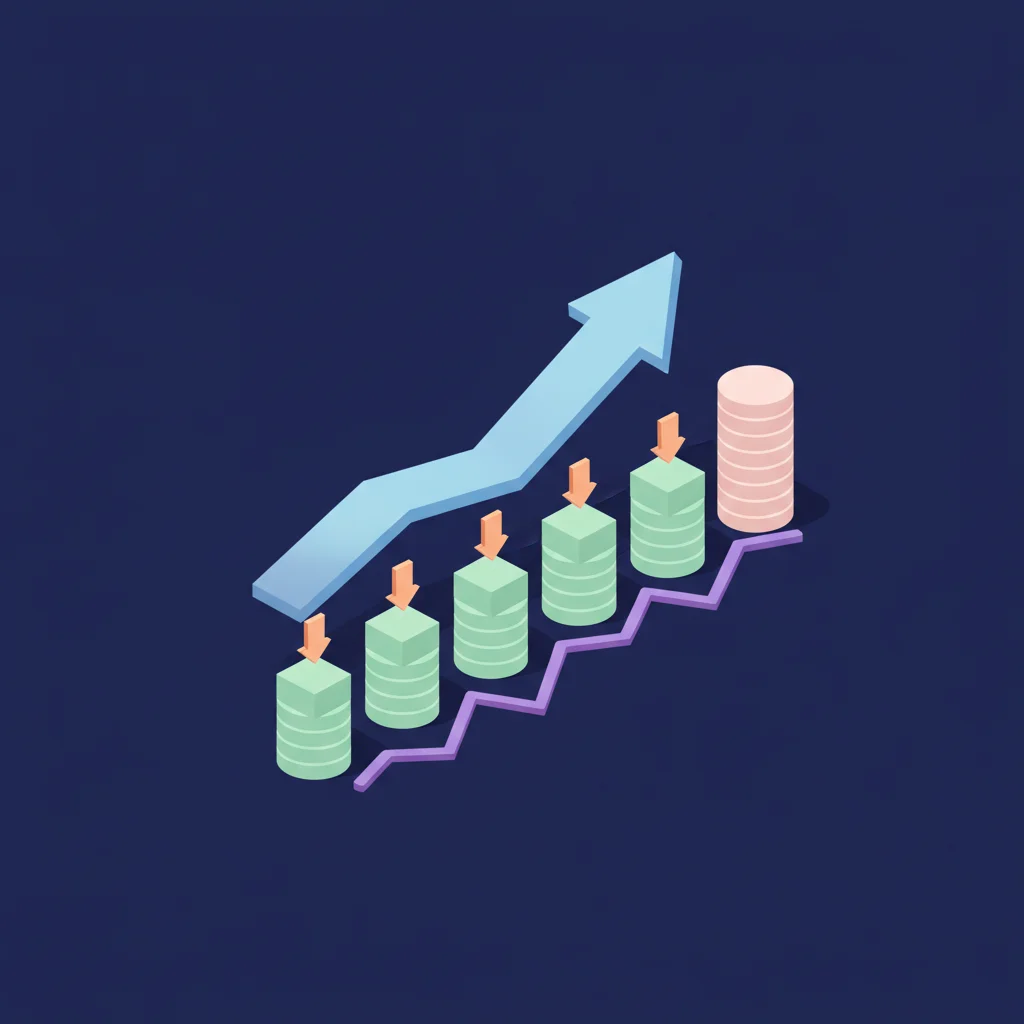
Investing can feel like a high-stakes game of timing the market, a challenge even for seasoned professionals. Many individual investors struggle with the anxiety of deciding when to buy, often leading to missed opportunities or poor decisions driven by emotion. The good news is there's a proven, straightforward strategy that can help mitigate this risk and build wealth consistently over time: dollar-cost averaging. This comprehensive guide will explain what dollar-cost averaging is, how it works, its benefits and drawbacks, and how you can effectively implement it into your personal finance strategy to achieve your long-term financial goals.
Dollar-Cost Averaging Definition: Dollar-cost averaging (DCA) is an investment strategy where an investor divides the total amount of money to be invested across periodic purchases of a target asset (e.g., stocks, mutual funds) to reduce the impact of volatility on the overall purchase.
Understanding Dollar-Cost Averaging
Dollar-cost averaging is a disciplined approach to investing that removes much of the guesswork and emotional stress from market fluctuations. Instead of trying to predict market highs and lows, you commit to investing a fixed amount of money at regular intervals, regardless of the asset's price. This strategy is particularly powerful for long-term investors aiming to build wealth steadily.
What is Dollar-Cost Averaging?
At its core, dollar-cost averaging involves making consistent, predetermined investments over time. For example, instead of investing $12,000 all at once in January, you might invest $1,000 at the beginning of each month throughout the year. This systematic approach means you buy more shares when prices are low and fewer shares when prices are high. Over time, this averages out your purchase price, often resulting in a lower average cost per share than if you had tried to time the market perfectly.
The concept is simple but effective. It leverages the natural ups and downs of the market to your advantage. When the market dips, your fixed investment buys more units of the asset, which can lead to greater returns when the market recovers. Conversely, when the market is high, your fixed investment buys fewer units, protecting you from overpaying at a peak. This strategy is especially beneficial for assets that experience price volatility, which includes most common investments like stocks and exchange-traded funds (ETFs).
How Dollar-Cost Averaging Works in Practice
Implementing dollar-cost averaging is typically straightforward. Most investors use automated contributions to their investment accounts. For instance, you might set up an automatic transfer of $250 from your checking account to your brokerage account every two weeks, which then automatically invests in a chosen fund. This automation is key to the discipline required for DCA.
Let's consider an example: Imagine you want to invest in a particular stock. If you invest $100 each month, and the stock price fluctuates:
- Month 1: Stock price is $10 per share. You buy 10 shares.
- Month 2: Stock price drops to $8 per share. You buy 12.5 shares.
- Month 3: Stock price rises to $12 per share. You buy 8.33 shares.
After three months, you've invested $300 and own 30.83 shares. Your average purchase price is approximately $9.73 per share ($300 / 30.83 shares). If you had invested all $300 at the initial price of $10, you would have only 30 shares. If you had invested it all at $12, you'd have 25 shares. This demonstrates how DCA helps you acquire more shares when prices are lower, reducing your average cost basis.
Dollar-Cost Averaging vs. Lump-Sum Investing
The primary alternative to dollar-cost averaging is lump-sum investing, where an investor puts all their available capital into an investment at once. Historically, studies have shown that lump-sum investing often outperforms dollar-cost averaging, especially in bull markets. This is because markets tend to trend upwards over the long term, so getting all your money into the market as early as possible maximizes its time to grow.
However, this statistical advantage comes with a significant caveat: it assumes you have a large sum of money available to invest at once, and it doesn't account for the psychological difficulty of investing during volatile periods. For most people, who receive income periodically (e.g., bi-weekly or monthly paychecks), dollar-cost averaging is the more practical and less emotionally taxing strategy. It also protects against the risk of investing a large sum right before a market downturn, which can be psychologically devastating.
| Feature | Dollar-Cost Averaging (DCA) | Lump-Sum Investing |
|---|---|---|
| Investment Style | Periodic, fixed amounts over time | All available capital invested at once |
| Market Timing | Aims to reduce impact of timing decisions | Requires a single timing decision, often based on belief |
| Risk Mitigation | Reduces risk of investing at a market peak | Higher risk if invested just before a downturn |
| Emotional Impact | Less emotional stress, disciplined | Can be stressful, especially during volatility |
| Average Cost | Averages out cost, often lower than market peaks | Cost is fixed at the time of investment |
| Typical Use Case | Regular savings from income, long-term goals | Large inheritance, bonus, or sale proceeds |
| Historical Performance | Generally performs well, but often slightly less than lump-sum in persistent bull markets | Historically outperforms DCA in bull markets |
As of early 2026, market volatility remains a factor, making DCA a prudent choice for many. While a lump sum might yield higher returns in a consistently rising market, the peace of mind and reduced risk offered by DCA make it a preferred strategy for many individual investors.
Benefits of Using Dollar-Cost Averaging
Dollar-cost averaging offers several compelling advantages, particularly for everyday investors building wealth over the long term. These benefits extend beyond just financial returns, impacting an investor's psychological well-being and discipline.
Reduces Investment Risk and Volatility
One of the most significant benefits of dollar-cost averaging is its ability to mitigate risk associated with market volatility. By spreading out investments over time, you avoid the risk of investing a large sum at an unfortunate peak, only to see your portfolio immediately decline. This is especially relevant in today's market, where economic indicators and geopolitical events can cause rapid shifts.
The strategy inherently smooths out the average purchase price of your investments. When prices are high, your fixed dollar amount buys fewer shares. When prices are low, the same dollar amount buys more shares. This process, known as "averaging down," can lead to a lower overall cost basis for your holdings, which can enhance returns when the market eventually recovers. For instance, if you started investing in an S&P 500 index fund in late 2021 and continued through the market downturn of 2022 and recovery in 2023-2025, your consistent contributions would have bought more shares at lower prices during the dip, significantly boosting your overall return as the market rebounded.
Removes Emotional Decision-Making
Fear and greed are powerful emotions that often lead investors astray. When markets are soaring, there's a temptation to jump in with a large sum, fearing you'll miss out. When markets are crashing, the instinct is often to sell everything to prevent further losses. Both reactions can be detrimental to long-term wealth building.
Dollar-cost averaging provides a disciplined framework that removes these emotional impulses. By committing to a fixed investment schedule, you bypass the need to constantly monitor market fluctuations and make difficult timing decisions. This automation fosters a "set it and forget it" mentality, allowing you to stay invested through market ups and downs without the stress of trying to predict the future. Financial advisors often recommend DCA precisely for its ability to instill discipline and prevent impulsive, emotionally driven investment choices. This psychological benefit is often underestimated but can be crucial for long-term success.
Encourages Consistent Saving and Investing
For many people, the biggest hurdle to building wealth is simply getting started and maintaining consistency. Dollar-cost averaging provides a structured way to do both. By setting up automatic transfers and investments, you essentially pay your future self first. This consistent habit is a cornerstone of sound personal finance.
Whether you're contributing to a 401(k), an IRA, or a taxable brokerage account, automating your investments ensures that you are regularly putting money to work. This consistency, even with small amounts, can lead to substantial growth over time due to the power of compounding returns. For example, a 25-year-old who invests $200 per month consistently until age 65, assuming an average annual return of 7%, could accumulate over $500,000. The key is the consistent, disciplined approach that DCA facilitates.
Potential Drawbacks and Considerations
While dollar-cost averaging offers significant advantages, it's not without its limitations. Understanding these potential drawbacks is crucial for a balanced investment strategy.
May Underperform in Bull Markets
One of the most frequently cited criticisms of dollar-cost averaging is its potential to underperform lump-sum investing during prolonged bull markets. When the market is consistently rising, investing a large sum upfront allows your entire capital to benefit from the upward trend immediately. By contrast, DCA means you are continuously buying shares at higher prices as the market climbs, which can result in a higher average cost per share than if you had invested all at once at the beginning of the rally.
For example, if the S&P 500 experiences a strong, uninterrupted upward trend of 15% in a year, a lump-sum investment made at the start of the year would capture that full gain. An investor using DCA, however, would have invested portions of their money throughout the year, with later investments buying in at higher prices, thus diluting the overall return compared to the lump-sum approach. According to a Vanguard study from 2016 (analyzing data from 1926-2015), lump-sum investing outperformed DCA approximately two-thirds of the time over various 10-year periods. However, this study also acknowledged the psychological benefits and risk reduction of DCA.
Not Always Optimal for Large Windfalls
If you suddenly come into a substantial sum of money, such as an inheritance, a large bonus, or the proceeds from selling a property, the decision between DCA and lump-sum investing becomes more pronounced. While DCA can reduce the risk of investing at a market peak, the statistical evidence suggests that investing a lump sum immediately often yields better returns over the long term, especially if you have a long investment horizon.
The reason is simple: markets tend to go up more often than they go down. By holding a significant portion of your capital in cash and slowly deploying it through DCA, you risk missing out on potential market gains. Financial advisors often suggest a hybrid approach for large windfalls, such as investing a portion immediately and dollar-cost averaging the remainder over a shorter period (e.g., 6-12 months) to balance risk and potential returns. The best approach depends on your risk tolerance and market outlook.
Transaction Costs (Less Relevant Today)
In the past, transaction costs (brokerage fees or commissions) could be a significant drawback for dollar-cost averaging. Making frequent, small investments meant incurring multiple fees, which could eat into returns, particularly for smaller portfolios. However, with the widespread adoption of commission-free trading for stocks, ETFs, and many mutual funds by major brokerage firms (like Fidelity, Charles Schwab, and Vanguard), this concern has largely diminished.
Today, most investors can implement dollar-cost averaging without incurring significant transaction costs, making the strategy more accessible and cost-effective than ever before. It's still wise to check your brokerage's fee structure, especially for mutual funds that might have expense ratios or trading fees, but for typical ETF and stock investing, fees are rarely a barrier to DCA.
Implementing Dollar-Cost Averaging Effectively
Successfully integrating dollar-cost averaging into your financial plan requires a clear strategy and consistent execution. It's about setting up a system that works for you and sticking to it.
Choose the Right Investment Vehicles
The effectiveness of dollar-cost averaging largely depends on the investment vehicles you choose. DCA works best with assets that are expected to grow over the long term and exhibit some degree of volatility. Ideal choices include:
- Index Funds and ETFs: These are excellent choices for DCA because they offer broad market exposure, diversification, and typically have low expense ratios. Examples include funds tracking the S&P 500, total stock market, or international indexes. They are designed for long-term growth and are less susceptible to the volatility of single stocks.
- Mutual Funds: Similar to index funds, actively managed mutual funds can also be suitable, though their higher expense ratios should be considered. Many employer-sponsored retirement plans (like 401(k)s) primarily offer mutual funds, making DCA a natural fit for these accounts.
- Individual Stocks: While possible, DCA into individual stocks carries higher risk due to lack of diversification. It's generally recommended for investors who have a strong conviction in specific companies and are comfortable with higher volatility.
- Cryptocurrencies: Given their extreme volatility, dollar-cost averaging is a popular strategy for investing in cryptocurrencies like Bitcoin and Ethereum. It helps smooth out the wild price swings and reduces the risk of buying in at a peak.
Avoid using DCA for assets that are highly stable or short-term, as the benefits of averaging out prices won't be as pronounced. Focus on growth-oriented assets with a long-term horizon.
Set Up Automatic Investments
The cornerstone of effective dollar-cost averaging is automation. Manually transferring and investing money each period opens the door to procrastination and emotional interference. Setting up automatic investments ensures discipline and consistency.
Here's how to do it:
Determine your budget: Decide how much you can comfortably invest each pay period or month without jeopardizing your emergency fund or other financial obligations.
Choose your frequency: Most investors align their investment frequency with their pay schedule (e.g., bi-weekly or monthly). This makes it easier to budget and ensures a steady flow of funds.
Configure with your brokerage: Log into your brokerage account (e.g., Fidelity, Vanguard, Charles Schwab, Robinhood, M1 Finance) or retirement plan administrator (e.g., Empower, T. Rowe Price). Look for options to set up "automatic investments," "recurring investments," or "scheduled transfers."
Select your investments: Specify which funds or ETFs you want your money to be invested in.
Review and confirm: Double-check all settings to ensure the correct amount, frequency, and investment choices are selected.
Automating this process removes the decision-making burden and ensures you stay on track, even when life gets busy or market news is discouraging.
Maintain Discipline and Long-Term Perspective
Dollar-cost averaging is not a get-rich-quick scheme. Its power lies in its consistency and long-term application. To truly benefit, you must maintain discipline and resist the urge to stop investing during market downturns or to try to time the market.
- Stay the course: Market corrections and bear markets are a natural part of investing. During these times, it's crucial to continue your regular investments. This is when DCA truly shines, as you are buying more shares at lower prices, setting yourself up for greater gains when the market recovers.
- Avoid panic selling: One of the biggest mistakes investors make is selling during a downturn. DCA helps you avoid this by keeping your focus on the long-term accumulation of assets, rather than short-term price movements.
- Regularly review, but don't obsess: It's good practice to review your portfolio periodically (e.g., once or twice a year) to ensure your asset allocation still aligns with your goals. However, avoid checking your portfolio daily, as this can lead to anxiety and impulsive decisions.
Remember, the goal of dollar-cost averaging is to build wealth steadily over decades, not to achieve immediate spectacular returns. Patience and consistency are your greatest allies.
Dollar-Cost Averaging in Retirement Accounts
Dollar-cost averaging is a particularly powerful strategy when applied to retirement accounts like 401(k)s, 403(b)s, and IRAs. These accounts are designed for long-term growth, making DCA a natural fit.
401(k) and 403(b) Contributions
For most employees, contributions to a 401(k) or 403(b) are automatically deducted from each paycheck. This is a perfect example of dollar-cost averaging in action. You contribute a fixed percentage or dollar amount of your salary every pay period, which is then invested into your chosen funds.
This automatic process ensures:
- Consistency: You're always investing, regardless of market conditions.
- Tax advantages: Contributions to these accounts are often pre-tax, reducing your current taxable income, and growth is tax-deferred until retirement.
- Employer match: Many employers offer a matching contribution, which is essentially free money. By consistently contributing, you ensure you capture the full match, significantly boosting your retirement savings. For instance, if your employer matches 50% of your contributions up to 6% of your salary, and you contribute 6% of your $70,000 salary ($4,200 annually), your employer adds another $2,100, bringing your total annual investment to $6,300. This is a powerful form of DCA.
As of 2026, the 401(k) contribution limit for employees is expected to be around $23,500 (up from $23,000 in 2025), with an additional catch-up contribution of $7,500 for those aged 50 and over. Maximizing these contributions through DCA is a cornerstone of retirement planning.
IRA Contributions (Traditional and Roth)
Individual Retirement Accounts (IRAs) also lend themselves well to dollar-cost averaging. Whether you choose a Traditional IRA (tax-deductible contributions, tax-deferred growth) or a Roth IRA (after-tax contributions, tax-free growth in retirement), setting up automatic monthly or bi-weekly contributions is an excellent way to consistently fund these accounts.
For example, if the IRA contribution limit for 2026 is $7,000 (up from $6,500 in 2025), you could set up an automatic transfer of approximately $583.33 per month ($7,000 / 12) to fully fund your IRA for the year. This ensures you meet the annual limit without having to find a large lump sum at the end of the year. The catch-up contribution for those aged 50 and over is expected to remain $1,000 for 2026, allowing for an additional $83.33 per month.
Many brokerage firms allow you to set up recurring investments directly into specific funds or ETFs within your IRA, making the DCA process seamless. This systematic approach helps you take full advantage of the tax benefits and long-term growth potential of IRAs.
Taxable Brokerage Accounts
Beyond retirement accounts, dollar-cost averaging is also highly effective for investing in taxable brokerage accounts. These accounts offer flexibility, as there are no contribution limits (unlike 401(k)s or IRAs) and no restrictions on withdrawals (though capital gains taxes apply).
Using DCA in a taxable account is ideal for:
- Saving for specific long-term goals: Such as a down payment on a house, a child's education (beyond 529 plans), or starting a business.
- Investing beyond retirement limits: Once you've maxed out your tax-advantaged retirement accounts, a taxable brokerage account is the next logical step for continued investing.
- Building a diversified portfolio: You can use DCA to build positions in various stocks, ETFs, or mutual funds that align with your investment strategy.
The same principles of automation and discipline apply. Set up regular transfers from your bank account to your brokerage account, and then schedule automatic investments into your chosen assets. This consistent approach in a taxable account can significantly boost your overall wealth accumulation.
Real-World Examples and Case Studies
Looking at how dollar-cost averaging performs in different market conditions can illustrate its power and resilience.
Navigating Market Downturns
Consider an investor who started contributing $500 per month to an S&P 500 index fund in January 2000, just before the dot-com bubble burst. The market experienced a significant downturn from 2000 to 2002. A lump-sum investor might have been severely impacted. However, the DCA investor continued buying shares every month.
During the downturn, their $500 bought more shares at lower prices. When the market eventually recovered and began its ascent in the mid-2000s, the investor's portfolio saw substantial gains because they had accumulated a larger number of shares at a lower average cost. This strategy helped them weather the storm and position themselves for stronger growth when the market rebounded. This pattern repeated during the 2008 financial crisis and the 2020 COVID-19 dip. Investors who continued their DCA strategy during these periods were rewarded as the market recovered.
Long-Term Growth and Compounding
Let's look at a hypothetical example of an investor, Sarah, who started investing $200 per month into a broad-market index fund at age 25. She consistently maintained this contribution for 40 years until she retired at age 65.
- Total invested: $200/month * 12 months/year * 40 years = $96,000
- Assumed average annual return: 8%
Due to the power of compounding and dollar-cost averaging, Sarah's portfolio could grow to approximately $622,000 by retirement. This significant sum is achieved with a relatively modest monthly contribution, thanks to the consistent application of DCA and the long-term growth of the market. The exact figure would vary based on actual market performance, but the principle holds: consistent small investments over time can lead to substantial wealth.
The Power of Automation
A study by Vanguard in 2022 highlighted the importance of automation in investment success. They found that participants in employer-sponsored retirement plans who use automatic enrollment and automatic contribution increases tend to have significantly higher savings rates and better investment outcomes. This is a direct testament to the effectiveness of dollar-cost averaging, as these automatic features embody the core principles of the strategy.
The psychological barrier of manually initiating investments is removed, ensuring that money is consistently put to work. This automation prevents emotional decisions during market volatility and keeps investors on track toward their financial goals, whether it's retirement, a down payment, or simply building a robust investment portfolio.
Advanced Dollar-Cost Averaging Strategies
While the basic premise of dollar-cost averaging is simple, there are a few advanced considerations and complementary strategies that can enhance its effectiveness.
Value Averaging
Value averaging is a more active form of dollar-cost averaging. Instead of investing a fixed dollar amount, you aim to have your portfolio value increase by a fixed amount each period. This means you invest more when the market is down (to reach your target value) and less (or even sell) when the market is up.
For example, if you want your portfolio to increase by $100 each month:
- Month 1: Portfolio value is $1,000. You invest $100. New value: $1,100.
- Month 2: Market drops, portfolio value is now $1,050. To reach $1,200 (previous $1,100 + $100 target), you need to invest $150.
- Month 3: Market rises, portfolio value is now $1,300. You need to sell $100 to bring it back to the $1,200 target + $100 = $1,300.
Value averaging can potentially lead to lower average purchase prices than traditional DCA, as it forces you to buy more aggressively during dips and less during rallies. However, it is more complex to implement, requires more active management, and may incur higher transaction costs (especially if selling is involved). It's generally suited for more experienced investors comfortable with a more hands-on approach.
Increasing Contributions Over Time
A highly effective way to supercharge your dollar-cost averaging strategy is to gradually increase your contributions over time. This can be done in several ways:
- Annual raises: When you receive a raise at work, commit to increasing your investment contributions by a portion of that raise (e.g., half of the raise goes to investing, half to spending).
- Automatic escalation: Many 401(k) plans offer an "auto-escalation" feature, which automatically increases your contribution percentage by 1% each year until it reaches a certain cap. This is an effortless way to boost your savings.
- Windfalls: When you receive a bonus, tax refund, or other unexpected income, consider directing a portion of it to your investments.
Increasing your contributions over time, even by small amounts, can have a dramatic impact on your long-term wealth due to compounding. It aligns your investment growth with your earning potential.
Rebalancing Your Portfolio
While not strictly a DCA strategy, portfolio rebalancing is an essential complementary practice. Over time, market movements can cause your asset allocation to drift from your target. For example, if stocks perform exceptionally well, they might grow to represent a larger percentage of your portfolio than you initially intended.
Rebalancing involves periodically adjusting your portfolio back to your desired asset allocation. This typically means selling some of your outperforming assets and using the proceeds to buy more of your underperforming assets. This process essentially forces you to "buy low and sell high," reinforcing the principles of DCA. Many robo-advisors and some mutual funds offer automatic rebalancing, making it easier to maintain your target allocation without active intervention.
Frequently Asked Questions
What is the main benefit of dollar-cost averaging?
The main benefit of dollar-cost averaging is that it reduces the risk of investing a large sum at an inopportune time, such as right before a market downturn. It also removes emotional decision-making, encouraging consistent investment regardless of market fluctuations.
Is dollar-cost averaging good for beginners?
Yes, dollar-cost averaging is an excellent strategy for beginners. It simplifies the investment process by removing the need for market timing, promotes discipline, and helps build consistent saving habits, making it less intimidating to start investing.
How often should I dollar-cost average?
The most common frequencies for dollar-cost averaging are monthly or bi-weekly, often aligning with paychecks. The key is consistency and regularity. While daily or weekly is also possible, the benefits tend to diminish beyond a certain frequency, and transaction costs (if any) could become a factor.
Does dollar-cost averaging work in a bear market?
Dollar-cost averaging is particularly effective in a bear market. When prices are falling, your fixed investment buys more shares at lower prices. This "averaging down" reduces your overall cost basis, positioning your portfolio for potentially greater returns when the market eventually recovers.
Should I stop dollar-cost averaging if the market is falling?
No, you should generally not stop dollar-cost averaging when the market is falling. This is precisely when the strategy is most beneficial, as you are accumulating more shares at discounted prices. Stopping investments during a downturn means missing out on the opportunity to buy low.
What are the best investments for dollar-cost averaging?
Dollar-cost averaging works best with long-term growth assets that exhibit some volatility. Ideal choices include broad-market index funds, exchange-traded funds (ETFs) tracking major indexes (like the S&P 500), and diversified mutual funds.
Is dollar-cost averaging always better than lump-sum investing?
Not always. Historically, in consistently rising bull markets, lump-sum investing has often outperformed dollar-cost averaging because all capital is invested earlier, maximizing time in the market. However, DCA offers significant risk reduction and psychological benefits, making it a more practical and less stressful strategy for most investors, especially those with periodic income.
Key Takeaways
Reduces Risk: Dollar-cost averaging mitigates the risk of investing a large sum at a market peak by spreading out investments over time.
Removes Emotion: It fosters disciplined investing, preventing impulsive decisions driven by market fear or greed.
Promotes Consistency: DCA encourages regular saving and investing, which is crucial for long-term wealth accumulation through compounding.
Ideal for Retirement: It's perfectly suited for 401(k)s, IRAs, and other long-term retirement accounts due to their periodic contribution structure.
May Underperform in Bull Markets: In consistently rising markets, lump-sum investing can sometimes yield higher returns than DCA.
Automation is Key: Setting up automatic investments is essential for the successful and consistent application of dollar-cost averaging.
Long-Term Strategy: DCA is a strategy for building wealth steadily over decades, requiring patience and a long-term perspective.
Conclusion
Dollar-cost averaging is a powerful and accessible investment strategy that empowers individuals to build wealth systematically and confidently. By committing to regular, fixed investments, you can navigate market volatility, reduce emotional stress, and consistently contribute to your financial future. While it may not always deliver the highest returns in every market scenario, its benefits in risk reduction, discipline, and long-term consistency make it an indispensable tool for nearly every personal finance plan. Whether you're contributing to a 401(k), an IRA, or a taxable brokerage account, embracing dollar-cost averaging in 2026 and beyond can help you achieve your financial goals with greater peace of mind. Start by automating your investments today and let the power of consistency work for you.
Disclaimer: This article is for informational and educational purposes only and does not constitute financial, investment, or tax advice. Always consult a qualified financial advisor before making investment decisions.
The information provided in this article is for educational purposes only and does not constitute financial, investment, or legal advice. Always consult with a qualified financial advisor, tax professional, or legal counsel for personalized guidance tailored to your specific situation before making any financial decisions.
Comments
No comments yet. Be the first to comment!
More from Personal Finance



Explore Related Guides
Expert reviews of Gold IRA companies, rollover guides, fees, and IRS rules.
Comprehensive investment strategies covering stocks, bonds, ETFs, crypto, and real estate.
Compare banking products, interest rates, and strategies to maximize your savings.