
How to Choose a Checking Account: What to Look for in 2026
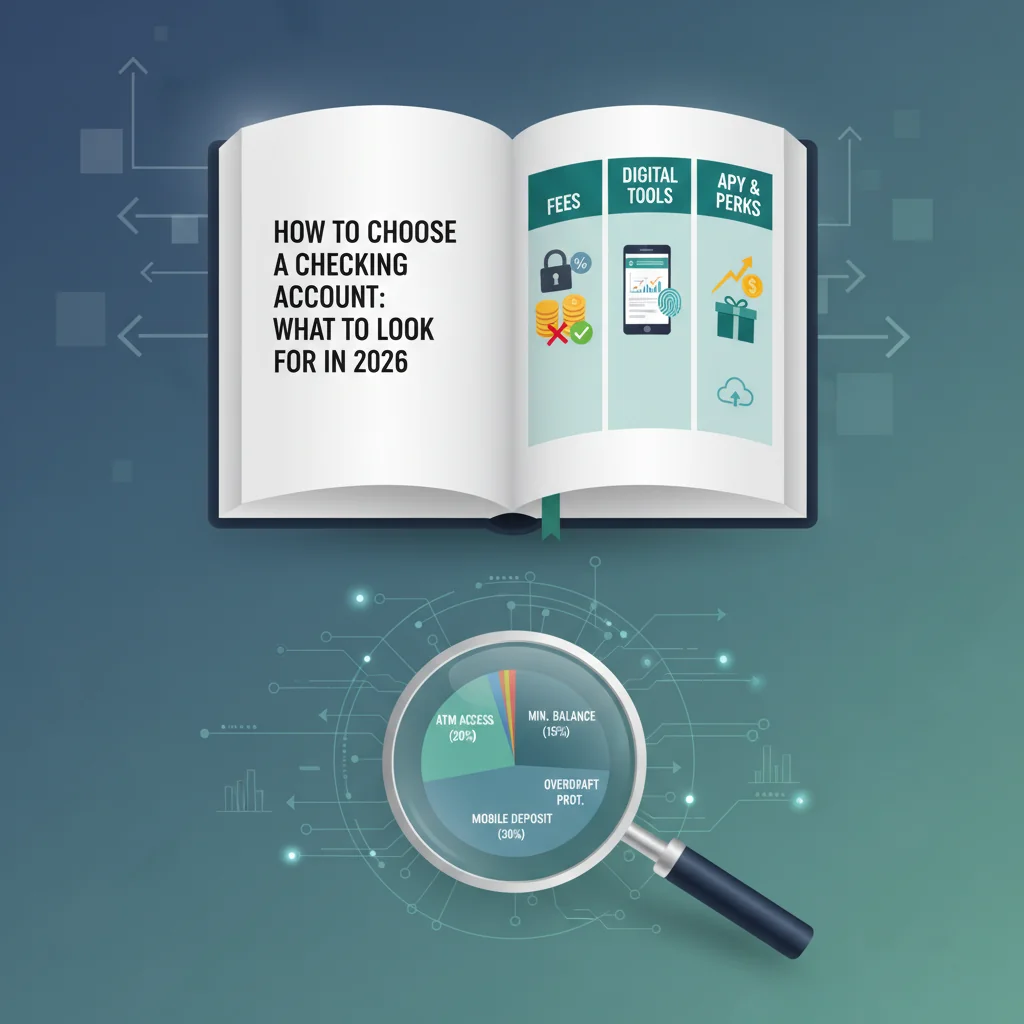
Editor's note: Names, images, and identifying details have been changed to protect the privacy of individuals featured in this article.
George, a 60-year-old social worker in Louisville, KY, recently found himself staring at his checking account statement with a familiar sigh. With $4,100 currently in his checking account, a $22,000 Roth IRA, and a $198,000 mortgage, he felt financially stable but knew there was room for improvement. His wedding to his fiancée was next spring, and every dollar counted. He'd been with the same bank for decades, but the monthly fees and lack of interest on his balance were starting to gnaw at him, especially after turning 50, which felt like a deadline to get serious about every aspect of his retirement planning. He wondered if his checking account was truly serving his needs or just costing him money. For many, a checking account is a financial cornerstone, yet few take the time to evaluate if it's the right fit. In 2026, the landscape of banking continues to evolve, offering a diverse array of options that can significantly impact your daily finances. This article will guide you through the essential factors to consider when choosing a checking account, ensuring you find one that aligns with your financial goals and lifestyle.
Checking Account Definition: A checking account is a demand deposit account held at a financial institution that allows for easy and frequent access to funds through various methods, including debit cards, checks, and electronic transfers, primarily used for everyday transactions and bill payments.
Understanding the Evolving Checking Account Landscape in 2026
The banking industry is in a constant state of flux, driven by technological advancements, changing consumer demands, and a competitive market. What constituted a "good" checking account a decade ago might be considered subpar today. In 2026, consumers have more choices than ever before, from traditional brick-and-mortar banks to online-only institutions and even fintech companies offering banking-like services. This evolution means greater flexibility but also necessitates a more informed approach to selecting the right account.
The Rise of Digital-First Banking
The shift towards digital banking has accelerated significantly, a trend further amplified by global events in recent years. According to a 2024 report by the American Bankers Association, over 70% of consumers now prefer to conduct their banking primarily through digital channels, including mobile apps and online platforms. This preference has led to the proliferation of online-only banks and digital checking accounts that often boast lower fees, higher interest rates, and advanced mobile features. These institutions typically operate with lower overhead costs, allowing them to pass savings on to their customers. For George, who is comfortable with his smartphone, a digital-first approach could mean saving on fees he currently pays.
Digital-first banks are financial institutions that primarily or exclusively operate online, without a physical branch network. They leverage technology to provide banking services, often resulting in more competitive rates and lower fees. These accounts typically offer robust mobile apps for managing finances, depositing checks remotely, and making payments. While convenient, they may not be suitable for individuals who frequently need in-person services or cash transactions.
Hybrid Models and Fintech Innovations
Beyond purely digital banks, many traditional institutions have adopted hybrid models, integrating advanced digital tools while maintaining a physical presence. This offers the best of both worlds for some consumers. Furthermore, fintech companies (financial technology companies) are increasingly blurring the lines between banking and technology, offering innovative checking account alternatives with features like early direct deposit, integrated budgeting tools, and even cryptocurrency integration. These innovations are pushing traditional banks to enhance their offerings, creating a more dynamic market. When choosing a checking account, it's crucial to consider how these innovations align with your financial habits and future needs.
The Importance of Personalized Financial Management
In 2026, a checking account is no longer just a place to hold money; it's often a hub for personalized financial management. Many accounts now come with integrated budgeting tools, spending trackers, and even AI-powered insights into spending habits. For individuals like George, who are planning significant life events like a wedding, these features can be invaluable for staying on budget and achieving financial goals. The ability to categorize transactions automatically or set spending limits within the banking app can transform a simple checking account into a powerful financial planning tool.
Key Factors When Choosing a Checking Account
Selecting the right checking account requires a careful evaluation of several critical factors. What works for one person might not be ideal for another. Your financial habits, liquidity needs, and preferred banking methods should all play a role in your decision-making process. Ignoring these elements can lead to unnecessary fees, missed opportunities for earning interest, or inconvenient banking experiences.
Understanding Account Fees and Minimums
One of the most significant considerations when choosing a checking account is the fee structure. While many banks advertise "free checking," this often comes with caveats. It's essential to scrutinize the fine print to understand all potential charges. For George, his current bank charges a monthly maintenance fee that he'd like to avoid.
Common fees to look out for include:
- Monthly Maintenance Fees: A recurring fee charged just for having the account open. Many banks waive this if you meet certain conditions, such as maintaining a minimum daily balance, having a certain amount in direct deposits, or using your debit card a specific number of times per month.
- Overdraft Fees: Charged when you spend more money than you have in your account. These can be substantial, often ranging from $25 to $35 per transaction. Some banks offer overdraft protection, linking your checking to a savings account or line of credit to cover shortfalls, though this may also incur a fee or interest.
- ATM Fees: Charged for using an ATM outside of your bank's network. This can be a double fee, with one charge from your bank and another from the ATM owner. Many online banks offer fee-free ATM networks or reimburse out-of-network ATM fees.
- Foreign Transaction Fees: A percentage charged on purchases made in a foreign currency or with a foreign merchant. This is particularly relevant for travelers.
- Wire Transfer Fees: Charges for sending or receiving money via wire transfer, which is typically faster but more expensive than other transfer methods.
- Minimum Balance Requirements: Some accounts require you to maintain a certain average daily or monthly balance to avoid fees or to earn interest. Failing to meet this can trigger a fee.
Fee waivers are conditions that, if met, exempt you from paying certain account fees, most commonly monthly maintenance fees. These often include direct deposit minimums, average daily balance requirements, or a minimum number of debit card transactions. Always confirm the specific requirements for fee waivers.
Interest Rates and Earning Potential
While checking accounts are primarily for transactional purposes, some offer interest on your balance. These are often called interest-bearing checking accounts or high-yield checking accounts. While the rates might not rival those of savings accounts, every little bit helps, especially for those who maintain a significant balance like George's $4,100. In 2026, with competitive online banks, it's possible to find checking accounts offering APYs (Annual Percentage Yields) comparable to traditional savings accounts.
When comparing interest rates, pay attention to:
- Annual Percentage Yield (APY): This is the effective annual rate of return, taking into account compounding interest.
- Balance Tiers: Some accounts offer higher interest rates only on balances up to a certain amount, or only if you meet specific activity requirements (e.g., a certain number of debit card transactions).
- Fee Impact: A high interest rate might be negated by high monthly fees if you don't meet waiver requirements.
For someone like George, who typically keeps a few thousand dollars in his checking for daily expenses and an emergency fund, an interest-bearing checking account could provide a small but consistent passive income stream, helping him save for his wedding or bolster his retirement savings.
Accessibility and Convenience
How you access your money and manage your account is paramount. Your preferred banking style will dictate the type of institution that best suits you.
- Branch Access: If you frequently need to deposit cash, speak with a teller, or prefer in-person service, a traditional bank or credit union with a robust branch network is essential.
- ATM Network: Consider the size and accessibility of the ATM network. Many online banks partner with large networks (like Allpoint or MoneyPass) to offer fee-free access, or they reimburse out-of-network ATM fees.
- Mobile and Online Banking: A strong mobile app and intuitive online banking platform are crucial for most people in 2026. Look for features like mobile check deposit, bill pay, account alerts, peer-to-peer payments (e.g., Zelle), and budgeting tools.
- Customer Service: How easy is it to get help when you need it? Look for banks with multiple customer service channels (phone, chat, email, social media) and favorable reviews regarding their responsiveness and helpfulness.
For George, who lives in Louisville, KY, and works as a social worker, convenient digital access is likely more important than branch access, though the occasional need for cash deposits might still arise. An account that offers both strong digital tools and a decent ATM network would be ideal.
Security and Insurance
Protecting your money is non-negotiable. Always ensure your checking account is held at an institution that is federally insured.
- FDIC Insurance: For banks, ensure your deposits are insured by the Federal Deposit Insurance Corporation (FDIC) up to $250,000 per depositor, per insured bank, for each account ownership category. This protects your money in the unlikely event of a bank failure.
- NCUA Insurance: For credit unions, deposits are insured by the National Credit Union Administration (NCUA), offering the same level of protection.
- Security Features: Look for robust security measures such as two-factor authentication, biometric login (fingerprint/facial recognition), fraud monitoring, and strong encryption for online and mobile transactions. Many banks offer debit card lock/unlock features through their apps, allowing you to instantly disable your card if it's lost or stolen.
According to the FDIC's 2023 annual report, no depositor has ever lost a penny of FDIC-insured funds, underscoring the reliability of this protection.
Additional Features and Perks
Beyond the basics, many checking accounts offer extra features that can add significant value.
- Early Direct Deposit: Some banks allow you to access your direct deposit funds up to two days early, which can be a huge benefit for managing cash flow.
- Budgeting Tools: Integrated tools within the banking app that help you track spending, categorize transactions, and set financial goals.
- Cash Back Rewards: A small percentage of your debit card purchases returned to you, typically on specific categories or all purchases.
- Linked Savings Accounts: Often, checking accounts can be easily linked to high-yield savings accounts within the same institution, making it simple to transfer funds and grow your savings.
- ATM Fee Reimbursements: Some accounts will refund fees charged by out-of-network ATMs, which can save a significant amount over time.
- Sign-up Bonuses: New customer incentives, often requiring a direct deposit or minimum spending within a certain timeframe.
For George, who is planning a wedding and managing a budget, features like early direct deposit and integrated budgeting tools could be particularly appealing, helping him stay on track with his expenses.
Types of Checking Accounts to Consider
The market offers a variety of checking account types, each designed to serve different financial needs and preferences. Understanding these categories will help you narrow down your options and choose a checking account that truly fits your lifestyle.
Traditional Checking Accounts
These are the most common type of checking account offered by brick-and-mortar banks and credit unions. They provide standard features like debit cards, check writing, and access to physical branches and ATMs. While convenient for those who prefer in-person banking, they often come with monthly maintenance fees that can be waived by meeting certain requirements, such as a minimum balance or direct deposit.
- Pros: Branch access, personalized service, typically robust ATM networks.
- Cons: Often have monthly fees, lower or no interest rates, potentially higher overdraft fees.
For someone like George, who has been with a traditional bank for decades, this is likely what he's used to, but it might not be the most cost-effective option in 2026.
Online Checking Accounts
Offered by online-only banks, these accounts typically have lower fees (often no monthly maintenance fees) and can offer higher interest rates due to lower operational costs. They rely entirely on digital platforms for banking services, including mobile apps, online portals, and extensive ATM networks (often through partnerships).
- Pros: Low or no fees, potentially higher interest rates, excellent mobile banking features, widespread ATM access through networks.
- Cons: No physical branches for in-person service, cash deposits might require third-party services or mailing.
An online checking account could be a strong contender for George, especially if he's comfortable with digital banking and wants to minimize fees while potentially earning interest.
Interest-Bearing Checking Accounts
These accounts allow you to earn interest on your checking account balance, similar to a savings account. While the rates might not always be as high as dedicated high-yield savings accounts, they can still provide a valuable return, especially for those who keep a higher balance in their checking for liquidity. Often, these accounts come with specific requirements, such as a minimum number of debit card transactions per month or a minimum direct deposit amount, to qualify for the higher APY.
- Pros: Earn money on your everyday funds, encourages responsible spending to meet activity requirements.
- Cons: May have stricter requirements to earn the advertised APY, potential fees if requirements aren't met.
For George, who maintains a healthy checking balance, an interest-bearing account could be an excellent way to make his money work harder for him.
Second Chance Checking Accounts
Designed for individuals who have been denied a traditional checking account due to past banking issues (e.g., frequent overdrafts, unpaid bank fees, or a negative ChexSystems report). These accounts help individuals re-establish a positive banking history, though they often come with higher fees, fewer features, and sometimes require a minimum deposit. After a period of responsible use, account holders may qualify for a standard checking account.
- Pros: Provides an opportunity to get back into the mainstream banking system.
- Cons: Higher fees, fewer features, may not offer checks or debit cards initially.
This type of account is not applicable to George, but it's an important option for others.
Student Checking Accounts
Tailored for students, these accounts typically offer no monthly fees, no minimum balance requirements, and sometimes perks like ATM fee reimbursements. They are designed to help young adults manage their money while minimizing costs. Age restrictions and enrollment verification are usually required.
- Pros: Fee-free, no minimums, student-specific perks.
- Cons: Only available to eligible students, features may be basic.
Joint Checking Accounts
A joint checking account is an account shared by two or more individuals, giving all account holders equal access and ownership of the funds. This is a popular option for couples, family members, or roommates who want to manage shared expenses. For George and his fiancée, a joint account could simplify managing wedding expenses and household bills once they are married. Both parties typically have full access to deposit, withdraw, and manage funds.
- Pros: Simplifies shared finances, transparency for all account holders, convenient for household budgeting.
- Cons: Requires strong trust and communication, each account holder is responsible for the account's activity, including overdrafts.
Given George's upcoming wedding, a joint checking account with his fiancée might be a practical consideration for managing shared finances.
Comparing Checking Accounts: A Practical Approach
Once you understand the different types of accounts and the key factors, the next step is to compare specific offerings. This involves more than just looking at the advertised interest rate; it requires a holistic view of how an account will fit into your financial life.
Creating a Checklist of Your Needs
Before diving into comparisons, list your non-negotiables and preferences. For George, this might look like:
- Must-haves:
- No monthly maintenance fees (or easy waiver)
- FDIC insured
- Robust mobile banking app
- Fee-free ATM access in Louisville, KY
- Online bill pay
- Nice-to-haves:
- Earns interest
- Early direct deposit
- Budgeting tools
- Cash back rewards
- Easy integration with a high-yield savings account
Having a clear list helps you quickly filter out accounts that don't meet your core requirements.
Utilizing Comparison Tools and Reviews
Several online resources can help you compare checking accounts side-by-side. Websites like NerdWallet, Investopedia, and The Balance (our own One Percent Finance also offers similar resources) provide detailed reviews and comparison tables. Pay attention to:
- Overall ratings and customer reviews: While individual experiences vary, a pattern of negative reviews about customer service or hidden fees should be a red flag.
- Fee disclosures: Look for comprehensive fee schedules.
- ATM network maps: Verify if the bank's fee-free ATM network covers your frequently visited areas.
- Mobile app features: Check screenshots and user reviews of the mobile app to ensure it meets your digital banking needs.
Scenario-Based Evaluation
Consider how different accounts would perform in various real-life scenarios.
- Scenario 1: Unexpected cash deposit. If George receives a cash gift for his wedding, how easily can he deposit it into an online-only account versus a traditional bank?
- Scenario 2: Travel abroad. If he and his fiancée plan a honeymoon, which account offers the lowest foreign transaction fees or provides ATM fee reimbursements internationally?
- Scenario 3: Overdraft. What are the overdraft policies and fees? Does the bank offer grace periods or overdraft protection?
- Scenario 4: Earning potential. If George keeps an average of $4,000 in his checking, how much interest could he earn annually with an interest-bearing account versus zero with his current account?
By running through these scenarios, you can identify potential pain points and choose an account that minimizes financial friction.
Data Table: Comparing Checking Account Features (Illustrative)
Here's an example of how George might compare different checking account options:
| Feature | George's Current Bank | Online Bank A (High-Yield) | Traditional Bank B (Fee-Waiver) | Fintech Bank C (Rewards) |
|---|---|---|---|---|
| Monthly Maintenance Fee | $10 (no waiver met) | $0 | $15 (waived with $500 DD) | $0 |
| Overdraft Fee | $35 | $0 (no overdraft allowed) | $30 | $25 |
| ATM Fees (Out-of-Network) | $3 + owner fee | Reimbursed up to $10/month | $3 + owner fee | Fee-free network |
| Interest Rate (APY) | 0.01% | 1.50% (up to $15k) | 0.05% | 0.25% |
| Mobile Check Deposit | Yes | Yes | Yes | Yes |
| Early Direct Deposit | No | Yes (up to 2 days) | No | Yes (up to 2 days) |
| Branch Access | Yes | No | Yes | No |
| Budgeting Tools | Basic | Advanced | Basic | Integrated |
| Cash Back Rewards | No | No | No | 1% on debit purchases |
| FDIC Insured | Yes | Yes | Yes | Yes |
This table clearly illustrates the trade-offs. While George's current bank offers branch access, it's expensive and offers no interest. Online Bank A offers high interest and no fees, but no physical branches. Traditional Bank B has branches and a fee waiver, but low interest. Fintech Bank C offers rewards and early direct deposit, but a slightly lower interest rate than Online Bank A. This kind of comparison empowers George to make an informed decision.
The Process of Opening and Managing a New Checking Account
Once you've decided on the best checking account for your needs, the process of opening and transitioning can be straightforward, but it requires careful planning to avoid disruptions to your finances.
Steps to Open a New Account
Opening a new checking account typically involves a few key steps:
- Gather Required Documents: You'll generally need:
- A government-issued photo ID (driver's license, passport, state ID)
- Your Social Security number (SSN) or Individual Taxpayer Identification Number (ITIN)
- Proof of address (utility bill, lease agreement, or another official document)
- Initial deposit funds (if required)
Apply Online or In-Person: Most banks offer online applications that can be completed in minutes. If you prefer, or if the bank requires it, you can apply at a physical branch.
Fund the Account: Make your initial deposit. This can often be done via electronic transfer from an existing account, mobile check deposit, or a physical check.
Set Up Online Access: Once approved, set up your online banking portal and mobile app access. This usually involves creating a username and password.
Order Debit Card and Checks: Your debit card will typically be mailed to you within 5-10 business days. If you need checks, you can usually order them through your bank's website or app.
The entire process, from application to receiving your debit card, can take anywhere from a few days to two weeks.
Transitioning Direct Deposits and Automatic Payments
This is a critical step to ensure a smooth transition and avoid missed payments or late fees.
- Update Direct Deposits: Contact your employer's payroll department or benefits provider (e.g., Social Security, pension) to update your direct deposit information to your new checking account. Provide them with your new account number and routing number.
- Change Automatic Payments: Make a list of all recurring bills and subscriptions linked to your old checking account or debit card. This includes utilities, mortgage/rent, car payments, insurance premiums, streaming services, gym memberships, and any other automated deductions. Log into each service and update the payment method to your new checking account or debit card.
- Monitor Both Accounts: For at least one to two billing cycles, keep both your old and new accounts open and actively monitor them. This allows you to catch any missed automatic payments or direct deposits that haven't fully transitioned.
- Transfer Remaining Funds: Once all direct deposits and automatic payments have successfully moved to your new account, transfer any remaining funds from your old account to the new one.
- Close the Old Account: After confirming everything is settled, formally close your old checking account. Do not just let it sit with a zero balance, as some banks might start charging dormant account fees. Request a confirmation in writing that the account has been closed and has a zero balance.
According to a 2023 survey by J.D. Power, the average time it takes for consumers to fully transition all direct deposits and automatic payments to a new bank account is about 3-4 weeks. Patience and diligence are key during this period.
Leveraging Mobile and Online Banking Features
Once your new account is set up, take full advantage of its digital capabilities.
- Set Up Alerts: Configure notifications for low balances, large transactions, direct deposits, and suspicious activity. This helps you stay on top of your finances and detect fraud quickly.
- Utilize Budgeting Tools: If your new bank offers integrated budgeting features, use them to track your spending, categorize expenses, and set financial goals. For George, this could be invaluable for managing his wedding budget.
- Mobile Check Deposit: Familiarize yourself with how to deposit checks using your smartphone camera.
- Peer-to-Peer Payments: Learn how to use services like Zelle or your bank's equivalent for quick transfers to friends and family.
- Bill Pay: Use the online bill pay feature to schedule and manage your recurring payments efficiently.
By actively engaging with these features, you can transform your checking account from a simple transactional tool into a powerful personal finance hub.
Common Mistakes to Avoid When Choosing a Checking Account
While the process of selecting a checking account might seem straightforward, many individuals fall into common traps that can lead to unnecessary fees, inconvenience, or missed financial opportunities. Being aware of these pitfalls can help you make a more informed decision.
Focusing Solely on "Free" Accounts
The term "free checking" can be misleading. While many accounts advertise no monthly maintenance fees, they often come with other charges, such as overdraft fees, out-of-network ATM fees, or inactivity fees. Furthermore, some "free" accounts might require you to meet specific criteria, like a minimum number of debit card transactions or a direct deposit threshold, to avoid a fee. George's current bank charges a monthly fee, but a "free" account with hidden charges could end up costing him more.
Actionable Advice: Always read the full fee schedule, not just the marketing headlines. Understand all potential charges and the conditions under which they apply or can be waived.
Ignoring Your Own Banking Habits
One of the biggest mistakes is choosing an account that doesn't align with how you actually bank. If you frequently deposit cash, an online-only bank with no physical branches might be inconvenient. If you rarely use ATMs, then extensive ATM fee reimbursements might not be a top priority. Conversely, if you're a digital native, sticking with a bank that has a clunky mobile app can be frustrating.
Actionable Advice: Take an honest look at your banking behavior over the past few months. Do you use cash often? How many times do you visit a branch? How comfortable are you with mobile banking? Let your habits guide your choice.
Underestimating the Impact of Fees
Even small fees can add up over time. A $10 monthly maintenance fee translates to $120 per year. A few overdraft fees can quickly erode your savings. Many consumers, like George, simply accept these fees as a cost of banking without realizing that alternatives exist.
Actionable Advice: Calculate the total potential annual cost of fees for any account you're considering. Compare this to the potential savings or earnings from other accounts. For George, even saving $10 a month adds up to $120 a year, which could go towards his wedding fund.
Not Considering Interest-Earning Potential
Many traditional checking accounts offer little to no interest. While checking accounts are primarily for transactional purposes, some high-yield checking options can offer competitive APYs, especially from online banks. For individuals who maintain a healthy balance in their checking account, this can be a missed opportunity to earn passive income.
Actionable Advice: If you typically keep more than a few hundred dollars in your checking account, explore interest-bearing options. Even a modest APY can add up over time, especially with compounding interest.
Neglecting Security Features
In an increasingly digital world, neglecting the security features of your checking account can put your finances at risk. Not all banks offer the same level of fraud protection, two-factor authentication, or debit card management tools.
Actionable Advice: Prioritize banks with robust security measures. Look for features like instant card lock/unlock, real-time fraud alerts, and strong encryption. Ensure the institution is FDIC or NCUA insured.
Failing to Plan for the Transition
Opening a new account is only half the battle; successfully transitioning all your financial activities is crucial. Forgetting to update direct deposits or automatic payments can lead to late fees, service interruptions, and significant stress.
Actionable Advice: Create a comprehensive list of all direct deposits and automatic payments. Start the transition process well in advance and monitor both accounts for at least one to two billing cycles before closing your old account.
By avoiding these common mistakes, you can ensure that your choice of checking account is not only cost-effective but also perfectly aligned with your financial goals and provides a seamless banking experience in 2026 and beyond.
Frequently Asked Questions
What is the best type of checking account for everyday use?
The best type of checking account for everyday use largely depends on your individual habits. For most people in 2026, an online checking account or an interest-bearing checking account with low or no fees and strong mobile banking features is ideal. These often offer convenience, competitive rates, and widespread ATM access through networks.
How much money should I keep in my checking account?
Financial advisors often recommend keeping enough money in your checking account to cover 1-2 months of essential living expenses, plus a small buffer for unexpected daily costs. For George, with three months of emergency funds in savings, his $4,100 checking balance provides ample liquidity for daily transactions and upcoming wedding expenses without being excessive. Any surplus beyond this amount is generally better off in a high-yield savings account or investment vehicle.
Are online checking accounts safe?
Yes, online checking accounts are generally very safe, provided they are offered by FDIC-insured (for banks) or NCUA-insured (for credit unions) institutions. They employ robust security measures like encryption, two-factor authentication, and fraud monitoring, often surpassing those of smaller traditional banks. The lack of physical branches does not compromise their security.
What are common fees associated with checking accounts?
Common checking account fees include monthly maintenance fees (often waivable), overdraft fees, out-of-network ATM fees, foreign transaction fees, and wire transfer fees. It's crucial to review a bank's full fee schedule to understand all potential charges and the conditions for fee waivers.
How do I switch my direct deposit to a new checking account?
To switch your direct deposit, you typically need to provide your employer's payroll department or benefits provider with the routing number and account number of your new checking account. Many banks offer a pre-filled direct deposit form that you can submit. It's advisable to keep your old account open and monitor both for at least one to two pay cycles to ensure a smooth transition.
Can I open a checking account with bad credit?
Yes, you can often open a checking account even with bad credit or a negative banking history, though you might need to look for specific options. Many banks offer "second chance checking accounts" designed for individuals who have been denied traditional accounts. These accounts typically have higher fees and fewer features but provide an opportunity to rebuild a positive banking relationship.
What is the difference between a checking account and a savings account?
A checking account is designed for frequent transactions and easy access to funds for daily spending and bill payments. A savings account is primarily for holding and growing your money over time, often with higher interest rates but with limitations on the number of monthly withdrawals or transfers. Checking accounts prioritize liquidity, while savings accounts prioritize growth.
Key Takeaways
- Evolving Landscape: The banking industry in 2026 offers diverse options, from digital-first banks to traditional institutions with advanced mobile features.
- Fee Scrutiny is Crucial: Always read the full fee schedule, focusing on monthly maintenance, overdraft, and ATM fees, and understand how to waive them.
- Interest-Earning Potential: Don't overlook interest-bearing checking accounts, especially if you maintain a significant balance; even small APYs add up.
- Accessibility Matters: Choose an account that aligns with your preferred banking methods, whether that's branch access, extensive ATM networks, or robust mobile apps.
- Security is Non-Negotiable: Ensure your account is FDIC/NCUA insured and offers strong digital security features like two-factor authentication and fraud alerts.
- Plan Your Transition: When switching accounts, carefully update all direct deposits and automatic payments, and monitor both accounts during the transition period.
- Personalize Your Choice: The "best" checking account is subjective; it's the one that best fits your unique financial habits, goals, and lifestyle.
Conclusion
Choosing the right checking account in 2026 is more than just picking a bank; it's about optimizing a fundamental component of your financial life. As George discovered, even after decades with the same institution, there's always room to re-evaluate and find a better fit. By carefully considering account fees, interest rates, accessibility, security, and additional features, you can select a checking account that not only meets your everyday needs but also supports your broader financial goals. The evolving landscape of digital banking offers unprecedented opportunities for lower costs and enhanced convenience. Don't settle for an account that drains your resources or frustrates your efforts. Take the time to compare, understand, and choose wisely. For George, making the switch to an interest-bearing online checking account meant saving on fees and earning a small but consistent return on his daily funds, providing extra peace of mind and a little more cushion for his upcoming wedding. This proactive step ensures his checking account is working for him, not against him, as he navigates his financial future.
Disclaimer: This article is for informational and educational purposes only and does not constitute financial, investment, or tax advice. Always consult a qualified financial advisor before making investment decisions.
The information provided in this article is for educational purposes only and does not constitute financial, investment, or legal advice. Always consult with a qualified financial advisor, tax professional, or legal counsel for personalized guidance tailored to your specific situation before making any financial decisions.
Comments
No comments yet. Be the first to comment!
More from Banking

Explore Related Guides
Expert reviews of Gold IRA companies, rollover guides, fees, and IRS rules.
Comprehensive investment strategies covering stocks, bonds, ETFs, crypto, and real estate.
Master budgeting, debt management, taxes, and financial planning for your situation.