Best CD Rates of 2026: Lock In High Yields Before Rates Drop
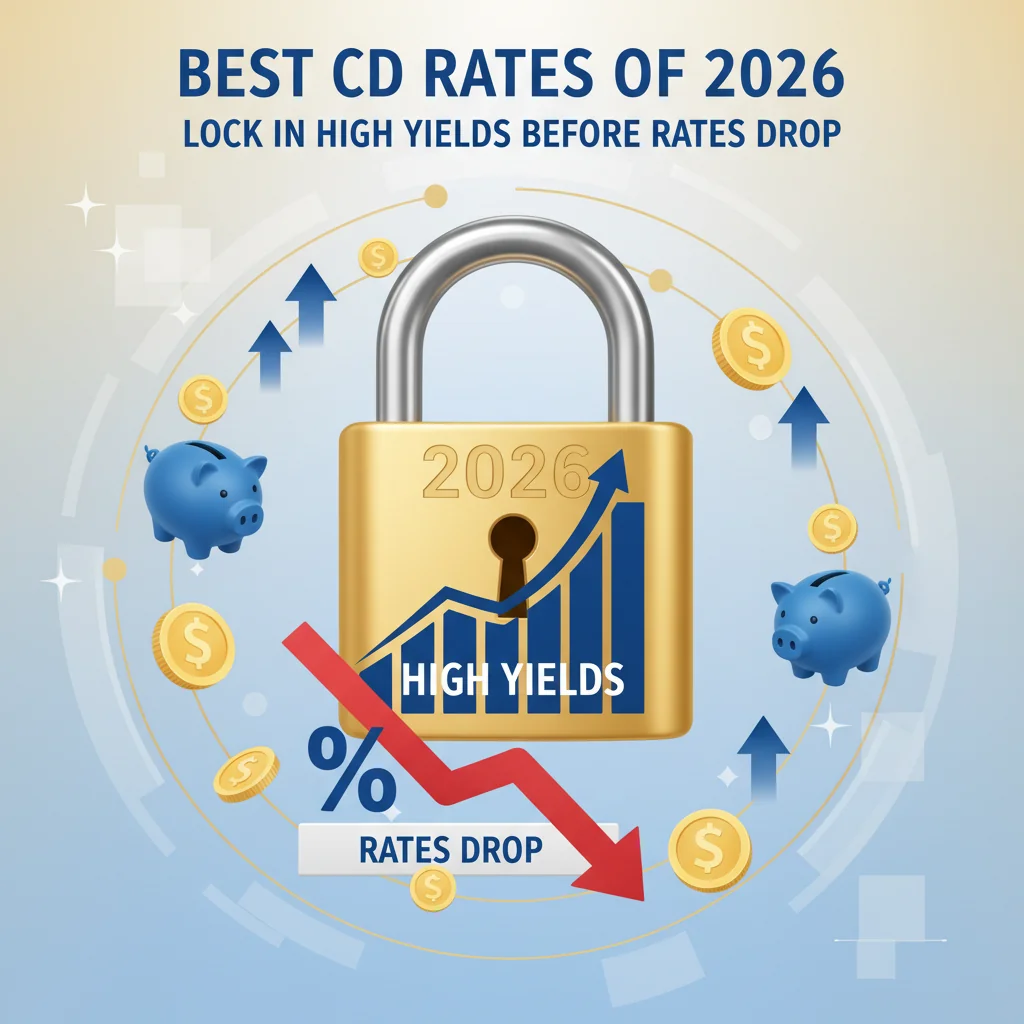
In an economic landscape often characterized by volatility, the allure of stable, predictable returns becomes increasingly attractive. For many savers, Certificates of Deposit (CDs) represent a time-tested strategy to grow their principal without exposure to stock market fluctuations. As we look towards 2026, the current high-interest rate environment presents a unique window of opportunity. While the Federal Reserve has signaled potential rate cuts in the future, savvy investors are already considering how to lock in today's elevated CD rates for years to come. This article will explore the dynamics of the CD market, highlight strategies for securing the best rates, and provide a comprehensive guide to navigating your options before potential rate declines diminish these attractive yields.
CD Rates Definition: CD rates are the annual percentage yield (APY) offered on Certificates of Deposit, which are savings accounts that hold a fixed amount of money for a fixed period of time, earning a fixed interest rate.
Understanding Certificates of Deposit (CDs)
Certificates of Deposit (CDs) are a foundational savings product offered by banks and credit unions. They provide a predictable return on your investment, making them a cornerstone of many conservative financial plans. Unlike a standard savings account, a CD requires you to commit your money for a specific term, ranging from a few months to several years. In exchange for this commitment, the financial institution typically offers a higher interest rate than a traditional savings account.
The primary appeal of CDs lies in their security and predictability. Your principal investment is protected by the Federal Deposit Insurance Corporation (FDIC) for banks or the National Credit Union Administration (NCUA) for credit unions, up to the standard maximum deposit insurance amount of $250,000 per depositor, per insured bank, for each account ownership category. This makes them an extremely low-risk investment, ideal for funds you cannot afford to lose, such as emergency savings or money earmarked for a future large purchase.
How CDs Work: The Basics
When you open a CD, you agree to deposit a specific amount of money for a predetermined period, known as the CD term. Common terms include 3 months, 6 months, 1 year, 2 years, 3 years, and 5 years, though some institutions offer even longer terms like 10 years or shorter ones like 7 days. During this term, your money earns interest at a fixed annual percentage yield (APY). This APY is guaranteed for the entire term, regardless of how market interest rates fluctuate.
Once the CD term ends, it reaches maturity. At this point, you typically have a grace period (often 7 to 10 days) to decide what to do with your funds. You can withdraw the principal and accumulated interest, or you can "roll over" the funds into a new CD. If you don't provide instructions during the grace period, the bank will often automatically renew your CD for a similar term at the current interest rate. It's crucial to be aware of this automatic renewal, as the new rate might be lower than what you could find elsewhere.
The fixed nature of CDs means that while your returns are stable, you generally cannot access your money before the maturity date without incurring a penalty. This early withdrawal penalty typically involves forfeiting a portion of the interest earned, or in some cases, even a portion of the principal if the CD is relatively new and little interest has accrued. Understanding these penalties is vital before committing to a CD.
Types of CDs Available
While the traditional fixed-rate CD is the most common, the market offers several variations designed to meet different financial needs and risk tolerances. Exploring these options can help you find the best fit for your savings goals.
Standard Fixed-Rate CDs: These are the most straightforward. You deposit a lump sum, lock in a specific APY for a set term, and receive your principal plus interest at maturity. They are ideal for those who prioritize predictability and security.
Jumbo CDs: These are standard CDs but require a much larger minimum deposit, typically $100,000 or more. In exchange for the larger deposit, jumbo CDs often offer slightly higher interest rates than regular CDs, though this difference has become less pronounced in recent years.
Callable CDs: These CDs give the issuing bank the option to "call" or redeem the CD before its maturity date. If interest rates fall significantly, the bank might call the CD to avoid paying a higher rate. While callable CDs often offer a higher APY than non-callable CDs, they introduce an element of reinvestment risk, as you might have to reinvest your funds at a lower rate if the CD is called.
Brokered CDs: These CDs are purchased through a brokerage firm rather than directly from a bank. Brokers can offer CDs from a wide range of banks, potentially providing access to higher rates and more diverse terms. They can also be bought and sold on the secondary market before maturity, offering liquidity, though their market value can fluctuate. Brokered CDs are still FDIC-insured up to the standard limits.
Liquid (No-Penalty) CDs: As the name suggests, these CDs allow you to withdraw your money before the maturity date without incurring an early withdrawal penalty, usually after an initial waiting period (e.g., 7 days after funding). While they offer flexibility, their interest rates are typically lower than those of traditional fixed-rate CDs with similar terms.
Bump-Up CDs: These CDs allow you to request a rate increase if market interest rates rise during your CD term. You are usually allowed one or two "bumps" during the term. The trade-off is that their initial APY is often lower than a comparable fixed-rate CD.
Step-Up CDs: Similar to bump-up CDs, step-up CDs have a predetermined schedule of rate increases at specific intervals during the CD term. For example, a 3-year step-up CD might offer 1.00% in year one, 1.50% in year two, and 2.00% in year three. Their initial rates are also typically lower than standard CDs.
The Current Interest Rate Environment and 2026 Outlook
Understanding the current economic climate is crucial for making informed decisions about CDs. The Federal Reserve's monetary policy plays a significant role in shaping interest rates across the financial system, including those offered on Certificates of Deposit. As of late 2024, the Fed has maintained a relatively high federal funds rate to combat inflation, which has, in turn, pushed CD rates to levels not seen in over a decade.
However, economic forecasts suggest a potential shift. The consensus among many economists and the Federal Reserve itself indicates that inflation is cooling, and the Fed may begin to cut interest rates in 2025 or 2026. This anticipated shift creates a strategic window for savers. Locking in today's elevated CD rates could provide a guaranteed high return for several years, safeguarding your savings against future rate declines.
Factors Influencing CD Rates
Several key factors determine the interest rates banks offer on CDs. Understanding these can help you anticipate market movements and identify opportunities.
Federal Funds Rate: This is the primary driver. The Federal Reserve sets a target range for the federal funds rate, which is the interest rate banks charge each other for overnight borrowing. Changes in this rate ripple throughout the economy, directly impacting the rates banks offer on savings products like CDs. When the Fed raises rates, CD rates tend to rise; when the Fed cuts rates, CD rates typically fall.
Inflation: Banks consider inflation when setting CD rates. If inflation is high, savers demand higher rates to ensure their returns outpace the erosion of purchasing power. The Federal Reserve's efforts to control inflation directly influence the rate environment.
Economic Growth: A strong economy generally leads to higher demand for loans, prompting banks to offer higher deposit rates to attract funds. Conversely, during economic downturns, demand for loans may decrease, leading to lower CD rates.
Bank Competition: The competitive landscape among banks and credit unions also plays a role. Institutions vying for deposits may offer more attractive CD rates to draw in new customers or retain existing ones. Online banks, with lower overhead costs, often lead the pack in offering top rates.
CD Term Length: Generally, longer-term CDs (e.g., 3-year, 5-year) offer higher interest rates than shorter-term CDs (e.g., 3-month, 6-month). This is because you are committing your money for a longer period, and the bank is willing to pay more for that extended certainty of funds. However, in an inverted yield curve environment (where short-term rates are higher than long-term rates), this dynamic can temporarily reverse.
Why 2026 is a Strategic Year for CDs
Looking ahead to 2026, the prevailing sentiment among financial analysts is that the peak of the current interest rate cycle may have passed or is nearing its end. According to the Federal Reserve's Summary of Economic Projections from September 2024, the median projection for the federal funds rate shows a decline in subsequent years, indicating potential rate cuts. This means that the high CD rates available today may not last indefinitely.
For savers, this presents a critical opportunity. By locking into a multi-year CD now, you can secure an attractive APY for the next two, three, or even five years. This strategy acts as a hedge against future rate cuts. If the Fed does indeed lower rates in 2025 or 2026, those who have secured long-term CDs will continue to earn their higher, locked-in rate, while new CD offerings will likely reflect the lower market rates. This approach allows you to maximize your earnings during a period when others might see their savings yields diminish.
Consider a scenario where the average 5-year CD rate is 5.00% APY today. If the Fed cuts rates by 1.00% over the next two years, new 3-year CDs might only offer 3.50% APY. By locking in that 5.00% for five years now, you're guaranteeing a significantly higher return for the majority of that period. This foresight can translate into thousands of dollars in additional interest earned, depending on the principal invested.
Finding the Best CD Rates for 2026
Identifying the top CD rates requires diligent research and a clear understanding of your financial objectives. The "best" CD rate isn't just about the highest APY; it's also about finding the right term, institution, and features that align with your savings strategy.
Where to Look for Top CD Rates
The landscape of CD providers has expanded beyond traditional brick-and-mortar banks. To find the most competitive CD rates, you'll need to cast a wider net.
Online Banks: These institutions consistently offer some of the highest CD rates. With lower overhead costs compared to traditional banks with physical branches, online banks can pass those savings on to their customers in the form of better APYs. Examples include Ally Bank, Discover Bank, Marcus by Goldman Sachs, and Synchrony Bank. They are FDIC-insured, just like traditional banks.
Credit Unions: Credit unions are member-owned financial cooperatives. They often offer competitive CD rates (which they call "share certificates") and are NCUA-insured. Local credit unions can sometimes have surprisingly high rates, especially for members. It's worth checking both national and local credit union options.
Brokerage Firms: As mentioned earlier, brokerage firms offer brokered CDs. These can provide access to a vast array of CDs from various banks, often at competitive rates. The ability to buy and sell them on the secondary market also offers a degree of liquidity not found in traditional CDs. However, their value can fluctuate with market rates if sold before maturity.
Local Banks and Regional Banks: While often not matching the top rates of online banks, some local and regional banks occasionally offer promotional CD rates to attract new deposits. It's always a good idea to check with your existing bank or credit union, especially if you value the convenience of having all your accounts in one place.
Strategies for Maximizing Your CD Returns
Simply finding a high rate isn't the only step. Strategic planning can help you optimize your returns and manage interest rate risk.
CD Laddering: This is a popular strategy to balance access to funds with earning higher interest rates. Instead of putting all your money into one CD, you divide your principal into several CDs with staggered maturity dates. For example, if you have $10,000, you might put $2,000 into a 1-year CD, $2,000 into a 2-year CD, $2,000 into a 3-year CD, $2,000 into a 4-year CD, and $2,000 into a 5-year CD.
- Benefits of Laddering:
- Liquidity: A portion of your money matures regularly, giving you access to funds without penalties.
- Rate Averaging: As each CD matures, you can reinvest it into a new, longer-term CD at the prevailing market rate. This allows you to take advantage of rising rates without having all your money locked into a low-rate CD.
- Flexibility: You can adjust your strategy as your financial needs or market conditions change.
Barbell Strategy: This involves investing in both very short-term and very long-term CDs, avoiding mid-range terms. For example, you might put half your money into a 3-month CD and the other half into a 5-year CD.
- Benefits of Barbell:
- Liquidity: The short-term CDs provide frequent access to funds and allow you to capitalize quickly if short-term rates rise.
- High Yield: The long-term CDs lock in higher rates for a significant period.
- Simplicity: Fewer CD terms to manage compared to a full ladder.
Bullet Strategy: This strategy involves investing in multiple CDs that all mature around the same time, usually when you anticipate needing a large sum of money for a specific goal (e.g., a down payment on a house, college tuition).
- Benefits of Bullet:
- Targeted Savings: Aligns perfectly with a specific future financial need.
- Predictable Payout: You know exactly when your funds will become available.
Comparing CD Offers: Key Considerations
When evaluating different CD offers, look beyond just the APY. Several other factors can influence your overall return and experience.
Annual Percentage Yield (APY): This is the most important number. APY accounts for the effect of compounding interest, giving you a true picture of your annual return. Always compare APYs, not just stated interest rates. A CD that compounds daily will have a slightly higher APY than one that compounds quarterly, even if their nominal interest rates are the same.
Minimum Deposit Requirements: Some CDs require a substantial minimum deposit (e.g., $1,000, $2,500, or even $10,000+ for jumbo CDs). Ensure the requirement fits your budget.
CD Term Length: Choose a term that aligns with your financial goals and your outlook on future interest rates. If you expect rates to fall, a longer term is generally better. If you anticipate needing funds sooner, a shorter term or a no-penalty CD might be more appropriate.
Early Withdrawal Penalties: Understand the specific penalty structure for each CD. This is typically expressed as a forfeiture of a certain number of months' interest (e.g., 3 months of simple interest for a 1-year CD, 6 months for a 5-year CD). Knowing this helps you assess the risk of needing to access funds early.
FDIC/NCUA Insurance: Always confirm that the institution is FDIC-insured (for banks) or NCUA-insured (for credit unions). This protects your deposits up to $250,000 per depositor, per institution, per ownership category. This is a non-negotiable safety feature.
Automatic Renewal Policies: Be aware of the bank's policy regarding maturity. Will it automatically renew your CD? For what term? At what rate? Mark your calendar for maturity dates so you can actively manage your funds during the grace period.
Customer Service and Online Access: While not directly impacting your APY, good customer service and user-friendly online banking can significantly improve your experience, especially with online-only institutions.
| Feature | Online Banks | Traditional Banks | Credit Unions | Brokerage Firms (Brokered CDs) |
|---|---|---|---|---|
| Typical APY | Generally Highest | Often Lower | Competitive, especially for members | Highly Competitive (from various banks) |
| Minimum Deposit | Varies, often low ($0-$1,000) | Varies, can be higher for best rates | Varies, often low ($0-$1,000) | Varies by issuing bank, can be higher |
| Insurance | FDIC-insured | FDIC-insured | NCUA-insured | FDIC-insured (by issuing bank) |
| Accessibility | Online/Mobile only | Branch, Online, Mobile | Branch, Online, Mobile | Online/Brokerage platform |
| Customer Service | Online, Phone | Branch, Online, Phone | Branch, Online, Phone | Brokerage's support, then issuing bank |
| Liquidity | Standard early withdrawal penalty (unless no-penalty CD) | Standard early withdrawal penalty (unless no-penalty CD) | Standard early withdrawal penalty (unless no-penalty CD) | Can be sold on secondary market (value fluctuates) |
| Unique Feature | Lower overhead, often best rates | In-person service, established relationships | Member-owned, often community-focused | Wide selection, secondary market liquidity |
The Role of CDs in a Diversified Portfolio
While CDs are often seen as a standalone savings vehicle, they also play a crucial role within a broader, diversified investment portfolio. Their stability and predictability can act as a counterbalance to more volatile assets, helping to mitigate overall portfolio risk.
Balancing Risk and Return
Every investment portfolio aims to achieve a balance between risk and return. Stocks offer the potential for high returns but come with significant volatility. Bonds offer less volatility than stocks but typically lower returns. CDs sit at the very low end of the risk spectrum, offering guaranteed returns with virtually no principal risk (up to insured limits).
For investors with a higher risk tolerance, CDs can serve as a safe haven for a portion of their portfolio. This could include funds earmarked for short-term goals (e.g., a down payment in 2-3 years) or a strategic allocation to reduce overall portfolio volatility. According to a 2023 survey by the Investment Company Institute, cash and cash equivalents, which include CDs, represent a significant portion of household financial assets, underscoring their importance in financial planning.
For more conservative investors, or those nearing retirement, CDs can form a larger component of their portfolio, providing a reliable income stream and capital preservation. The guaranteed income from CDs can be particularly appealing to retirees who need predictable cash flow to cover living expenses.
CDs for Short-Term and Long-Term Goals
CDs are versatile and can be tailored to various financial objectives.
Short-Term Goals: For goals within the next 1 to 5 years, such as saving for a new car, a vacation, or a home renovation, CDs offer an excellent solution. You can select a CD term that aligns precisely with your timeline, ensuring your money is available when you need it without market risk. For example, if you plan to buy a car in 2 years, a 2-year CD allows you to earn a higher rate than a standard savings account while keeping your funds safe and accessible at the right time.
Long-Term Goals: While often associated with shorter terms, longer-term CDs (5 years or more) can also contribute to long-term goals. They are particularly effective when rates are high and expected to fall, allowing you to lock in attractive yields for an extended period. This can be beneficial for a portion of retirement savings, especially if you're looking to create a "bond ladder" with highly secure instruments. For example, a 5-year CD could mature just as you enter retirement, providing a lump sum or a series of payouts.
It's important to note that for very long-term goals (e.g., 10+ years for retirement), growth-oriented investments like stocks or diversified mutual funds are generally recommended due to their higher potential for capital appreciation over time. However, even in these scenarios, CDs can provide a conservative anchor, especially as you approach the goal.
Incorporating CDs into Retirement Planning
CDs can be a valuable tool in retirement planning, particularly for those looking to generate predictable income or preserve capital.
Income Generation: For retirees, a CD ladder can provide a steady stream of income. As each CD matures, the principal and interest can be withdrawn to cover living expenses, or reinvested if not immediately needed. This creates a predictable income flow that is not subject to market fluctuations, offering peace of mind.
Capital Preservation: As individuals approach and enter retirement, preserving capital becomes paramount. CDs offer a safe haven for funds that cannot be exposed to market risk. This could include a portion of an emergency fund, money set aside for future healthcare costs, or a buffer against market downturns.
Tax-Advantaged Retirement Accounts: You can hold CDs within tax-advantaged retirement accounts like Individual Retirement Accounts (IRAs). A CD IRA allows your interest earnings to grow tax-deferred (in a Traditional IRA) or tax-free (in a Roth IRA), maximizing your overall return. This is an excellent way to combine the security of CDs with the tax benefits of retirement accounts. For example, if you're looking to diversify your retirement savings beyond stocks and bonds, a 5-year CD within a Roth IRA can provide a guaranteed, tax-free return that contributes to your long-term wealth.
Potential Downsides and Risks of CDs
While CDs are known for their safety, it's important to be aware of their limitations and potential drawbacks. Understanding these can help you make a fully informed decision.
Inflation Risk
One of the primary risks associated with CDs is inflation risk. This is the risk that the purchasing power of your returns will be eroded by inflation. If the annual inflation rate is higher than your CD's APY, your money will effectively lose value over time, even though you are earning interest. For example, if your CD pays 2.00% APY but inflation is 3.00%, your real return is negative 1.00%.
This risk is particularly relevant during periods of high inflation. While current CD rates are relatively high, it's crucial to compare them against the prevailing inflation rate. The Federal Reserve aims for a 2% inflation target, but actual inflation can fluctuate. For instance, according to the Bureau of Labor Statistics, the Consumer Price Index (CPI) rose by 3.1% year-over-year in November 2023, indicating that even strong CD rates need to be carefully considered against the cost of living.
Interest Rate Risk
Interest rate risk in the context of CDs refers to the possibility that interest rates will rise after you've locked your money into a CD. If you invest in a 3-year CD at 4.00% APY and then market rates for comparable CDs jump to 5.00% a year later, you're stuck earning the lower rate for the remaining two years. This is the flip side of the current opportunity to lock in high rates before they fall.
This risk is mitigated by strategies like CD laddering, which allows a portion of your funds to mature periodically, giving you the chance to reinvest at potentially higher rates. However, if you've committed a large sum to a single, long-term CD and rates skyrocket, you could miss out on significant additional earnings.
Liquidity Risk and Early Withdrawal Penalties
CDs are inherently illiquid investments. Your money is locked up for the agreed-upon term. If you need to access your funds before the maturity date, you will almost certainly face an early withdrawal penalty. These penalties are typically calculated as a forfeiture of a certain number of months' interest.
For example, a common penalty for a 1-year CD might be 3 months of simple interest, while a 5-year CD might incur a penalty of 6 months' interest. In some cases, if you withdraw early and haven't earned enough interest to cover the penalty, the bank may even dip into your principal. This makes CDs unsuitable for emergency funds or money you might need unexpectedly. Always ensure you have a separate, easily accessible emergency fund before investing in CDs.
Opportunity Cost
Investing in a CD means foregoing other investment opportunities. While CDs offer safety and predictability, they typically do not provide the same growth potential as equities or other higher-risk assets over the long term. The opportunity cost is the potential return you miss out on by choosing a CD instead of another investment.
For example, if the stock market experiences a bull run while your money is locked in a CD, you won't participate in those gains. This is a trade-off for the security and guaranteed return that CDs offer. It's why financial advisors often recommend a diversified approach, where CDs are just one component of a broader portfolio.
How to Open a CD Account
Opening a Certificate of Deposit is a straightforward process, whether you choose an online bank, a traditional branch, or a credit union. The steps are generally similar, but there are a few key considerations to keep in mind.
Step-by-Step Guide
Determine Your Goals and Timeline: Before you even look at rates, decide what you're saving for and when you'll need the money. This will help you choose the appropriate CD term. Do you need the money in 1 year for a down payment, or are you looking to lock in rates for 5 years for a portion of your retirement savings?
Research and Compare Rates: Use online comparison tools and visit the websites of various banks and credit unions. Pay close attention to the Annual Percentage Yield (APY), minimum deposit requirements, and early withdrawal penalties. Remember to check both online-only banks and local institutions.
Choose Your Institution: Select a bank or credit union that offers competitive rates and meets your other criteria (e.g., customer service, online access, specific CD types like no-penalty CDs). Ensure the institution is FDIC or NCUA insured.
Gather Required Information: You'll typically need:
- Government-issued ID (driver's license, passport)
- Social Security number
- Current address and contact information
- Bank account and routing number for funding the CD (if opening online)
- Fund Your CD: You can usually fund your CD via:
- Electronic transfer (ACH): From an existing checking or savings account. This is common for online banks.
- Wire transfer: Faster but may incur fees.
- Check: Mail a check or deposit it at a branch.
- Internal transfer: If you already have an account with the same institution.
Review and Confirm: Carefully read all the terms and conditions before finalizing your CD. Double-check the APY, term length, maturity date, and early withdrawal penalties. Confirm that your deposit is correctly reflected.
Monitor Maturity Dates: Set a reminder for your CD's maturity date. This allows you to plan your next steps during the grace period, whether that's withdrawing funds, rolling over to a new CD, or exploring other investment options.
Important Considerations When Opening
Beneficiary Designations: When opening a CD, especially for long-term savings or retirement planning, consider adding beneficiaries. This ensures that the funds pass directly to your chosen heirs upon your death, bypassing probate. This is particularly important for CDs held outside of a retirement account.
Tax Implications: Interest earned on CDs is generally taxable at the federal and state levels (unless held in a tax-advantaged account like an IRA). The bank will issue a Form 1099-INT if you earn more than $10 in interest in a year. Be aware that even if interest is compounded and not withdrawn, it may still be taxable in the year it's credited to your account.
Joint Accounts: If you're opening a CD with another person, consider whether a joint account is appropriate. Joint accounts offer shared ownership and access but also shared liability. For married couples, joint accounts can double the FDIC/NCUA insurance coverage to $500,000 for certain ownership categories.
Minimum Age Requirements: Most financial institutions require you to be at least 18 years old to open a CD account. For minors, a custodial account (e.g., UGMA/UTMA) can be opened by an adult.
By following these steps and considering these factors, you can confidently open a CD account that aligns with your financial strategy and helps you lock in attractive CD rates for the future.
Frequently Asked Questions
What is a good CD rate for 2026?
A good CD rate for 2026 will depend on the prevailing interest rate environment at that time. However, if you are locking in rates now for a CD that matures in 2026 or later, anything above 4.50% to 5.00% APY for terms of 2-5 years would generally be considered excellent, especially if the Federal Reserve begins to cut rates as anticipated.
Are CD rates expected to go down in 2026?
Many financial experts and the Federal Reserve's own projections suggest that interest rates are likely to decline in 2025 and 2026 as inflation cools. This means that current high CD rates may not be available in the future, making it a strategic time to lock in longer-term CDs.
Are CDs a good investment for retirement?
Yes, CDs can be a good investment for certain aspects of retirement planning, particularly for capital preservation and generating predictable income. They offer security and guaranteed returns, making them suitable for funds you cannot afford to lose or for creating a stable income stream, especially when held within a tax-advantaged IRA.
How does CD laddering work?
CD laddering involves dividing your total investment into several CDs with staggered maturity dates (e.g., 1-year, 2-year, 3-year, 4-year, 5-year CDs). As each short-term CD matures, you reinvest the funds into a new, longer-term CD, allowing you to consistently take advantage of the highest available rates while maintaining regular access to a portion of your money.
What is the difference between APY and interest rate on a CD?
The Annual Percentage Yield (APY) is the effective annual rate of return, taking into account the effect of compounding interest. The nominal interest rate is the stated rate without considering compounding. APY is always the better metric to compare, as it gives you the true annual return on your investment.
Is my money safe in a CD?
Yes, money deposited in Certificates of Deposit is very safe. CDs offered by FDIC-insured banks are protected by the Federal Deposit Insurance Corporation (FDIC) up to $250,000 per depositor, per insured bank, for each account ownership category. Similarly, CDs from NCUA-insured credit unions are protected by the National Credit Union Administration (NCUA).
Can I lose money in a CD?
It is highly unlikely to lose your principal in a CD, provided it's held at an FDIC or NCUA-insured institution and your deposit is within the insurance limits. The primary way you might "lose" money is by incurring an early withdrawal penalty that exceeds the interest you've earned, potentially dipping into your principal. Also, inflation can erode the purchasing power of your returns.
Key Takeaways
- Lock in High Rates Now: The current high-interest rate environment offers a strategic opportunity to secure attractive CD rates before potential Federal Reserve rate cuts in 2025-2026.
- CDs Offer Security and Predictability: Your principal is FDIC/NCUA insured up to $250,000, making CDs a low-risk option for capital preservation and guaranteed returns.
- Explore Diverse CD Types: Beyond standard CDs, consider liquid CDs for flexibility, brokered CDs for wider selection, or bump-up CDs if you anticipate rising rates.
- Implement CD Strategies: Strategies like CD laddering and barbell investing can help you balance liquidity, maximize returns, and manage interest rate risk.
- Compare APY and Terms: Always compare the Annual Percentage Yield (APY) across different institutions and choose a term that aligns with your financial goals and timeline.
- Understand Early Withdrawal Penalties: Be aware of the penalties for accessing funds before maturity, as CDs are generally illiquid.
- CDs Complement a Diversified Portfolio: They provide a stable component, balancing risk and return, and are valuable for both short-term savings and retirement planning, especially within a CD IRA.
Conclusion
As we navigate the evolving economic landscape, Certificates of Deposit stand out as a reliable and strategic tool for savers. The current high-interest rate environment, coupled with the anticipation of future rate cuts in 2025 and 2026, presents a unique window to lock in attractive CD rates for the long term. By understanding the various types of CDs, implementing smart strategies like laddering, and diligently comparing offers, you can secure predictable returns and protect your savings from market volatility.
Whether you're saving for a short-term goal, building an emergency fund, or seeking to diversify your retirement portfolio, CDs offer a powerful combination of security and guaranteed growth. Don't let the opportunity to maximize your earnings pass you by. Take action now to research the best CD rates available and position your finances for a more secure and prosperous future.
Disclaimer: This article is for informational and educational purposes only and does not constitute financial, investment, or tax advice. Always consult a qualified financial advisor before making investment decisions.
The information provided in this article is for educational purposes only and does not constitute financial, investment, or legal advice. Always consult with a qualified financial advisor, tax professional, or legal counsel for personalized guidance tailored to your specific situation before making any financial decisions.
Comments
No comments yet. Be the first to comment!
More from Banking



Explore Related Guides
Expert reviews of Gold IRA companies, rollover guides, fees, and IRS rules.
Comprehensive investment strategies covering stocks, bonds, ETFs, crypto, and real estate.
Master budgeting, debt management, taxes, and financial planning for your situation.