
Opportunity Cost: Complete Personal Finance Guide
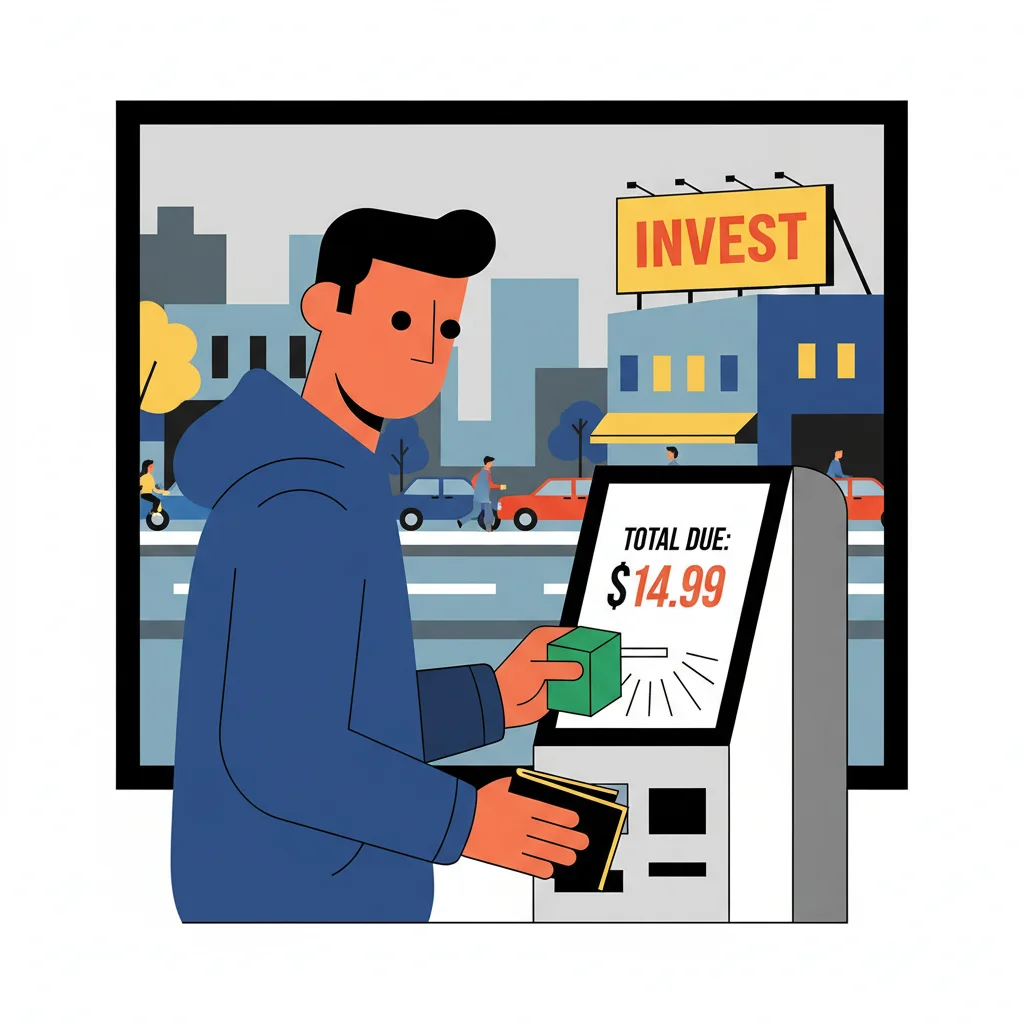
Every financial decision you make, from buying a coffee to investing in a stock, comes with a hidden cost: the value of the next best alternative you gave up. This concept, known as opportunity cost, is fundamental to personal finance, yet it's often overlooked. Understanding opportunity cost empowers you to make smarter choices, optimize your budget, and build wealth more effectively. Ignoring it can lead to missed financial goals and regrets.
This comprehensive guide will demystify opportunity cost, explain its profound impact on your personal finances, and provide practical strategies to integrate it into your decision-making process. By the end of this article, you'll be equipped to identify, evaluate, and minimize opportunity costs, transforming the way you approach your money.
Opportunity Cost Definition: Opportunity cost is the value of the next best alternative that you forgo when making a choice. In personal finance, it represents the potential benefits an individual misses out on when selecting one alternative over another.
Understanding the Core Concept of Opportunity Cost
At its heart, opportunity cost is about trade-offs. Because resources like money and time are finite, every decision to pursue one option inherently means giving up another. This isn't just a theoretical economic concept; it's a daily reality that shapes your financial future. Recognizing these trade-offs is the first step toward making more informed and strategic financial decisions.
What is Opportunity Cost in Personal Finance?
In personal finance, opportunity cost manifests in countless ways. It's not just the explicit cost of an item or service, but the implicit cost of what you could have done with that money or time instead. For example, the opportunity cost of buying a new car might be the down payment on a house you could have afforded, or the years of investment growth you missed out on by not putting that money into a retirement account.
Consider a common scenario: a daily $5 latte. While $5 seems small, the opportunity cost over a year is substantial. If you invested that $5 daily (approximately $1,825 annually) into an account earning an average 7% return, after 30 years, you could have accumulated over $180,000. This stark contrast highlights how small, seemingly insignificant choices accumulate into significant opportunity costs over time. Understanding this implicit cost is crucial for long-term financial planning.
Why Opportunity Cost Matters for Your Money
Opportunity cost is a critical component of sound financial decision-making because it forces you to look beyond the immediate price tag. It encourages a holistic view of your financial choices, prompting you to consider the long-term implications and potential missed gains. Without considering opportunity cost, you might prioritize short-term gratification over long-term financial security, leading to suboptimal outcomes.
For instance, choosing to carry a high-interest credit card balance instead of paying it off means you're not just paying interest; you're also losing the opportunity to invest that money or use it for other financial goals. According to a 2025 report by the Consumer Financial Protection Bureau (CFPB), the average credit card interest rate was around 21%. If you carry a $5,000 balance at 21% interest, you're paying $1,050 in interest annually. The opportunity cost is the potential growth of that $5,000 if it were invested, plus the additional $1,050 you could have saved or invested instead of paying interest.
Identifying and Calculating Opportunity Costs
While the concept of opportunity cost might seem abstract, it can be systematically identified and, in many cases, quantified. This process involves comparing alternatives and understanding the value of what you're giving up. By actively seeking out these hidden costs, you gain greater control over your financial narrative.
Steps to Identify Opportunity Costs
Identifying opportunity costs requires a conscious effort to pause and evaluate before making a financial decision. It's about asking "What else could I do with this?" Here are key steps:
Define the Decision: Clearly state the choice you are about to make. (e.g., "I am considering buying a new car.")
List Alternatives: Brainstorm at least two or three other viable options for your money or time. (e.g., "Keep my old car and invest the money," "Buy a reliable used car," "Use public transport more often.")
Evaluate Benefits of Each Alternative: For each alternative, consider the financial and non-financial benefits it would provide. (e.g., "Investing the money would grow my retirement fund," "A used car would be cheaper, leaving more for savings," "Public transport saves on gas and insurance.")
Determine the "Next Best" Alternative: Identify the single alternative that you would have chosen if your primary choice wasn't available. This is your opportunity cost. (e.g., "The next best alternative to buying a new car is keeping my old car and investing the new car's cost.")
Quantify the Value: Assign a monetary value to the benefits of that next best alternative, if possible. This is often where the "cost" becomes clear. Quantifying helps make the abstract concrete.
How to Calculate Opportunity Cost (Examples)
Calculating opportunity cost often involves comparing the expected returns or benefits of different options. While not always perfectly precise, estimating helps in decision-making.
Example 1: Education vs. Immediate Work
- Decision: Go to college for four years.
- Next Best Alternative: Start working immediately after high school.
- Calculation:
- Cost of College: Tuition, fees, books, living expenses (e.g., $30,000/year x 4 years = $120,000).
- Lost Income (Opportunity Cost): Potential earnings during those four years (e.g., $40,000/year x 4 years = $160,000).
- Total Immediate Opportunity Cost: $120,000 (direct costs) + $160,000 (lost income) = $280,000.
- Note: This doesn't account for the potential for higher lifetime earnings with a degree, which would be a long-term benefit offsetting this initial opportunity cost.
Example 2: Major Purchase vs. Investment
- Decision: Buy a new luxury watch for $10,000.
- Next Best Alternative: Invest $10,000 in a diversified stock portfolio.
- Calculation:
- Investment Growth: Assuming an average annual return of 7% over 10 years, $10,000 could grow to approximately $19,671.
- Opportunity Cost: The potential gain of $9,671 (or $19,671 total value) that you forgo by buying the watch instead of investing.
These examples illustrate that opportunity cost is not just about the money spent, but the money not earned or not grown. It's about the missed financial potential.
The Role of Time in Opportunity Cost
Time is one of the most valuable, yet often undervalued, resources in personal finance. The longer you delay a financially beneficial action, the greater its opportunity cost. This is particularly true for investments, thanks to the power of compound interest. Starting to save for retirement early, for example, dramatically reduces the amount you need to contribute later to reach the same goal.
Consider two individuals, both aiming to have $1 million by retirement at age 65, assuming a 7% annual return:
| Scenario | Start Age | Monthly Contribution | Total Contributed | Final Value (Age 65) |
|---|---|---|---|---|
| Early Saver | 25 | $350 | $168,000 | ~$1,000,000 |
| Late Saver | 35 | $750 | $270,000 | ~$1,000,000 |
| Later Saver | 45 | $1,800 | $432,000 | ~$1,000,000 |
Calculations are approximate and for illustrative purposes.
The opportunity cost of delaying saving by 10 years (from 25 to 35) is an additional $402,000 in contributions needed to reach the same goal. This demonstrates how delaying financial actions incurs a significant opportunity cost in terms of lost compounding growth and increased future effort.
Opportunity Cost in Everyday Financial Decisions
Opportunity cost isn't just for big life decisions; it's embedded in almost every daily financial choice. From your morning coffee to your housing situation, understanding these trade-offs can significantly impact your financial well-being. By applying the concept consistently, you can align your spending with your broader financial goals.
Spending vs. Saving vs. Investing
Every dollar you earn presents a choice: spend it, save it, or invest it. Each option has its own set of opportunity costs.
- Spending: When you spend money on non-essential items, the opportunity cost is the potential savings or investment growth you forgo. For example, buying a new gadget for $500 means you can't put that $500 into your emergency fund or invest it for long-term growth.
- Saving: While saving is generally good, there's an opportunity cost if your savings aren't earning a competitive return. If your money is sitting in a low-yield savings account earning 0.5% when a high-yield account offers 4.5%, the opportunity cost is the 4% difference in interest you're missing out on. As of April 2026, many high-yield savings accounts offer rates above 4.0% APY.
- Investing: Even within investing, there are opportunity costs. Choosing to invest in a low-growth, low-risk bond fund might mean you miss out on the higher returns of a diversified stock portfolio, albeit with higher risk. Conversely, investing solely in high-risk ventures means you forgo the stability and capital preservation of more conservative options.
The key is to find a balance that aligns with your financial goals and risk tolerance. Balancing these three options is a continuous process of evaluating opportunity costs.
Major Purchases: Home, Car, Education
Large purchases carry the most significant opportunity costs due to their substantial price tags and long-term implications.
- Housing: Deciding whether to rent or buy involves a complex opportunity cost analysis.
- Renting: The opportunity cost might be the equity you could build as a homeowner and the potential appreciation of property value. However, it also offers flexibility and avoids costs like property taxes, maintenance, and interest payments.
- Buying: The opportunity cost could be the liquidity of your capital tied up in a down payment, the investment returns you could have earned on that money, and the freedom to move easily. A 2025 study by the National Association of Realtors indicated that the median home price in the U.S. had increased by an average of 5-7% annually over the past decade. This appreciation is a significant benefit of homeownership, but it comes with the opportunity cost of other investment avenues.
- Cars: The choice between a new car, a used car, or no car at all has massive opportunity costs.
- A new car depreciates rapidly (often 20-30% in the first year). The opportunity cost is the substantial amount of money lost to depreciation and higher insurance, which could have been invested.
- Choosing a reliable used car significantly reduces this depreciation cost, freeing up capital for other uses.
- Opting for public transport, cycling, or ride-sharing eliminates car payments, insurance, fuel, and maintenance costs, presenting a huge opportunity to save and invest that money.
- Education: As discussed earlier, the opportunity cost of higher education is the direct cost of tuition and living expenses, plus the income forgone during studies. However, the long-term benefit of increased earning potential often outweighs this initial cost. According to the Bureau of Labor Statistics (BLS) 2025 data, individuals with a bachelor's degree earn significantly more over their lifetime than those with only a high school diploma. Evaluating education's long-term ROI is essential.
Time Management and Career Choices
Opportunity cost isn't limited to money; it also applies to how you allocate your time.
- Career Path: Choosing one career path means forgoing the potential income, experience, and personal satisfaction of another. For example, pursuing a passion project that pays less initially might have an opportunity cost of higher earnings in a more traditional, lucrative field. However, the non-monetary benefits (job satisfaction, work-life balance) might outweigh the financial opportunity cost.
- Work-Life Balance: Deciding to work extra hours for more income has an opportunity cost of less time for family, hobbies, or self-care. Conversely, prioritizing leisure time might mean a lower income and slower financial progress. The "cost" here is balancing financial gain with personal well-being. A 2025 survey by Gallup found that employees with better work-life balance reported higher job satisfaction and productivity, suggesting that the opportunity cost of not prioritizing balance can be significant for overall well-being.
Minimizing Opportunity Costs and Maximizing Financial Outcomes
Understanding opportunity cost is powerful, but the real benefit comes from actively using this knowledge to make better financial decisions. By adopting certain strategies, you can minimize the negative impact of opportunity costs and steer your finances toward your goals.
Strategic Budgeting and Financial Planning
A well-structured budget is your primary tool for managing opportunity costs. It allows you to consciously allocate your resources, ensuring that your spending aligns with your priorities and long-term goals.
- Prioritize Goals: Clearly define your financial goals (e.g., retirement, homeownership, debt repayment). This helps you evaluate which alternatives offer the best path to these goals.
- Track Spending: Know where your money is going. This reveals areas where you might be incurring unnecessary opportunity costs (e.g., excessive discretionary spending that could be invested). A 2025 survey by Fidelity Investments showed that individuals who consistently track their spending are 2.5 times more likely to achieve their financial goals.
- "Pay Yourself First": Automate savings and investments before you have a chance to spend the money. This strategy minimizes the opportunity cost of spending by ensuring your financial future is prioritized. For example, set up an automatic transfer of 15% of each paycheck to your 401(k) or Roth IRA. In 2026, the maximum contribution limit for a 401(k) is $23,000, and for a Roth IRA, it is $7,000 (with an additional catch-up contribution of $1,000 for those 50 and over). Leveraging these limits is a key strategy.
- Zero-Based Budgeting: This method requires you to assign every dollar a job. It forces you to explicitly choose between spending, saving, or investing, making opportunity costs more visible.
Making Informed Investment Decisions
Investment decisions are inherently about opportunity costs. Choosing one asset over another means forgoing the potential returns of the alternative.
- Diversification: Spreading your investments across different asset classes (stocks, bonds, real estate) helps mitigate the opportunity cost of putting all your eggs in one basket. If one asset class underperforms, others may compensate.
- Risk vs. Reward: Understand the trade-off between risk and potential return. A low-risk savings account has a low opportunity cost of capital loss but a high opportunity cost of missed growth. A high-risk stock has the opposite. Your risk tolerance should guide these decisions.
- Long-Term Perspective: For long-term goals like retirement, the opportunity cost of not investing in growth assets (like stocks) can be substantial due to inflation eroding purchasing power. Over the past 50 years, the S&P 500 has averaged an annual return of approximately 10-12%, significantly outpacing inflation. Long-term investing minimizes inflation's opportunity cost.
- Regular Review: Periodically review your portfolio and financial plan. Market conditions change, and your goals may evolve. Rebalancing your portfolio can help you avoid the opportunity cost of holding onto underperforming assets or missing out on new opportunities.
Evaluating Debt Management Strategies
Debt, especially high-interest debt, can create significant opportunity costs. Every dollar spent on interest payments is a dollar that cannot be saved, invested, or used for other purposes.
- High-Interest Debt First: Prioritize paying off high-interest debts like credit card balances. The interest rate on these debts (often 18-25% as of 2026) is typically much higher than what you can reliably earn through investments. The opportunity cost of not paying off a 20% interest credit card balance is losing 20% on that money each year, effectively making it a guaranteed 20% return to pay it off.
- Debt Snowball vs. Debt Avalanche:
- Debt Avalanche: Pay off debts with the highest interest rate first. This minimizes the total interest paid and thus the financial opportunity cost.
- Debt Snowball: Pay off the smallest balance first, regardless of interest rate, for psychological momentum. While it might incur a slightly higher financial opportunity cost, the motivation gained can be invaluable.
- Refinancing: Consider refinancing high-interest loans (e.g., mortgages, student loans) to a lower interest rate. This reduces your monthly payments and the total interest paid, freeing up capital that can be used for other financial goals, thereby reducing the opportunity cost of those interest payments.
Common Pitfalls and How to Avoid Them
Even with a good understanding of opportunity cost, it's easy to fall into traps that lead to suboptimal financial decisions. Recognizing these common pitfalls can help you navigate your financial journey more effectively.
Ignoring Small, Recurring Expenses
One of the most insidious forms of opportunity cost comes from small, seemingly insignificant daily expenses that add up over time. These are often overlooked because they don't feel like "big" decisions.
- The Latte Factor: As mentioned, a daily $5 coffee might seem harmless. But over a year, it's $1,825. Over 30 years, invested at 7% annually, it's over $180,000. The opportunity cost is the substantial wealth that could have been built.
- Subscription Creep: Multiple streaming services, apps, and gym memberships can quietly drain hundreds of dollars annually. Each subscription has an opportunity cost of what that money could have done if saved or invested. According to a 2025 report by Statista, the average American household spends over $200 per month on subscription services.
- Eating Out: Frequent dining out or ordering takeout, while convenient, is often significantly more expensive than home-cooked meals. The difference can be hundreds of dollars a month, representing a substantial opportunity cost for savings or investments.
Solution: Regularly review your bank and credit card statements to identify these recurring expenses. Ask yourself if the value you receive truly outweighs the opportunity cost of that money. Automating savings first can help mitigate this.
Focusing Only on Monetary Costs
Opportunity cost isn't exclusively about money. Time, effort, and even emotional well-being also have value and can be part of the equation. Focusing solely on monetary costs can lead to decisions that are financially sound but detrimental in other ways.
- DIY vs. Hiring a Professional: Doing a complex home repair yourself might save money (direct cost), but the opportunity cost could be your valuable time, the stress involved, or even the potential for costly mistakes if you lack expertise. Hiring a professional might have a higher monetary cost but a lower opportunity cost in terms of time, stress, and quality.
- "Free" Activities: A "free" event or activity might still have an opportunity cost in terms of the time spent that could have been used for more productive or fulfilling pursuits (e.g., working on a side hustle, spending quality time with family, exercising).
Solution: When evaluating alternatives, consider all forms of cost and benefit: financial, time, effort, stress, and personal satisfaction. A decision that costs more money might be worth it if it saves you significant time or stress. Holistic evaluation is key.
Falling Victim to Sunk Cost Fallacy
The sunk cost fallacy is the tendency to continue an endeavor or investment simply because resources (money, time, effort) have already been invested, even if continuing is no longer the best decision. This leads to ignoring future opportunity costs.
- Example: You bought an expensive ticket to a concert, but on the day of the event, you feel sick. The sunk cost fallacy would compel you to go anyway because you "already paid for it." The opportunity cost of going, however, is feeling worse, missing out on rest, and potentially spending more money at the event. The best decision, from an opportunity cost perspective, might be to stay home and recover, even if it means losing the ticket money.
- Bad Investments: Holding onto a losing stock because you've already invested a lot in it, hoping it will recover, is another common example. The opportunity cost is the potential gains you could make by selling the losing stock and investing that money elsewhere.
Solution: When making future decisions, focus only on future costs and benefits. Past investments (sunk costs) are irrelevant to the current decision. Ask yourself: "Knowing what I know now, would I make this choice if I hadn't already invested anything?" Future-oriented decision-making is crucial.
Lack of Long-Term Perspective
Many financial decisions are made with a short-term view, neglecting the compounding effects of opportunity costs over decades.
- Delaying Retirement Savings: As illustrated earlier, delaying retirement savings by even a few years can have an astronomical opportunity cost in terms of lost compound growth.
- Ignoring Health: Neglecting health through poor diet or lack of exercise might save money or time in the short term, but the long-term opportunity cost could be significant medical expenses, reduced quality of life, and lost earning potential due to illness.
Solution: Always consider the long-term implications of your financial choices. Use tools like compound interest calculators to visualize the future impact of your decisions. Adopting a long-term mindset helps align daily choices with distant goals.
Frequently Asked Questions
What is the simplest definition of opportunity cost?
Opportunity cost is the value of the best alternative you give up when you make a choice. It's what you sacrifice to get what you want.
How does opportunity cost apply to everyday spending?
Every dollar you spend on one item (like a coffee or a new gadget) is a dollar you cannot spend, save, or invest elsewhere. The opportunity cost is the benefit you would have received from that next best alternative, such as growing your savings or paying down debt.
Is opportunity cost always about money?
No, opportunity cost is not always about money. It can also involve time, effort, or other resources. For example, spending time on social media has an opportunity cost of time you could have spent exercising, learning a new skill, or working on a side hustle.
How can I reduce my opportunity costs?
You can reduce opportunity costs by making conscious, informed decisions. This involves clearly defining your financial goals, evaluating alternatives, prioritizing spending based on those goals, and considering both monetary and non-monetary trade-offs. Strategic budgeting and automating savings are effective tools.
What is the opportunity cost of not investing for retirement?
The opportunity cost of not investing for retirement is the significant amount of wealth you miss out on due to the power of compound interest. Delaying investments means you'll need to contribute much more later to reach the same financial goal, or you'll simply have less money in retirement.
What is the difference between explicit and implicit costs?
Explicit costs are direct, out-of-pocket expenses, like the price you pay for a good or service. Implicit costs are the opportunity costs, representing the value of what you gave up by choosing one option over another, even if no money directly changed hands for that specific alternative.
How does inflation affect opportunity cost?
Inflation erodes the purchasing power of money over time. If your money is not growing at a rate that at least matches inflation (e.g., sitting in a low-interest savings account), the opportunity cost is the lost purchasing power. You're effectively losing money in real terms because your money buys less in the future.
Key Takeaways
- Opportunity Cost is the Value of the Next Best Alternative: Every financial decision involves giving up something else; understanding what that "something else" is, is crucial.
- It's More Than Just Money: Opportunity cost includes lost time, effort, and potential non-monetary benefits, not just direct financial expenses.
- Small Choices Add Up: Daily, seemingly insignificant expenses accumulate into substantial opportunity costs over time, impacting long-term wealth building.
- Time is a Critical Factor: The opportunity cost of delaying savings and investments is immense due to the power of compound interest.
- Strategic Planning Minimizes Costs: Effective budgeting, goal setting, and informed decision-making help you identify and reduce negative opportunity costs.
- Avoid Common Pitfalls: Be aware of ignoring small expenses, focusing only on monetary costs, the sunk cost fallacy, and a lack of long-term perspective.
- Empowers Better Decisions: Consciously considering opportunity cost leads to more deliberate and financially beneficial choices, aligning your actions with your long-term financial goals.
Conclusion
Opportunity cost is not merely an economic theory; it's a practical lens through which to view every personal finance decision. By consistently asking "What am I giving up?" you unlock a powerful tool for optimizing your financial life. From daily spending habits to major investment choices, recognizing the implicit costs of your actions empowers you to align your resources with your deepest financial aspirations.
Embracing the concept of opportunity cost allows you to move beyond simply tracking expenses to actively shaping your financial future. It encourages deliberate choices, fosters long-term thinking, and ultimately helps you build greater wealth and achieve financial freedom. Start today by consciously evaluating the trade-offs in your next financial decision, and watch as your understanding transforms your financial trajectory.
Disclaimer: This article is for informational and educational purposes only and does not constitute financial, investment, or tax advice. Always consult a qualified financial advisor before making investment decisions.
The information provided in this article is for educational purposes only and does not constitute financial, investment, or legal advice. Always consult with a qualified financial advisor, tax professional, or legal counsel for personalized guidance tailored to your specific situation before making any financial decisions.
Comments
No comments yet. Be the first to comment!
More from Personal Finance



Explore Related Guides
Expert reviews of Gold IRA companies, rollover guides, fees, and IRS rules.
Comprehensive investment strategies covering stocks, bonds, ETFs, crypto, and real estate.
Compare banking products, interest rates, and strategies to maximize your savings.