High-Yield Savings Account Hopping: Maximize Your Returns
In today's financial landscape, every dollar counts. Yet, countless Americans are unknowingly leaving significant money on the table by keeping their savings in traditional accounts earning meager interest rates. The average interest rate for a standard savings account in the U.S. hovered around 0.45% APY as of early 2026, according to FDIC data. This stark reality means that inflation often outpaces growth, eroding purchasing power over time. Imagine earning less than half a percent on your hard-earned cash while the cost of living continues to rise. This article will equip you with the knowledge and strategies to combat this financial stagnation through High-Yield Savings Account (HYSA) hopping, a proactive approach to maximizing your savings returns.
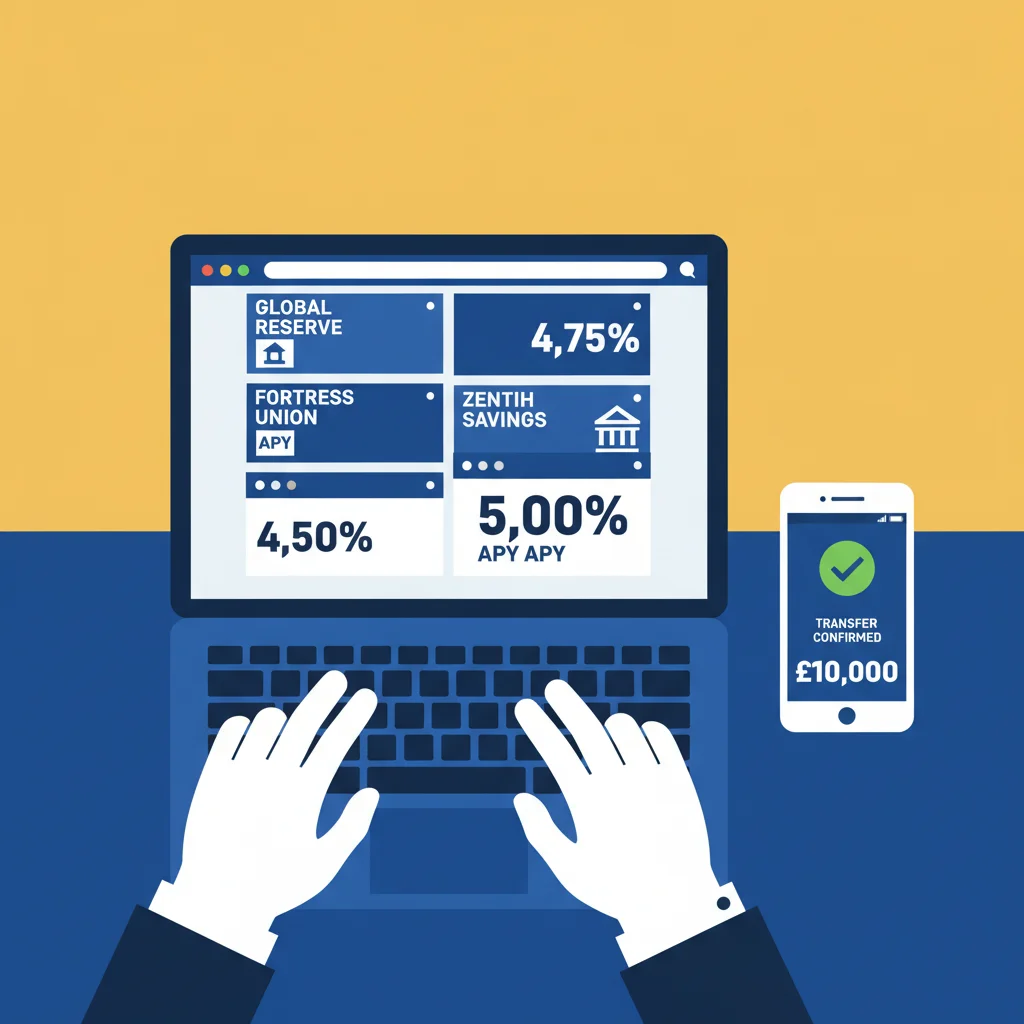
High-Yield Savings Account Hopping Definition: HYSA hopping is the strategic practice of moving your savings between different high-yield savings accounts to consistently secure the highest available annual percentage yield (APY) and take advantage of promotional offers, ensuring your money earns the maximum possible return.
Understanding High-Yield Savings Accounts (HYSAs)
High-Yield Savings Accounts (HYSAs) are a cornerstone of smart financial management, offering significantly higher interest rates than traditional savings accounts. While the concept is simple, understanding their mechanics and benefits is crucial for effective HYSA hopping. These accounts are designed to help your money grow faster, providing a powerful tool against inflation.
What Makes an Account "High-Yield"?
The "high-yield" designation primarily refers to the annual percentage yield (APY) offered on the account balance. Unlike traditional savings accounts, which often pay rates below 0.50% APY, HYSAs can offer rates several times higher. For instance, as of March 2026, top HYSAs are offering APYs ranging from 4.50% to over 5.25%. This difference might seem small at first glance, but it compounds significantly over time, especially with larger balances.
Most HYSAs are offered by online-only banks. These institutions typically have lower overhead costs compared to brick-and-mortar banks. They don't maintain physical branches, ATMs, or the associated staff. This cost saving allows them to pass on higher interest rates to their depositors. Online banks are often able to offer more competitive rates because their operational expenses are considerably lower.
Key Features and Benefits of HYSAs
HYSAs share many characteristics with traditional savings accounts but come with enhanced benefits. Understanding these features helps you make informed decisions when choosing an account.
- Higher Interest Rates: This is the primary draw. Your money grows faster, helping you reach financial goals sooner. For example, $10,000 earning 0.50% APY would yield $50 in interest over a year. The same $10,000 earning 5.00% APY would yield $500 in interest.
- FDIC Insurance: Just like traditional banks, reputable HYSAs are FDIC-insured up to $250,000 per depositor, per institution, in the event of a bank failure. This provides peace of mind and ensures your principal is safe.
- Liquidity: HYSAs offer relatively easy access to your funds. While there are often limits on the number of withdrawals or transfers you can make per statement cycle (typically six, as per Regulation D, though this was temporarily suspended during the pandemic and some banks still adhere to it), your money is not locked away like in a Certificate of Deposit (CD).
- No Monthly Fees (Often): Many online HYSAs come with no monthly maintenance fees, especially if you meet certain minimum balance requirements or set up direct deposit. This saves you money that would otherwise eat into your earnings.
- Easy Online Management: Online banking platforms provide convenient access to your account 24/7. You can check balances, transfer funds, and manage your account from anywhere with an internet connection.
How HYSAs Compare to Other Savings Vehicles
It's helpful to see where HYSAs fit within the broader spectrum of savings and investment options.
| Feature | High-Yield Savings Account (HYSA) | Traditional Savings Account | Certificate of Deposit (CD) | Money Market Account (MMA) |
|---|---|---|---|---|
| APY | High (e.g., 4.50% - 5.25% in 2026) | Very Low (e.g., 0.45% in 2026) | Varies, often higher than HYSAs, fixed for term | Moderate, often slightly lower than HYSAs, but higher than traditional |
| Liquidity | High (limited monthly transactions) | High (limited monthly transactions) | Low (penalties for early withdrawal) | High (often comes with check-writing/debit card privileges) |
| FDIC Insured | Yes | Yes | Yes | Yes |
| Minimum Balance | Often low or none for high APY, some require higher for top rates | Often low or none | Varies, can be high | Often higher than HYSAs |
| Fees | Often none | Can have monthly fees | No monthly fees, but early withdrawal penalties | Can have monthly fees |
| Best For | Emergency funds, short-term goals, maximizing liquid savings | Everyday banking, small reserves | Specific future expenses, locking in rates for a set period | Larger liquid savings with some checking features |
HYSAs strike an excellent balance between competitive returns and accessibility, making them ideal for emergency funds, down payments, or any savings you might need within a few years.
The Strategy of HYSA Hopping
HYSA hopping is a proactive financial strategy designed to maximize the interest earned on your savings. It involves regularly monitoring interest rates and promotional offers from various banks and moving your funds to the account that provides the best return. This isn't about chasing every tiny fluctuation but rather making strategic moves to significantly boost your earnings.
Why HYSA Hopping is a Smart Move
In a dynamic economic environment, interest rates are constantly changing. Banks adjust their APYs based on market conditions, the federal funds rate, and their own competitive strategies. HYSA hopping ensures you are always taking advantage of these shifts.
- Maximize Earnings: The most obvious benefit is earning more interest. Even a 1% difference in APY can translate into hundreds or thousands of dollars over time, especially with larger savings balances. For example, on a $50,000 balance, moving from a 4.00% APY to a 5.00% APY account generates an extra $500 in interest annually.
- Combat Inflation: With inflation rates fluctuating, earning a competitive APY helps your money retain its purchasing power. While HYSAs may not always outpace high inflation, they certainly perform better than traditional accounts. The Consumer Price Index (CPI) showed inflation at 3.1% year-over-year as of February 2026, making a 5%+ HYSA crucial for maintaining value.
- Take Advantage of Promotional Offers: Many online banks offer introductory bonuses for new customers. These can be a flat cash bonus for depositing a certain amount or an elevated APY for a limited period. Hopping allows you to capitalize on these limited-time deals.
- Stay Informed: Regularly reviewing HYSA rates keeps you informed about the broader financial market. This knowledge can empower you to make better decisions across all your financial products.
When to Consider a Hop
Not every rate change warrants a move. HYSA hopping should be strategic, not impulsive. Consider a hop when:
- Significant Rate Discrepancy: If your current HYSA's APY falls significantly behind the top market rates (e.g., a difference of 0.50% or more). A small difference might not justify the effort.
- New Promotional Offers: A new bank offers a substantial sign-up bonus or a significantly higher introductory APY that makes the switch worthwhile.
- Changes in Your Current Bank's Terms: Your bank might introduce new fees, higher minimum balance requirements, or reduce its APY without a corresponding market shift.
- Consolidation or Diversification: You might want to consolidate multiple small accounts into one high-earning account, or conversely, diversify across a few top-tier HYSAs.
Financial advisors often recommend reviewing your savings rates at least once or twice a year, or whenever there's a notable shift in the broader interest rate environment. This proactive approach ensures you're not missing out on significant gains.
Potential Drawbacks and How to Mitigate Them
While highly beneficial, HYSA hopping isn't without its minor inconveniences. Being aware of these can help you manage them effectively.
- Time and Effort: Researching rates, opening new accounts, and transferring funds takes time. However, online applications are typically streamlined, and transfers can often be initiated electronically.
- Tax Implications: Interest earned from HYSAs is taxable income. Each time you close an account, you'll receive a 1099-INT form for the interest earned. Keep good records for tax season.
- Temporary Account Freezes: During large transfers, especially initial ones, banks might temporarily freeze funds for security verification. This is usually short-lived but can be inconvenient if you need immediate access. Plan transfers in advance.
- Minimum Balance Requirements: Some HYSAs require a minimum balance to earn the advertised APY or to avoid fees. Ensure your transferred amount meets these criteria.
- Impact on Credit Score (Minor): Opening a new bank account typically involves a "soft" credit inquiry, which doesn't affect your credit score. However, some banks might perform a "hard" inquiry if you link a checking account with overdraft protection or apply for other credit products simultaneously. Stick to savings accounts to avoid this.
By understanding these potential issues, you can plan your HYSA hopping strategy to minimize disruption and maximize your financial gains.
How to Effectively Hop HYSAs: A Step-by-Step Guide
Successfully navigating the world of HYSA hopping requires a systematic approach. By following these steps, you can ensure a smooth transition and maximize your interest earnings without unnecessary hassle. This process is designed to be efficient and secure.
Step 1: Research and Compare Top HYSA Rates
The first and most crucial step is to identify the best available rates. This involves consistent monitoring of the market.
- Utilize Comparison Websites: Websites like NerdWallet, Bankrate, and Forbes Advisor regularly update lists of the highest-yielding savings accounts. These sites provide current APYs, minimum balance requirements, fees, and other important details.
- Check Bank Websites Directly: Once you've identified a few top contenders, visit their official websites. Rates can change frequently, so always verify the APY directly before applying. Look for any special introductory offers or bonuses.
- Consider All Factors: Don't just look at the APY. Also, evaluate:
- Minimum Deposit/Balance: Does it fit your savings amount?
- Fees: Are there monthly maintenance fees, and how can they be waived?
- Withdrawal Limits: Are there any unusual restrictions beyond the standard Regulation D limits?
- Customer Service: Read reviews about their customer support.
- Online Banking Experience: Is their platform user-friendly?
Expert tip: Focus on banks with a history of competitive rates, not just a one-time promotional spike. This indicates a more stable long-term option.
Step 2: Gather Necessary Information and Documents
Before applying, have all your personal and financial information ready. This streamlines the application process.
- Personal Identification:
- Social Security Number (SSN)
- Driver's License or State ID
- Current Address
- Date of Birth
- Financial Information:
- Existing bank account and routing numbers (for initial funding)
- Employment information (some banks may ask)
- Beneficiary Information: Have names and dates of birth for anyone you wish to designate as a beneficiary.
Having these details readily available can turn a 15-minute application into a 5-minute one.
Step 3: Open the New High-Yield Savings Account
Opening an online HYSA is typically a straightforward process.
Complete the Online Application: Fill out the bank's online application form. This usually takes 5-10 minutes.
Verify Your Identity: Banks will digitally verify your identity. This might involve answering security questions based on your credit history or uploading copies of your ID.
Fund the Account: You'll typically link an external bank account (your existing checking or savings account) to make an initial deposit. This is usually done via an Automated Clearing House (ACH) transfer. Some banks may also offer options for wire transfers or mailing a check.
Set Up Direct Deposit (Optional): If you plan to regularly add to your savings, consider setting up a recurring direct deposit from your paycheck. This can also help meet minimum activity requirements for some accounts.
Security reminder: Always ensure you are on the official bank website (check the URL for "https://" and a padlock icon) when providing personal information.
Step 4: Transfer Funds from Your Old Account
Once your new account is open and verified, it's time to move your money.
- Initiate ACH Transfer: The most common and usually free method is an ACH transfer. You can typically initiate this from your new bank's online portal, pulling funds from your old account. Alternatively, you can push funds from your old bank to the new one.
- Understand Transfer Limits and Timelines: ACH transfers usually take 1-3 business days to clear. Be aware of any daily or monthly transfer limits imposed by either your old or new bank. For very large sums, consider a wire transfer, which is faster but usually incurs a fee (e.g., $25-$35 per transfer).
- Keep an Emergency Buffer: It's wise to leave a small buffer in your old account until the transfer is fully complete and you're comfortable with the new account. This ensures you have access to funds in an emergency.
Step 5: Close Your Old Account (Carefully)
This step is often overlooked but important for financial hygiene.
Confirm All Funds Transferred: Double-check that your old account balance is zero or only contains the small buffer you left.
Check for Pending Transactions: Ensure no outstanding checks, automatic payments, or direct deposits are linked to the old account. Update any recurring payments to your new account.
Contact the Old Bank: Call or visit your old bank to formally close the account. Do not just let it sit with a zero balance, as some banks may charge inactivity fees or eventually close it themselves, potentially sending a check to an outdated address.
Request Confirmation: Ask for written confirmation that the account has been closed and that there are no remaining fees or obligations.
By following these steps, you can efficiently and securely hop between HYSAs, ensuring your savings are always earning the highest possible return.
Maximizing Your HYSA Hopping Gains
While the core strategy of HYSA hopping is straightforward, there are advanced tactics and considerations that can further enhance your earnings and streamline the process. These tips focus on optimizing your returns and minimizing potential friction.
Timing Your Hops for Maximum Impact
Timing is crucial in HYSA hopping, especially when interest rates are dynamic.
- Monitor Federal Reserve Actions: The Federal Reserve's decisions on the federal funds rate significantly influence HYSA rates. When the Fed raises rates, banks typically follow suit, offering higher APYs. Conversely, rate cuts can lead to lower HYSA rates. Staying informed about Fed announcements (e.g., via financial news outlets) can give you a heads-up on potential rate changes.
- Look for "Rate Leader" Banks: Some banks consistently lead the market with the highest APYs. These are often the first to raise rates during an upward cycle and are prime targets for hopping.
- Consider Promotional Windows: Many banks offer elevated introductory rates or cash bonuses for a limited period (e.g., 3-6 months). Plan your hops to move funds out of these accounts before the promotional rate expires and into another top-tier offer. Keep a calendar reminder for these expiration dates.
Leveraging Sign-Up Bonuses and Promotions
Sign-up bonuses can significantly boost your initial earnings, sometimes offering a higher effective APY than the standard rate for the first year.
- Read the Fine Print: Always understand the requirements for receiving a bonus. This often includes:
- Minimum Deposit: A specific amount you need to deposit.
- Holding Period: How long the funds must remain in the account (e.g., 60-90 days).
- Activity Requirements: Sometimes, a certain number of debit card transactions or direct deposits are needed.
- Calculate the Net Benefit: Factor in any potential fees or the opportunity cost of having funds tied up. For example, a $200 bonus on a $10,000 deposit held for 90 days is a significant boost.
- Don't Chase Every Bonus: Only pursue bonuses from reputable, FDIC-insured institutions. Avoid obscure offers that seem too good to be true.
Example: In early 2026, Bank X offered a $300 bonus for new customers depositing $25,000 and maintaining it for 90 days, in addition to their 5.00% APY. This bonus effectively adds an extra 1.2% APY for that 90-day period on the $25,000, making the overall return even more attractive.
Automating the Process (Where Possible)
While HYSA hopping requires some manual intervention, certain aspects can be automated or streamlined.
- Rate Alert Services: Sign up for email alerts from financial news websites or comparison tools that notify you when top HYSA rates change.
- Recurring Transfers: Once you've settled into a new HYSA, set up recurring automatic transfers from your checking account to consistently grow your savings. This "pay yourself first" strategy is a cornerstone of personal finance.
- Digital Record Keeping: Maintain a digital spreadsheet or use a personal finance app to track:
- Current HYSA APY
- Date opened
- Date to review next
- Any promotional offer expiration dates
- Interest earned (for tax purposes)
Tax Considerations for Interest Income
All interest earned from savings accounts, including HYSAs, is considered taxable income by the IRS.
- 1099-INT Form: Banks will issue a Form 1099-INT if you earn $10 or more in interest during a calendar year. You will receive one from each bank you hold an account with.
- Income Tax Brackets: The interest is added to your ordinary income and taxed at your marginal income tax rate.
- State and Local Taxes: Depending on your state, interest income may also be subject to state and local income taxes.
- Record Keeping: Keep all 1099-INT forms and records of your interest earnings. This is particularly important if you're hopping between multiple accounts, as you'll receive multiple forms.
- Estimated Taxes: If you earn a substantial amount of interest income, you might need to pay estimated taxes quarterly to avoid underpayment penalties. Consult a tax professional if you anticipate significant interest earnings.
By proactively managing these aspects, you can ensure your HYSA hopping strategy is not only profitable but also compliant and efficient.
Common Mistakes to Avoid When Hopping HYSAs
While HYSA hopping is a powerful strategy, certain pitfalls can diminish its effectiveness or lead to unnecessary complications. Being aware of these common mistakes can help you navigate the process smoothly and maximize your financial gains.
Not Reading the Fine Print
One of the most frequent errors is failing to thoroughly review the terms and conditions of a new account.
- Hidden Fees: Some accounts may have monthly maintenance fees that can erode your interest earnings. These are often waivable if you meet certain conditions, such as maintaining a minimum balance or setting up direct deposit. Always confirm how to avoid these fees.
- Minimum Balance Requirements: An advertised high APY might only apply to balances above a certain threshold. Below that, the rate could be significantly lower, or you might incur fees. Ensure your deposit meets the requirements for the advertised rate.
- Promotional Rate Expiration: Introductory rates are temporary. If you don't note the expiration date, your APY could drop significantly without you realizing it, leaving your money earning less than optimal returns.
- Withdrawal Limits/Restrictions: While Regulation D limits are common, some banks might have additional, stricter policies on transfers or withdrawals. Ensure these align with your access needs.
Always download and review the account disclosure document before opening a new HYSA.
Chasing Every Tiny Rate Fluctuation
While the goal is to maximize earnings, constantly moving money for a marginal increase in APY can be counterproductive.
- Time vs. Reward: The time and effort involved in opening a new account, transferring funds, and closing an old one might not be worth a 0.05% or 0.10% APY increase, especially on smaller balances.
- Transfer Delays: Frequent transfers can lead to funds being in transit for several days, during which they might not be earning interest. This "float" period can negate small gains.
- Tax Complexity: More accounts mean more 1099-INT forms at tax time, increasing administrative burden.
Rule of thumb: Aim for a minimum APY difference of 0.25% to 0.50% (or a significant sign-up bonus) to justify the effort of a hop, especially for balances under $20,000. For larger balances, even a 0.15% difference might be worthwhile.
Neglecting Account Security
Moving money between banks means handling sensitive financial information. Security should always be a top priority.
- Phishing Scams: Be wary of emails or texts claiming to be from banks asking for personal information or account details. Always navigate directly to the bank's official website.
- Strong Passwords: Use unique, complex passwords for each online banking account and enable two-factor authentication (2FA) whenever possible.
- Public Wi-Fi: Avoid accessing your banking accounts on unsecured public Wi-Fi networks.
- FDIC Insurance Verification: Always confirm that the new bank is FDIC-insured. You can check this on the FDIC's BankFind tool. Each depositor is insured up to $250,000 per institution.
Forgetting to Update Recurring Payments and Direct Deposits
When you close an old account, any linked automatic transactions will fail if not updated.
- Automatic Bill Pay: Update all recurring bill payments (utilities, subscriptions, loan payments) to pull from your new checking or savings account.
- Direct Deposit: If you're using the HYSA for direct deposit of your paycheck, ensure your employer has the correct routing and account numbers for the new account.
- Linked Accounts: Update any external investment accounts, credit cards, or payment apps (e.g., PayPal, Venmo) that were linked to your old bank account.
Proactive planning: Create a checklist of all linked accounts and recurring payments before initiating a transfer or closing an old account.
Not Keeping Good Records
Poor record-keeping can lead to confusion, missed opportunities, and tax headaches.
- Track APYs and Dates: Keep a simple spreadsheet noting the APY, opening date, and any promotional end dates for each HYSA you use.
- Save Correspondence: Retain confirmation emails for account openings, transfers, and closures.
- Tax Documents: File all 1099-INT forms carefully.
By avoiding these common mistakes, your HYSA hopping strategy will remain efficient, secure, and highly profitable, ensuring your money works as hard as possible for you.
The Future of High-Yield Savings Accounts
The landscape of personal finance is constantly evolving, and High-Yield Savings Accounts are no exception. Understanding potential future trends can help you adapt your HYSA hopping strategy and continue to maximize your savings. The digital transformation of banking and shifting economic policies will play significant roles.
Impact of Economic Conditions and Federal Reserve Policy
Interest rates are intrinsically linked to broader economic conditions and the Federal Reserve's monetary policy.
- Federal Funds Rate: The primary driver of HYSA rates is the federal funds rate. When the Fed raises this benchmark rate to combat inflation or cool an overheating economy, HYSA rates typically rise in tandem. Conversely, during periods of economic slowdown or recession, the Fed may lower rates, leading to a decline in HYSA APYs. As of early 2026, the Fed has indicated a data-dependent approach, suggesting rates could remain elevated or see modest cuts depending on inflation and employment data.
- Inflation: Persistent inflation can erode the purchasing power of savings. HYSAs become even more critical during inflationary periods, as they help your money keep pace (or at least minimize the loss of value) compared to traditional accounts.
- Economic Growth: A strong economy generally leads to higher demand for credit, which can encourage banks to offer more competitive deposit rates to attract funds.
Financial analysts widely predict that while the peak of interest rates may have passed, rates are unlikely to return to the near-zero levels seen in the 2010s anytime soon, making HYSAs a valuable tool for the foreseeable future.
The Rise of FinTech and Digital Banking
The financial technology (FinTech) sector continues to disrupt traditional banking, heavily influencing the HYSA market.
- Increased Competition: FinTech companies and challenger banks (often online-only) are driving competition by offering innovative features, user-friendly interfaces, and, crucially, highly competitive interest rates. This forces traditional banks to adapt or lose market share.
- Personalized Experiences: Expect more personalized savings tools, AI-driven insights into spending and saving habits, and seamless integration with other financial apps.
- Faster Transfers: Advancements in payment technology, such as real-time payments (RTP) and FedNow, could make interbank transfers almost instantaneous, further streamlining the HYSA hopping process and reducing the "float" period.
- Embedded Finance: HYSAs may become more seamlessly integrated into non-banking platforms (e.g., investment apps, budgeting tools), offering high-yield options directly within those ecosystems.
Potential for New Account Features and Structures
Banks are constantly innovating to attract and retain customers. Future HYSAs might offer:
- Tiered APYs: More sophisticated tiered APY structures that reward higher balances with even better rates, or conversely, offer a base rate that increases with certain account activity.
- Gamified Savings: Features that turn saving into a game, offering small bonuses or rewards for reaching savings milestones.
- Integrated Budgeting Tools: HYSAs that come with built-in budgeting and expense tracking features, making them a more holistic financial hub.
- "Hybrid" Accounts: Blended accounts that combine high-yield savings with limited checking features, offering convenience without sacrificing significant interest.
One Percent Finance anticipates that the trend towards digital-first, customer-centric banking will continue to push HYSA rates higher and make account management more intuitive. Staying informed about these developments will be key to optimizing your savings strategy in the years to come.
Frequently Asked Questions
What is a High-Yield Savings Account (HYSA)?
A High-Yield Savings Account (HYSA) is a type of savings account that offers significantly higher interest rates (Annual Percentage Yield or APY) than traditional savings accounts. They are typically offered by online-only banks due to their lower overhead costs, and they are FDIC-insured, protecting your deposits up to $250,000 per institution.
How much interest can I earn with an HYSA in 2026?
As of early 2026, top High-Yield Savings Accounts are offering Annual Percentage Yields (APYs) ranging from 4.50% to over 5.25%. This is substantially higher than the average traditional savings account rate, which hovers around 0.45% APY. The exact amount you earn depends on your balance and the specific account's APY.
Is HYSA hopping legal and safe?
Yes, HYSA hopping is completely legal and safe, provided you choose FDIC-insured banks. It's simply the strategic movement of your money between different banking institutions to secure better interest rates or promotional offers. Always verify a bank's FDIC insurance status before opening an account.
How often should I consider hopping HYSAs?
There's no strict rule, but a good practice is to review your HYSA's APY and compare it to market leaders at least once or twice a year, or whenever there's a significant shift in overall interest rates (e.g., after a Federal Reserve announcement). Consider hopping if you find a new account offering a significantly higher APY (e.g., 0.25% to 0.50% more) or a compelling sign-up bonus.
Are there any fees associated with HYSA hopping?
Most High-Yield Savings Accounts offered by online banks have no monthly maintenance fees, especially if you meet minimum balance requirements. However, some banks might charge fees for wire transfers (typically $25-$35) or if you fail to meet certain conditions. Always read the terms and conditions carefully to understand any potential fees.
What are the tax implications of earning interest from HYSAs?
All interest earned from High-Yield Savings Accounts is considered taxable income by the IRS. Banks will issue a Form 1099-INT if you earn $10 or more in interest during a calendar year. This income is added to your ordinary income and taxed at your marginal income tax rate. Keep good records of all interest earned.
What documents do I need to open a new HYSA?
To open a new High-Yield Savings Account, you'll typically need your Social Security Number (SSN), a valid government-issued ID (like a driver's license), your current address, and information from an existing bank account to fund the new one (account and routing numbers).
Key Takeaways
- Maximize Your Earnings: HYSA hopping is a proactive strategy to ensure your savings consistently earn the highest possible interest rates, often 4.50% to 5.25% APY in 2026.
- Combat Inflation: Earning a competitive APY helps your money retain its purchasing power against inflation, which was around 3.1% year-over-year as of February 2026.
- Strategic, Not Impulsive: Don't chase every tiny rate change; focus on significant APY differences (0.25% to 0.50% or more) or substantial sign-up bonuses to justify the effort.
- FDIC Insured Protection: Always choose HYSAs from FDIC-insured institutions, guaranteeing your deposits up to $250,000 per depositor, per bank.
- Read the Fine Print: Carefully review terms for fees, minimum balances, and promotional rate expiration dates to avoid unexpected costs or reduced earnings.
- Stay Organized: Keep good records of account details, APYs, and tax documents (1099-INT forms) to simplify management and tax season.
- Future-Proof Your Savings: Stay informed about economic trends and FinTech innovations, as they will continue to shape the HYSA landscape and offer new opportunities to optimize your savings.
Conclusion
In an era where every percentage point matters, leaving your hard-earned money in a low-yield savings account is akin to leaving cash on the table. High-Yield Savings Account hopping is a powerful, yet straightforward, strategy that empowers you to take control of your financial growth. By consistently seeking out the best available APYs and leveraging promotional offers, you can significantly boost your savings, outpace inflation, and accelerate your progress toward financial goals.
The process, while requiring a bit of initial effort, becomes routine with practice. The benefits of maximizing your interest earnings far outweigh the minor inconveniences of opening new accounts and transferring funds. Embrace the proactive approach of HYSA hopping and transform your savings from stagnant reserves into a dynamic engine of wealth creation. Your future self, with a significantly larger savings balance, will thank you.
Disclaimer: This article is for informational and educational purposes only and does not constitute financial, investment, or tax advice. Always consult a qualified financial advisor before making investment decisions.
The information provided in this article is for educational purposes only and does not constitute financial, investment, or legal advice. Always consult with a qualified financial advisor, tax professional, or legal counsel for personalized guidance tailored to your specific situation before making any financial decisions.
Comments
No comments yet. Be the first to comment!
More from Banking



Explore Related Guides
Expert reviews of Gold IRA companies, rollover guides, fees, and IRS rules.
Comprehensive investment strategies covering stocks, bonds, ETFs, crypto, and real estate.
Master budgeting, debt management, taxes, and financial planning for your situation.