
How to Avoid Bank Fees: 10 Strategies That Actually Work
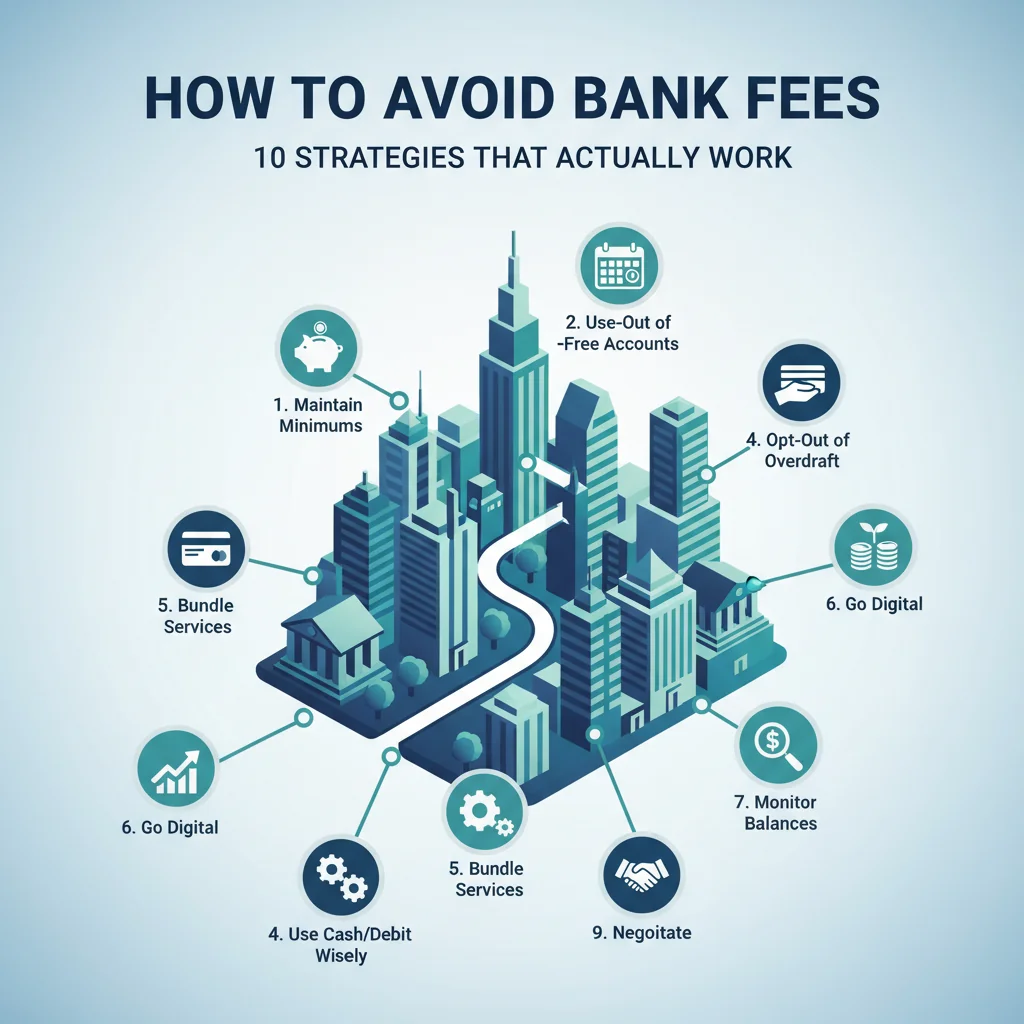
Editor's note: Names, images, and identifying details have been changed to protect the privacy of individuals featured in this article.
Amy, a 59-year-old insurance agent in Fort Worth, TX, faced a stark reality when her company announced potential layoffs. With $58,000 in a 403(b), a $78,000 mortgage remaining, and a checking balance of $3,800, her financial picture seemed stable. However, a quick calculation revealed her emergency fund, designed to cover four months of expenses, would last less than three weeks if she lost her income and was hit with unexpected bank fees. This realization sparked a deep concern: every dollar counted, and unnecessary bank fees could quickly erode her safety net. For many Americans, these seemingly small charges add up, silently chipping away at hard-earned money. This article will equip you with practical, actionable strategies to navigate the banking landscape, minimize, and even eliminate common bank fees, ensuring your money stays where it belongs: in your pocket.
Bank Fees Definition: Bank fees are charges levied by financial institutions for various services, transactions, or account maintenance. These can include monthly service fees, ATM fees, overdraft fees, wire transfer fees, and more, significantly impacting a consumer's financial health if not managed proactively.
Understanding Common Bank Fees and Their Impact
Bank fees are a pervasive part of the financial landscape, often catching consumers off guard and eroding their savings. While some fees are unavoidable, many can be significantly reduced or eliminated with a proactive approach. Understanding the types of fees and their potential impact is the first step toward better financial management.
The Landscape of Bank Fees
Financial institutions generate substantial revenue from fees. According to a 2023 report by the Consumer Financial Protection Bureau (CFPB), banks collected billions of dollars in overdraft and non-sufficient funds (NSF) fees alone. These fees disproportionately affect vulnerable consumers, who are more likely to experience cash flow shortages. Beyond overdrafts, a myriad of other charges exists, from monthly maintenance fees to foreign transaction fees, each capable of chipping away at your financial stability. For someone like Amy, who relies on every dollar, even a few unexpected fees can disrupt her carefully planned budget and emergency fund.
Common Types of Bank Fees to Watch Out For
Navigating the world of banking means being aware of the various charges that can apply to your accounts. Here are some of the most common types of bank fees:
- Monthly Service/Maintenance Fees: Many checking and savings accounts come with a recurring fee if certain conditions aren't met, such as maintaining a minimum balance or setting up direct deposit.
- Overdraft Fees (ODF) and Non-Sufficient Funds (NSF) Fees: These are charged when you spend more money than you have in your account. An overdraft fee typically applies when the bank covers the transaction, while an NSF fee (also known as a returned item fee) occurs when the bank declines the transaction. The average overdraft fee in 2022 was $30.00, according to a Bankrate survey.
- ATM Fees: You might incur a fee for using an ATM outside your bank's network, and the ATM owner may also charge a separate fee.
- Wire Transfer Fees: Sending or receiving money via wire transfer, especially internationally, often comes with a fee.
- Foreign Transaction Fees: Using your debit or credit card for purchases in a foreign currency or outside your home country typically incurs a percentage-based fee.
- Account Closure Fees: Some banks charge a fee if you close an account within a certain period after opening it.
- Paper Statement Fees: Many banks encourage paperless statements and may charge a fee for mailed paper statements.
- Inactive Account Fees: If an account remains dormant for an extended period, some banks may charge a fee.
Understanding these charges is crucial for effectively implementing strategies to avoid bank fees.
Strategy 1: Choose the Right Bank and Account
The first and arguably most impactful step in avoiding bank fees is to be strategic about where you bank and what type of accounts you open. Not all banks are created equal, and their fee structures can vary wildly. A little research upfront can save you significant money down the line.
Researching Fee-Friendly Financial Institutions
Before committing to a bank, thoroughly investigate its fee schedule. Many traditional brick-and-mortar banks have higher overheads, which can translate into more fees for consumers. Online banks, credit unions, and challenger banks often boast lower or no fees due to their different operating models.
- Online Banks: These institutions typically have no physical branches, reducing their operational costs. This often translates to no monthly maintenance fees, higher interest rates on savings, and widespread ATM networks (often with fee reimbursements). Examples include Ally Bank, Discover Bank, and Capital One 360.
- Credit Unions: Member-owned and non-profit, credit unions are known for their customer-centric approach, lower fees, and better interest rates on deposits and loans. They often have fewer fees compared to traditional banks and are generally more flexible.
- Challenger Banks/Fintechs: Newer digital-first platforms often offer innovative features, no monthly fees, and sometimes even early access to direct deposit.
When researching, look specifically for banks that advertise "no monthly fees," "free checking," or "no minimum balance requirements." Don't just take their word for it; dig into the fine print of their fee schedule, which should be readily available on their website.
Opting for Accounts with No Monthly Fees
Many banks offer checking and savings accounts that come with no monthly service fees, provided certain conditions are met. These conditions are typically easy to fulfill for most consumers.
- No-Fee Checking Accounts: Look for accounts that explicitly state "no monthly maintenance fee" or "free checking." Some banks offer these as standard, while others require specific actions to waive the fee.
- Waiver Requirements: Common ways to waive monthly fees include:
- Maintaining a minimum daily balance: For instance, a bank might waive the fee if your account balance never drops below $1,500.
- Setting up direct deposit: Many banks waive fees if you have a regular direct deposit (e.g., your paycheck) of a certain amount (e.g., $500 or more) per statement cycle.
- A certain number of debit card transactions: Some accounts waive fees if you make a minimum number of debit card purchases each month.
- Being a student or senior: Many institutions offer special no-fee accounts for students or individuals over a certain age.
- Linking other accounts: Having multiple accounts (e.g., checking, savings, loan) with the same institution can sometimes qualify you for fee waivers.
For Amy, choosing an online bank or credit union that offers a no-fee checking account with easy-to-meet waiver requirements would be a crucial step. This ensures her $3,800 checking balance isn't slowly eaten away by recurring charges, preserving her funds for essential needs.
Strategy 2: Master Your Account Balance and Transactions
One of the most common reasons for incurring bank fees, particularly overdraft fees, is a lack of awareness regarding your account balance and upcoming transactions. Proactive monitoring and careful management can virtually eliminate these costly charges.
Regularly Monitor Your Account Activity
In the age of digital banking, there's no excuse for not knowing your account balance. Most banks offer robust online banking platforms and mobile apps that provide real-time access to your account information.
- Daily Check-ins: Make it a habit to check your checking and savings account balances daily, or at least every few days. This allows you to spot discrepancies, identify pending transactions, and prevent unexpected overdrafts.
- Transaction History Review: Regularly review your transaction history. This helps you identify recurring charges, detect potential fraud, and track your spending habits. Many apps allow you to categorize expenses, making budgeting easier.
- Alerts and Notifications: Set up email or text alerts for low balances, large transactions, or when your balance falls below a certain threshold. For example, Amy could set an alert to notify her if her checking account balance drops below $500, giving her time to transfer funds from savings before an overdraft occurs. According to a 2023 survey by Javelin Strategy & Research, consumers who use bank alerts are 30% less likely to incur overdraft fees.
Avoid Overdrafts with Prudent Spending
Overdraft fees are among the most expensive and easily avoidable bank charges. A single overdraft can cost you upwards of $30, and multiple overdrafts in a short period can quickly deplete your funds.
- Know Your Balance Before You Spend: Always confirm your available balance before making a purchase, especially larger ones. Remember that your "available balance" might be different from your "current balance" due to pending transactions that haven't fully cleared yet.
- Opt-Out of Overdraft Protection for Debit Card Transactions: While it might seem counterintuitive, opting out of overdraft protection for debit card transactions can save you money. If you opt out, your bank will simply decline the transaction if you don't have enough funds, rather than allowing it to go through and charging you an overdraft fee. This can be embarrassing but is far less costly. However, be aware that checks and ACH transactions might still incur overdraft fees even if you opt out for debit card purchases.
- Link a Savings Account for Overdraft Protection: A smarter form of overdraft protection is to link your checking account to a savings account or a line of credit. If you overdraw, funds are automatically transferred from your linked account to cover the transaction. While some banks charge a small fee for this transfer (e.g., $5-$10), it's significantly less than a typical overdraft fee. Ensure you understand the terms, including any limits on transfers or fees for the linked line of credit.
By diligently monitoring her accounts and being mindful of her spending, Amy can ensure her $3,800 checking balance remains intact and free from the burden of overdraft fees, protecting her financial stability.
Strategy 3: Leverage Direct Deposit and Minimum Balances
Many banks offer fee waivers or even special perks for customers who maintain a certain level of engagement or financial commitment. Utilizing direct deposit and maintaining minimum balances are two of the most common and effective ways to avoid monthly service fees.
Setting Up Direct Deposit
Direct deposit is not only convenient but often a key to unlocking fee-free banking. Banks love direct deposit because it ensures a steady flow of funds into their institution and indicates a primary banking relationship.
- Automatic Fee Waivers: Many checking accounts explicitly waive monthly maintenance fees if you set up a recurring direct deposit that meets a minimum threshold. This threshold can vary, but common amounts are $250, $500, or $1,000 per statement cycle. For Amy, whose income is from her insurance agent salary, setting up direct deposit for her paycheck would likely meet most banks' requirements.
- Convenience and Security: Beyond fee avoidance, direct deposit offers unparalleled convenience, eliminating the need to visit a branch or ATM to deposit a check. It also enhances security by reducing the risk of lost or stolen paper checks.
- Early Access to Funds: Some banks and fintech platforms offer early access to direct deposit funds, sometimes up to two days before your official payday, which can be a significant benefit for managing cash flow.
Maintaining Minimum Balance Requirements
Another prevalent method for banks to waive monthly fees is by requiring customers to maintain a minimum daily or average balance in their accounts. This strategy requires careful financial planning and discipline.
- Understand the Specifics: Banks have different rules for minimum balances. Some require a minimum daily balance (the lowest your balance can be at any point during the statement cycle), while others use an average daily balance (the sum of the daily balances divided by the number of days in the cycle). It's crucial to know which one applies to your account.
- Consolidate Funds (If Possible): If you have multiple accounts with small balances spread across different institutions, consolidating them into one primary account at a single bank might help you meet the minimum balance requirement more easily.
- Automate Transfers: If you struggle to consistently maintain the minimum balance in your checking account, consider setting up an automatic transfer from your savings account (or another account) to top it up if it falls below a certain threshold. This can act as a buffer against fees.
- Consider Opportunity Cost: While maintaining a minimum balance avoids fees, ensure that the money isn't just sitting idle if it could be earning higher interest elsewhere. However, the cost of fees often outweighs the potential interest gains on a relatively small balance.
By ensuring her paycheck is directly deposited and keeping a watchful eye on her checking account to maintain the required minimum balance, Amy can easily avoid the monthly service fees that often plague traditional bank accounts.
Strategy 4: Optimize ATM Usage and International Transactions
ATM fees and foreign transaction fees can quickly add up, especially for frequent travelers or those who often use out-of-network ATMs. Strategic planning and awareness can help you minimize or eliminate these charges.
Using In-Network or Fee-Free ATMs
ATM fees are a double whammy: your bank might charge you for using an out-of-network ATM, and the ATM owner will almost certainly charge you a surcharge. These fees can range from $2.50 to $5.00 per transaction, quickly eroding your cash withdrawals.
- Locate In-Network ATMs: Most banks provide an ATM locator tool on their website or mobile app. Before you need cash, use this tool to find nearby in-network ATMs. For Amy, knowing the locations of her bank's ATMs in Fort Worth is essential.
- Utilize Partner Networks: Many banks are part of larger ATM networks, such as Allpoint or Plus, which offer thousands of fee-free ATMs. Check if your bank participates in such a network. Credit unions often belong to the CO-OP ATM network.
- Get Cash Back at Point of Sale: Instead of using an ATM, make a small purchase at a grocery store or pharmacy and ask for cash back. This is usually a free service and can save you multiple ATM fees.
- Consider an Online Bank with ATM Reimbursements: Many online banks, like Ally Bank or Charles Schwab Bank, reimburse all or a portion of ATM fees charged by other banks, making virtually any ATM fee-free for their customers.
Minimizing Foreign Transaction Fees
Traveling internationally can be exciting, but foreign transaction fees can be an unwelcome surprise on your bank statement. These fees typically range from 1% to 3% of the transaction amount.
- Use a Credit Card with No Foreign Transaction Fees: Many travel-focused credit cards and some general rewards cards offer 0% foreign transaction fees. This is often the best option for international purchases, as credit cards also offer better fraud protection than debit cards.
- Open a Debit Card Account with No Foreign Transaction Fees: Some online banks and challenger banks offer debit cards with no foreign transaction fees and may even reimburse international ATM fees. This is ideal for withdrawing local currency.
- Avoid Dynamic Currency Conversion (DCC): When paying in a foreign country, you might be asked if you want to pay in the local currency or your home currency. Always choose to pay in the local currency. If you choose your home currency, the merchant's bank will perform the conversion, often at a less favorable exchange rate and with hidden fees.
- Limit Cash Withdrawals: While it's good to have some local currency, try to limit frequent small ATM withdrawals, as each withdrawal might incur a flat international ATM fee on top of any foreign transaction fees. Plan larger, less frequent withdrawals if necessary.
By being mindful of where and how she accesses cash and makes international purchases, Amy can significantly reduce her exposure to these common but avoidable fees, especially if she ever decides to travel abroad.
Strategy 5: Negotiate and Communicate with Your Bank
Many consumers don't realize that bank fees, particularly one-off charges like overdrafts, are often negotiable. Building a relationship with your bank and being proactive in communication can save you money and foster a more positive banking experience.
Calling to Waive Fees
If you've incurred an unexpected fee, especially an overdraft fee, don't just accept it. A phone call to your bank's customer service department can often result in a fee waiver.
- Be Polite and Prepared: When you call, be polite, explain the situation clearly, and be prepared to state why you believe the fee should be waived. For example, if it's your first overdraft, or if you immediately deposited funds to cover it, mention that.
- Highlight Your Relationship: If you've been a long-standing customer in good standing, or if you have multiple accounts with the bank, politely remind them of your loyalty. Banks value good customers.
- Ask for a "Courtesy Waiver": Many banks have a policy to offer a "courtesy waiver" for certain fees, especially for first-time offenders or loyal customers. Don't be afraid to ask if one is available.
- Escalate if Necessary: If the first representative can't help, politely ask to speak with a supervisor. Sometimes, a higher-level employee has more discretion to waive fees.
- Don't Make it a Habit: While negotiating can work, it's not a long-term strategy. Banks are less likely to waive fees repeatedly. Use this as a last resort for genuine mistakes or unexpected circumstances.
Understanding Your Bank's Fee Policies
Knowledge is power when it comes to bank fees. Take the time to thoroughly read and understand your bank's fee schedule and terms and conditions.
- Access the Fee Schedule: Banks are required to make their fee schedules publicly available, usually on their website. Download and review it periodically, as fees can change.
- Ask Questions: If anything in the fee schedule is unclear, don't hesitate to call customer service and ask for clarification. It's better to understand upfront than to be surprised by a charge later.
- Stay Informed About Changes: Banks are required to notify customers of significant changes to their fee schedules. Pay attention to these notifications, which often come via email or mail.
- Compare to Competitors: Regularly compare your bank's fees to those of competitors. If you find significantly better terms elsewhere, you can use this information to negotiate with your current bank or consider switching.
For Amy, if she accidentally incurs an overdraft fee due to a timing issue with her direct deposit, a polite call to her bank explaining her long-standing relationship and immediate correction of the balance could very well result in a waiver, saving her $30-$35.
Strategy 6: Utilize Digital Tools and Paperless Options
In an increasingly digital world, banks are incentivizing customers to move away from paper-based transactions and embrace online tools. By going paperless and using digital banking features, you can often avoid fees and gain better control over your finances.
Opting for Paperless Statements
Many banks now charge a fee for mailed paper statements, viewing them as an unnecessary cost and an environmental burden. Switching to paperless statements is an easy win for both your wallet and the planet.
- Environmental Impact: Reducing paper consumption is a positive step for the environment.
- Fee Avoidance: Most banks will waive the paper statement fee (typically $2-$5 per month) once you opt for electronic statements. This might seem small, but it adds up to $24-$60 annually.
- Convenience and Security: Electronic statements are accessible 24/7 through your online banking portal, often for several years. They are also more secure than mailed statements, which can be intercepted or lost. You can download and save them as PDFs for your records.
- How to Switch: Log into your online banking account, navigate to your account settings or statement preferences, and select the option to go paperless. If you can't find it, a quick call to customer service will guide you.
Leveraging Online Bill Pay and Transfers
Digital banking tools offer a wealth of features that can help you manage your money more efficiently and avoid fees associated with traditional banking methods.
- Online Bill Pay: Most banks offer free online bill pay services. This allows you to schedule payments to various payees directly from your bank account.
- Avoid Late Fees: By scheduling payments in advance, you can ensure bills are paid on time, avoiding late payment fees from creditors.
- No Stamp or Check Fees: Eliminates the cost of stamps, envelopes, and potentially purchasing checks.
- Proof of Payment: Online bill pay systems provide a digital record of your payments, which can be useful for tracking and dispute resolution.
- Internal Transfers: Transferring money between your own accounts (e.g., from checking to savings) is almost always free through online banking or mobile apps. This is crucial for maintaining minimum balances or funding your savings goals without incurring transfer fees.
- External Transfers (ACH): Most banks allow free ACH (Automated Clearing House) transfers to accounts at other financial institutions. While these transfers may take a few business days to process, they are a cost-effective alternative to wire transfers for non-urgent money movement.
- Mobile Check Deposit: Use your bank's mobile app to deposit checks by simply taking a picture. This saves you a trip to the bank or ATM and avoids any potential fees associated with physical deposits.
For Amy, opting for paperless statements and utilizing online bill pay ensures that her financial management is not only efficient but also free from unnecessary charges, allowing her to better track her expenses and protect her emergency fund.
Strategy 7: Be Wary of Inactivity and Account Closure Fees
While less common than overdraft or monthly service fees, inactivity and account closure fees can still surprise account holders. Understanding these potential charges can help you avoid them.
Avoiding Inactive Account Fees
Some banks charge a fee if an account remains dormant for an extended period, typically 6-12 months without any customer-initiated activity. This is more common with older accounts or those with very low balances.
- Understand the Definition of "Activity": Activity usually includes deposits, withdrawals, transfers, or bill payments. Simply logging into your online banking portal might not count as activity. Check your bank's specific definition.
- Keep Accounts Active: If you have an account you don't use frequently but wish to keep open (e.g., an old savings account for a specific goal), make a small, periodic transaction. A small transfer from your checking account every few months is usually enough to keep it active.
- Close Unused Accounts: If you have accounts you truly no longer need, it's often better to close them properly rather than letting them sit idle and potentially incur inactivity fees.
- Consolidate Accounts: Having too many accounts can make it difficult to track activity. Consolidating your funds into fewer, active accounts can simplify management and reduce the risk of inactivity fees.
Navigating Account Closure Fees
While most banks do not charge a fee to close an account, some may impose one if the account is closed within a very short period after opening, typically 90-180 days. This is often designed to deter customers who open accounts solely for promotional bonuses and then immediately close them.
- Read the Fine Print: Before opening a new account, especially one offering a sign-up bonus, carefully read the terms and conditions regarding account closure. Look for any mention of early closure fees.
- Wait Out the Period: If there is an early closure fee, simply wait until the specified period has passed before closing the account.
- Confirm Zero Balance: Before closing any account, ensure all outstanding transactions have cleared and the balance is truly zero. If you close an account with a pending transaction, it can lead to complications and potential fees.
- Get Confirmation: When you close an account, request written confirmation that the account has been closed and has a zero balance. This can be a statement or an email.
For Amy, who is already managing several financial accounts, being mindful of inactivity on any secondary savings accounts and understanding the terms of new accounts would prevent unexpected fees. Her focus should be on maintaining active, fee-free primary accounts.
Strategy 8: Consider Credit Unions and Online-Only Banks
The traditional banking model, with its extensive branch networks and high overheads, often necessitates higher fees. For consumers looking to minimize or eliminate fees, exploring alternatives like credit unions and online-only banks can be a game-changer.
Benefits of Credit Unions
Credit unions are member-owned, non-profit financial cooperatives. This fundamental difference often translates into significant benefits for their members compared to for-profit banks.
- Lower Fees: Credit unions are renowned for their generally lower fees across the board, including fewer monthly maintenance fees, lower overdraft fees, and often no ATM fees within their shared network (CO-OP ATM network).
- Better Interest Rates: They typically offer higher interest rates on savings accounts and lower interest rates on loans and credit cards.
- Personalized Service: Being member-owned fosters a more community-focused approach, often leading to more personalized customer service.
- Accessibility: While they may have fewer physical branches than large banks, credit unions often participate in shared branching networks, allowing members to conduct transactions at other credit unions nationwide.
- Eligibility: To join a credit union, you typically need to meet certain eligibility requirements, such as living in a specific geographic area, working for a particular employer, or being part of an association. However, many credit unions have very broad membership criteria, making them accessible to almost anyone.
Advantages of Online-Only Banks
Online-only banks operate without physical branches, significantly reducing their operational costs. These savings are often passed on to customers in the form of lower fees and better rates.
- Minimal or No Fees: A primary draw of online banks is their commitment to minimal or no monthly maintenance fees, no minimum balance requirements, and often no foreign transaction fees.
- Higher Interest Rates: Without the overhead of physical branches, online banks can afford to offer significantly higher interest rates on savings accounts and certificates of deposit (CDs) compared to traditional banks.
- Widespread ATM Access: Many online banks partner with large ATM networks (like Allpoint) to offer fee-free access to tens of thousands of ATMs nationwide. Some even reimburse ATM fees charged by other banks.
- Convenience: 24/7 access to banking services through robust mobile apps and online platforms.
- Enhanced Digital Tools: Online banks often lead the way in integrating new financial technologies, offering advanced budgeting tools, spending analytics, and seamless mobile experiences.
For Amy, considering a credit union or an online-only bank could fundamentally change her banking experience. A credit union in Fort Worth might offer her a more personalized, fee-friendly experience, while an online bank could provide higher interest on her savings and virtually eliminate all common fees, helping her grow her emergency fund more effectively.
Strategy 9: Consolidate Accounts and Simplify Your Finances
Having too many bank accounts spread across different institutions can complicate financial management and inadvertently lead to fees. Streamlining your banking relationships can offer clarity, efficiency, and significant fee avoidance.
The Benefits of Account Consolidation
While it might seem prudent to diversify, having multiple accounts with small balances can sometimes do more harm than good, especially if each account has its own set of fee waiver requirements.
- Easier Fee Avoidance: With fewer accounts, it's simpler to meet minimum balance requirements or direct deposit thresholds for fee waivers. For example, instead of struggling to maintain a $500 minimum in three different checking accounts, you can easily maintain a $1,500 minimum in one.
- Simplified Monitoring: Tracking transactions and balances becomes much easier when all your primary accounts are in one place. This reduces the risk of overlooking a low balance and incurring an overdraft fee.
- Better Relationship with One Institution: Consolidating your banking can lead to a stronger relationship with a single financial institution. This might grant you access to better rates on loans, investment advice, or more favorable treatment when negotiating fees.
- Reduced Administrative Burden: Fewer accounts mean fewer statements to review, fewer passwords to remember, and less time spent managing your finances across different platforms.
Strategies for Simplifying Your Banking
Consolidating doesn't mean putting all your eggs in one basket, but rather strategically organizing your financial life.
- Identify Your Core Needs: Determine what types of accounts you truly need: a primary checking account for daily expenses, a high-yield savings account for emergencies and goals, and perhaps a credit card.
- Choose a Primary Bank/Credit Union: Select one institution that best meets your needs for low fees, good rates, and excellent customer service. This will be where you direct your primary income and manage most of your expenses.
- Transfer Funds and Close Unnecessary Accounts: Once you've chosen your primary institution, transfer funds from other accounts and then formally close the unused accounts. Remember to check for early closure fees and ensure all transactions have cleared.
- Automate Transfers: Use your primary bank's tools to automate transfers between your checking and savings accounts to build your emergency fund or meet savings goals. This ensures consistent progress without manual effort.
- Review Regularly: Periodically review your banking setup. As your financial situation or bank offerings change, you might find new opportunities to optimize your accounts further.
For Amy, consolidating her banking could mean moving her 403(b) to an institution that also offers a robust, fee-free checking and high-yield savings account. This would simplify her financial overview, make it easier to manage her funds, and ensure she avoids any potential fees from dormant or underutilized accounts.
Strategy 10: Leverage Technology and Financial Apps
In today's digital age, a plethora of financial technology (fintech) tools and apps can empower you to manage your money more effectively, anticipate cash flow issues, and proactively avoid bank fees.
Utilizing Budgeting and Tracking Apps
Budgeting apps have evolved beyond simple expense trackers. Many now offer advanced features that can help you stay on top of your finances and prevent fee-triggering mistakes.
- Real-Time Balance Monitoring: Apps like Mint, YNAB (You Need A Budget), or Personal Capital link directly to your bank accounts and provide real-time updates on your balances. This is crucial for avoiding overdrafts.
- Transaction Categorization and Analysis: These apps automatically categorize your spending, helping you understand where your money goes. This insight can reveal spending patterns that might lead to low balances.
- Alerts and Notifications: Many apps offer customizable alerts for low balances, upcoming bills, or unusual spending, acting as an early warning system to prevent fees. For instance, an alert that your checking account balance is below $200 could prompt you to transfer funds from savings.
- Goal Setting and Tracking: Budgeting apps help you set and track financial goals, such as building an emergency fund. Seeing your progress can motivate you to manage your money more carefully and avoid unnecessary fees.
- Forecasting Tools: Some advanced apps offer cash flow forecasting, predicting your balance based on upcoming income and expenses. This can be invaluable for identifying potential shortfalls before they occur.
Setting Up Automated Savings and Bill Payments
Automation is a powerful tool for financial stability. By automating your savings and bill payments, you reduce the risk of human error, late fees, and overdrafts.
- Automated Savings Transfers: Set up automatic transfers from your checking account to your savings account immediately after your paycheck hits. Even small, consistent transfers (e.g., $50-$100 per paycheck) can build your emergency fund over time and help you meet minimum balance requirements in your savings.
- Automatic Bill Payments: Enroll in automatic bill pay for your recurring expenses like rent/mortgage, utilities, and loan payments. This ensures payments are made on time, avoiding late fees from creditors and preventing accidental overdrafts due to forgotten bills.
- Timing is Key: Schedule automated payments to occur a few days before the due date to account for processing times and ensure funds are available.
- Review Regularly: While automated, it's still important to review your scheduled payments periodically, especially if your income or expenses change.
- "Set It and Forget It" with Caution: While automation is beneficial, it's not a substitute for regular account monitoring. Always keep an eye on your overall cash flow to ensure there are sufficient funds for automated transactions.
For Amy, integrating a budgeting app to monitor her checking account and setting up automated transfers to her emergency fund would provide an additional layer of protection against fees. This proactive use of technology would ensure her financial decisions are informed and her money is working for her, not against her.
Frequently Asked Questions
What is the most common bank fee?
The most common bank fee is typically the monthly service or maintenance fee, which many checking accounts charge if certain conditions (like a minimum balance or direct deposit) are not met. However, overdraft fees are often the most expensive and frequently incurred by consumers.
How much do banks make from fees annually?
Banks collect billions of dollars annually from various fees. For example, U.S. banks collected an estimated $14.5 billion in overdraft and non-sufficient funds (NSF) fees in 2022, according to the Consumer Financial Protection Bureau (CFPB).
Can I get an overdraft fee waived?
Yes, it is often possible to get an overdraft fee waived, especially if it's your first time, you have a good banking relationship, or you promptly deposit funds to cover the overdraft. Call your bank's customer service, explain the situation politely, and ask for a "courtesy waiver."
Are online banks truly fee-free?
Many online banks offer accounts with no monthly maintenance fees and often reimburse ATM fees, making them largely fee-free for common transactions. However, they may still charge for less common services like wire transfers or stop payment orders, so always review their full fee schedule.
What is the difference between an overdraft fee and an NSF fee?
An overdraft fee is charged when your bank covers a transaction that exceeds your available balance, essentially extending you a short-term loan. An NSF (Non-Sufficient Funds) fee is charged when your bank declines a transaction (e.g., a check or ACH payment) because you don't have enough money in your account.
How can I avoid ATM fees?
To avoid ATM fees, use your bank's in-network ATMs, utilize partner ATM networks (like Allpoint or CO-OP), get cash back at grocery stores or pharmacies with a purchase, or consider an online bank that reimburses ATM fees.
Is it better to use a credit union or a traditional bank to avoid fees?
Generally, credit unions tend to have lower fees and better interest rates than traditional for-profit banks because they are member-owned and non-profit. Online-only banks are also excellent choices for fee avoidance due to their lower operating costs.
Key Takeaways
- Choose Wisely: Select banks or credit unions with transparent, low-fee or no-fee accounts that match your financial habits.
- Monitor Actively: Regularly check your account balances and transaction history to prevent overdrafts and spot errors.
- Automate for Safety: Set up direct deposit and automated bill payments to ensure timely transactions and potentially waive monthly fees.
- Go Paperless: Opt for electronic statements and online banking to avoid paper statement fees and gain 24/7 access to your finances.
- Negotiate When Needed: Don't hesitate to call your bank to request a waiver for an unexpected fee, especially if you're a good customer.
- Optimize ATM Use: Stick to in-network ATMs, get cash back at stores, or use banks that reimburse ATM fees.
- Simplify Your Structure: Consolidate accounts to make it easier to meet fee waiver requirements and manage your money.
Conclusion
Navigating the complex world of bank fees can feel like a daunting task, but with the right strategies, it's entirely possible to minimize and even eliminate these charges. For Amy, understanding these 10 strategies means the difference between her emergency fund lasting three weeks or four months. By proactively choosing the right accounts, diligently monitoring her balances, leveraging digital tools, and communicating effectively with her financial institution, she can ensure every dollar of her hard-earned money remains secure.
The financial landscape is constantly evolving, with new banking options and technologies emerging regularly. By staying informed and adopting these practical approaches, you empower yourself to take control of your financial destiny. Don't let hidden charges erode your savings; implement these strategies to avoid bank fees and keep your money working for you. Your financial peace of mind is worth the effort.
Disclaimer: This article is for informational and educational purposes only and does not constitute financial, investment, or tax advice. Always consult a qualified financial advisor before making investment decisions.
The information provided in this article is for educational purposes only and does not constitute financial, investment, or legal advice. Always consult with a qualified financial advisor, tax professional, or legal counsel for personalized guidance tailored to your specific situation before making any financial decisions.
Comments
No comments yet. Be the first to comment!
More from Banking



Explore Related Guides
Expert reviews of Gold IRA companies, rollover guides, fees, and IRS rules.
Comprehensive investment strategies covering stocks, bonds, ETFs, crypto, and real estate.
Master budgeting, debt management, taxes, and financial planning for your situation.