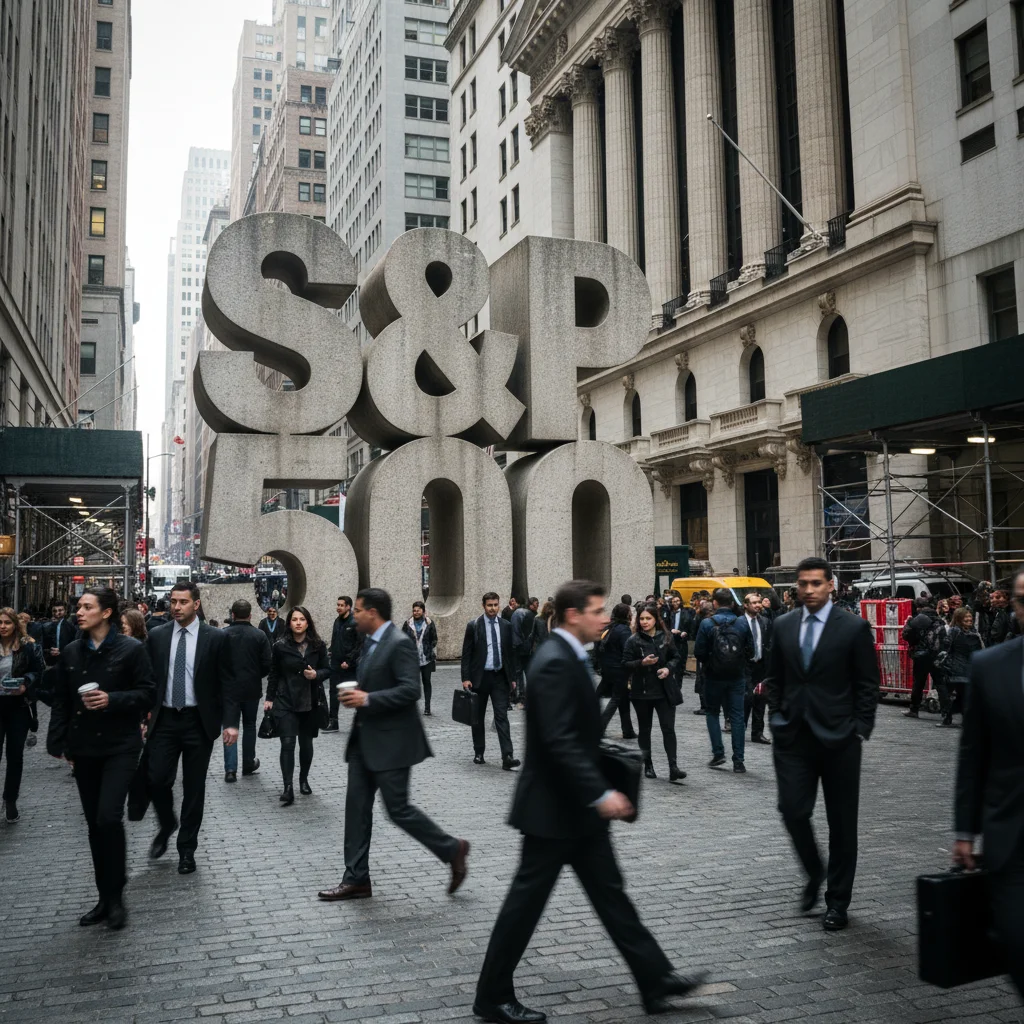
Navigating the world of investing can feel overwhelming, especially with countless options vying for your attention. Many investors, from seasoned professionals to beginners, often overlook one of the most reliable and historically robust avenues for wealth growth: the S&P 500. This benchmark index, representing the performance of 500 of the largest U.S. publicly traded companies, has consistently delivered impressive returns over the long term, making it a cornerstone of many successful portfolios. Understanding how to invest in the S&P 500 can demystify market participation and provide a clear path to achieving your financial goals. This comprehensive guide will break down everything you need to know, from its composition and historical performance to practical investment strategies and common pitfalls to avoid, ensuring you have the knowledge to confidently integrate the S&P 500 into your investment plan.
S&P 500 Definition: The S&P 500, or Standard & Poor's 500, is a stock market index that tracks the stock performance of 500 of the largest companies listed on U.S. stock exchanges, selected by S&P Dow Jones Indices. It is widely regarded as one of the best gauges of large-cap U.S. equities and the overall health of the U.S. economy.
Understanding the S&P 500 Index
The S&P 500 is more than just a number; it's a carefully constructed index designed to reflect the broad performance of the U.S. stock market. Its composition and methodology are key to its significance and reliability as an investment vehicle.
What is the S&P 500 and How is it Constructed?
The S&P 500 is a market-capitalization-weighted index. This means that companies with larger market values have a greater impact on the index's performance. For example, if Apple, a company with a massive market capitalization, sees its stock price rise, it will influence the S&P 500 more significantly than a smaller company within the index, even if both experience the same percentage gain. This weighting ensures the index accurately reflects the overall market's sentiment towards the largest publicly traded companies.
The selection process for companies included in the S&P 500 is rigorous, overseen by a committee at S&P Dow Jones Indices. Companies must meet specific criteria, including being a U.S. company, having a market capitalization of at least $14.5 billion (as of early 2026, though this fluctuates), being highly liquid, and having at least 50% of their shares available to the public. They must also have positive reported earnings in the most recent quarter and positive aggregate earnings over the past four consecutive quarters. This meticulous selection ensures the index comprises stable, profitable, and influential companies, making it a robust indicator of economic health.
Historical Performance and Why It Matters
The S&P 500 has a remarkable track record of long-term growth. Since its inception in 1957, the index has delivered an average annual return of approximately 10-12%, including dividends. While past performance is never a guarantee of future results, this historical data provides a powerful argument for its role in a diversified portfolio. For instance, according to S&P Dow Jones Indices data, the S&P 500 has averaged an annual return of around 10.2% over the last 30 years (ending December 31, 2025). This consistent growth, despite numerous economic downturns, recessions, and global crises, underscores the resilience and innovative capacity of American businesses.
Investing in the S&P 500 allows investors to participate in this long-term growth trajectory without needing to pick individual winning stocks. The index's diversification across 500 companies in various sectors naturally mitigates the risk associated with any single company's poor performance. This broad exposure to the U.S. economy's largest players is a primary reason why the S&P 500 is often recommended as a core holding for long-term investors aiming for capital appreciation.
Ways to Invest in the S&P 500
Directly investing in all 500 companies of the S&P 500 would be impractical and expensive for most individual investors. Fortunately, several accessible and cost-effective financial products allow you to gain exposure to the entire index with a single investment.
S&P 500 Index Funds
Index funds are mutual funds designed to track the performance of a specific market index, such as the S&P 500. When you invest in an S&P 500 index fund, your money is pooled with other investors' funds and used to purchase shares of the 500 companies in the index, in the same proportions as the index itself. This passive investment strategy aims to replicate the index's returns, rather than trying to outperform it.
Key features of S&P 500 index funds include:
- Diversification: Instant exposure to 500 large-cap U.S. companies across various sectors.
- Low Fees: Because they are passively managed, index funds typically have very low expense ratios (annual fees), often ranging from 0.03% to 0.15%. This means more of your money stays invested and compounds over time.
- Simplicity: No need for active stock picking or market timing. You invest in the broad market.
- Accessibility: Available through most brokerage firms and retirement accounts (e.g., 401(k)s, IRAs).
For example, a popular S&P 500 index fund might be the Vanguard 500 Index Fund Admiral Shares (VFIAX) or Fidelity 500 Index Fund (FXAIX). These funds offer broad market exposure at minimal cost, making them excellent choices for long-term investors.
S&P 500 Exchange-Traded Funds (ETFs)
Exchange-Traded Funds (ETFs) are similar to index funds in that they track an index, but they trade like individual stocks on an exchange throughout the day. This means their price can fluctuate minute by minute, unlike mutual funds which are priced once per day after the market closes. S&P 500 ETFs are a highly popular way to invest in the index due to their flexibility and cost-effectiveness.
Advantages of S&P 500 ETFs include:
- Intraday Trading: You can buy and sell shares throughout the trading day, offering more flexibility than traditional mutual funds.
- Low Expense Ratios: Like index funds, S&P 500 ETFs are passively managed and boast very low expense ratios, often below 0.10%.
- Tax Efficiency: ETFs generally have a more tax-efficient structure than traditional mutual funds, particularly in taxable brokerage accounts, due to how they handle capital gains distributions.
- Diversification: Provides the same broad diversification as an S&P 500 index mutual fund.
Prominent S&P 500 ETFs include the SPDR S&P 500 ETF Trust (SPY), iShares Core S&P 500 ETF (IVV), and Vanguard S&P 500 ETF (VOO). These ETFs are often considered core holdings for many investors seeking broad market exposure.
Comparing Index Funds and ETFs
While both S&P 500 index funds and ETFs offer excellent ways to invest in the index, there are subtle differences that might make one a better choice depending on your investment style and account type.
| Feature | S&P 500 Index Mutual Funds | S&P 500 ETFs |
|---|---|---|
| Trading | Priced once daily after market close | Trade like stocks throughout the day |
| Minimum Investment | Often have higher minimums ($1,000-$3,000 or more) | Can buy a single share (often $300-$500+) |
| Expense Ratios | Generally very low (e.g., 0.03% - 0.15%) | Generally very low (e.g., 0.03% - 0.09%) |
| Commissions | Often no transaction fees for proprietary funds | May have trading commissions (though many are commission-free) |
| Tax Efficiency | Less tax-efficient than ETFs in taxable accounts | Generally more tax-efficient in taxable accounts |
| Fractional Shares | Often available for automatic investments | Typically not available (unless through specific brokers) |
| Best For | Long-term investors, automated contributions, retirement accounts | Active traders, those seeking intraday flexibility, taxable accounts |
For most long-term investors making regular contributions, the choice between an S&P 500 index fund and an S&P 500 ETF often comes down to personal preference and the specific features offered by their brokerage or retirement plan. Both provide excellent, low-cost access to the broad U.S. stock market.
Building Your S&P 500 Investment Strategy
Investing in the S&P 500 is a long-term game. A well-defined strategy can help you maximize returns and navigate market fluctuations with confidence.
Dollar-Cost Averaging (DCA)
Dollar-cost averaging (DCA) is an investment strategy where you invest a fixed amount of money at regular intervals, regardless of the asset's price. For example, you might decide to invest $200 into an S&P 500 ETF every two weeks. When the market is down, your fixed dollar amount buys more shares. When the market is up, it buys fewer shares. Over time, this strategy helps to average out your purchase price and reduces the risk of investing a large sum at an unfortunate market peak.
The benefits of DCA are significant:
- Reduces Risk: It mitigates the impact of market volatility by spreading out your purchases. You avoid the temptation to time the market, which is notoriously difficult even for professionals.
- Simplifies Investing: It removes emotional decision-making. You set a schedule and stick to it, fostering discipline.
- Builds Wealth Consistently: Regular contributions, combined with the power of compounding, can lead to substantial wealth accumulation over decades.
DCA is particularly effective for S&P 500 investments because the index has a long history of upward momentum. By consistently investing, you ensure you're always participating in the market's growth, while also taking advantage of downturns to buy at lower prices.
Long-Term Holding and Compounding
The true power of investing in the S&P 500 is realized through long-term holding and the magic of compounding. Compounding is the process where your investment returns generate their own returns. When you reinvest dividends and capital gains from your S&P 500 index fund or ETF, those additional funds then start earning returns as well, creating an exponential growth effect.
Consider this example: If you invested $10,000 in an S&P 500 index fund that returned an average of 10% annually, after 10 years, your investment would grow to approximately $25,937. After 20 years, it would be around $67,275, and after 30 years, it could reach over $174,000. This dramatic increase highlights why patience and a long-term perspective are crucial. Trying to time the market or frequently trading in and out of S&P 500 investments often leads to missed gains and higher transaction costs. Financial advisors frequently recommend a minimum investment horizon of 5-10 years, and ideally much longer, to fully harness the power of compounding with S&P 500 investments.
Diversification Beyond the S&P 500
While the S&P 500 offers excellent diversification within large-cap U.S. equities, it's important to remember that it represents only one segment of the global investment landscape. A truly robust portfolio should consider diversification beyond just the S&P 500.
Ways to diversify further include:
- International Stocks: Investing in companies outside the U.S. can provide exposure to different economic cycles and growth opportunities. International ETFs or mutual funds can achieve this.
- Small-Cap and Mid-Cap Stocks: While the S&P 500 focuses on large companies, smaller companies can offer higher growth potential (though also higher risk).
- Bonds: Adding bonds to your portfolio can reduce overall volatility, especially during stock market downturns. Bonds typically offer lower returns than stocks but provide stability and income.
- Real Estate: Through REITs (Real Estate Investment Trusts) or direct property ownership, real estate can offer diversification and inflation protection.
- Alternative Investments: Commodities, precious metals, or private equity can further diversify a portfolio, though these often come with higher risks and complexities.
The optimal level of diversification depends on your age, risk tolerance, and financial goals. For many investors, a core S&P 500 holding supplemented by international stocks and a bond allocation creates a well-rounded and resilient portfolio. For instance, a common portfolio allocation might be 60% S&P 500, 20% international equities, and 20% bonds.
Risks and Considerations for S&P 500 Investors
While the S&P 500 is a powerful investment tool, it's not without risks. Understanding these potential downsides and how to mitigate them is crucial for successful long-term investing.
Market Volatility and Downturns
The stock market, including the S&P 500, is inherently volatile. While the long-term trend has been upward, there will be periods of significant downturns, or bear markets. For example, during the 2008 financial crisis, the S&P 500 dropped by over 50% from its peak. More recently, the COVID-19 pandemic triggered a sharp, albeit brief, decline in early 2020.
Key aspects of market volatility:
- Temporary Losses: During downturns, the value of your S&P 500 investments will decrease. It's important to remember that these are often temporary paper losses if you don't sell.
- Emotional Impact: Market drops can be stressful and lead investors to make rash decisions, such as selling at the bottom.
- Recovery: Historically, the S&P 500 has always recovered from downturns and gone on to reach new highs, given enough time. The average bear market lasts about 10-18 months, while bull markets typically last several years.
The best defense against market volatility is a long-term perspective and sticking to your investment plan. Avoid checking your portfolio daily during a downturn and remember that these periods can present opportunities to buy more shares at lower prices through dollar-cost averaging.
Concentration Risk and Sector Exposure
Although the S&P 500 includes 500 companies, it's a market-capitalization-weighted index. This means that a few very large companies can disproportionately influence its performance. For example, as of early 2026, the top 10 companies in the S&P 500 often account for 25-30% of the index's total value. If these dominant companies, often in the technology sector, face headwinds, the entire index can be significantly impacted.
Furthermore, the S&P 500 can have significant sector concentration. For instance, the information technology sector often represents a substantial portion of the index (e.g., over 25% in recent years). While this has been a boon during periods of tech growth, it also means the index is heavily reliant on the performance of that specific sector.
To mitigate this:
- Understand the Top Holdings: Be aware of the largest companies and sectors within your S&P 500 fund.
- Consider Broader Diversification: As discussed earlier, adding international stocks, small-cap funds, or bonds can help balance out any concentration risk inherent in the S&P 500 itself.
- Regular Rebalancing: Periodically rebalance your overall portfolio to ensure your asset allocation remains aligned with your risk tolerance and goals.
Fees and Expense Ratios
While S&P 500 index funds and ETFs are known for their low costs, it's still crucial to pay attention to fees and expense ratios. An expense ratio is the annual fee charged by the fund provider as a percentage of your total investment. Even a seemingly small difference in expense ratios can have a significant impact on your long-term returns due to compounding.
For example:
- An S&P 500 ETF with a 0.03% expense ratio means you pay $3 annually for every $10,000 invested.
- An S&P 500 mutual fund with a 0.50% expense ratio means you pay $50 annually for every $10,000 invested.
Over 30 years, that difference of $47 per $10,000 invested, compounded annually, can amount to tens of thousands of dollars in lost returns. Always choose the lowest-cost S&P 500 fund or ETF available to you, assuming it meets your other criteria. Many major brokerage firms offer S&P 500 funds with expense ratios well below 0.10% today.
Practical Steps to Invest in the S&P 500
Ready to start investing in the S&P 500? Here's a step-by-step guide to get you started.
Step 1: Choose a Brokerage Account
The first step is to open an investment account with a reputable brokerage firm. This is where you will hold your S&P 500 index funds or ETFs. Popular online brokerages include:
- Fidelity: Offers a wide range of mutual funds and ETFs, including their own low-cost S&P 500 index funds.
- Vanguard: Known for its low-cost index funds and ETFs, a pioneer in passive investing.
- Charles Schwab: Another major brokerage with a comprehensive offering of investment products.
- E*TRADE / Morgan Stanley: Offers a user-friendly platform and various investment tools.
- Interactive Brokers: Often favored by more active traders for its advanced tools and low commissions.
When choosing a brokerage, consider factors like:
- Fees and Commissions: Look for commission-free ETF trades and low or no transaction fees for mutual funds.
- Account Minimums: Some brokerages have minimum deposit requirements, though many are $0 to start.
- Investment Options: Ensure they offer the specific S&P 500 index funds or ETFs you're interested in.
- Customer Service and Tools: Good customer support and helpful research tools can be invaluable.
- Account Types: Decide if you need a taxable brokerage account, a Roth IRA, a Traditional IRA, or a 401(k) (if offered through your employer).
Step 2: Select Your S&P 500 Investment Vehicle
Once you have a brokerage account, you need to decide whether to invest via an S&P 500 index mutual fund or an S&P 500 ETF. As discussed, both are excellent options.
- For automated, regular investments and retirement accounts: An S&P 500 index mutual fund might be simpler, especially if your employer's 401(k) offers one. Many mutual funds allow for fractional share purchases through automatic investment plans.
- For flexibility, tax efficiency in taxable accounts, or if you prefer trading like stocks: An S&P 500 ETF is often the preferred choice.
Some popular options to research:
- ETFs: SPDR S&P 500 ETF Trust (SPY), iShares Core S&P 500 ETF (IVV), Vanguard S&P 500 ETF (VOO).
- Mutual Funds: Vanguard 500 Index Fund Admiral Shares (VFIAX), Fidelity 500 Index Fund (FXAIX), Schwab S&P 500 Index Fund (SWPPX).
Always check the expense ratio and ensure it's among the lowest available. An expense ratio below 0.10% is generally considered excellent for S&P 500 tracking funds.
Step 3: Fund Your Account and Invest
After selecting your investment vehicle, you'll need to fund your brokerage account. This can typically be done via:
- Electronic Funds Transfer (EFT): Linking your bank account to your brokerage account for easy transfers.
- Wire Transfer: For larger sums, though often comes with fees.
- Check Deposit: Mailing a physical check.
- Rollover: Transferring funds from an old 401(k) or IRA.
Once your account is funded, you can place your order. If buying an ETF, you'll place a market order or limit order just like buying a stock. If investing in a mutual fund, you'll typically specify a dollar amount you wish to invest, and the fund will process the order at the end of the trading day.
Consider setting up automatic investments if your brokerage allows it. This automates dollar-cost averaging, ensuring you regularly contribute to your S&P 500 investment without needing to manually place orders. This disciplined approach is a cornerstone of successful long-term investing.
Step 4: Monitor and Rebalance (Periodically)
Investing in the S&P 500 is largely a "set it and forget it" strategy, but it's not entirely hands-off. You should periodically monitor your investments and rebalance your overall portfolio.
- Monitoring: Check your portfolio's performance a few times a year. Understand that short-term fluctuations are normal. Focus on the long-term trend.
- Rebalancing: If your S&P 500 allocation grows significantly beyond your target percentage (e.g., if stocks have had a strong bull run), you might consider selling a portion to bring it back in line with your desired asset allocation. Conversely, if your S&P 500 allocation shrinks due to a market downturn or strong performance in other assets, you might buy more to reach your target. Rebalancing helps maintain your desired risk level and ensures you're buying low and selling high over time. Many financial advisors recommend rebalancing once a year or when an asset class deviates by more than 5-10% from its target.
Remember, the goal is to stay invested for the long haul, ride out market volatility, and let the power of compounding work for you.
Frequently Asked Questions
What is the average annual return of the S&P 500?
The S&P 500 has historically delivered an average annual return of approximately 10-12% since its inception in 1957, including dividends. This figure can vary significantly depending on the specific time period analyzed, but it represents a strong long-term growth trend.
Is investing in the S&P 500 a good idea for beginners?
Yes, investing in the S&P 500 is often considered an excellent starting point for beginners. It offers immediate diversification across 500 large U.S. companies, low costs through index funds or ETFs, and a historically strong long-term return, simplifying market participation without requiring individual stock picking.
How much money do I need to start investing in the S&P 500?
You can start investing in the S&P 500 with relatively little money. Many S&P 500 ETFs can be purchased for the price of a single share, often a few hundred dollars. Some brokerages also offer fractional shares, allowing you to invest any dollar amount you choose, even $50 or less, into an S&P 500 ETF.
What is the difference between an S&P 500 index fund and an S&P 500 ETF?
Both S&P 500 index funds and ETFs track the S&P 500 index. The main difference is how they trade: ETFs trade like stocks throughout the day on an exchange, while index mutual funds are priced once daily after the market closes. ETFs generally offer more tax efficiency in taxable accounts and lower minimum investments, while mutual funds are often preferred for automated, recurring investments.
Can I lose money investing in the S&P 500?
Yes, you can lose money investing in the S&P 500. While the index has a strong long-term track record, its value fluctuates with the stock market. During market downturns or recessions, the value of your S&P 500 investments can decrease, and there is no guarantee of returns. However, historically, the S&P 500 has always recovered from downturns over time.
How often should I check my S&P 500 investment?
For long-term investors, it's generally recommended to check your S&P 500 investment infrequently, perhaps once a quarter or once a year. Over-monitoring can lead to emotional decision-making during market volatility. Focus on your long-term goals and consistent contributions rather than short-term price movements.
Should I invest in the S&P 500 or individual stocks?
For most investors, especially those without extensive research time or expertise, investing in the S&P 500 through an index fund or ETF is generally a more prudent strategy than picking individual stocks. The S&P 500 offers broad diversification, lower risk, and historically strong returns without the need to analyze and manage individual companies. Individual stock picking carries higher risk and requires significant due diligence.
Key Takeaways
- S&P 500 is a powerful benchmark: It represents 500 of the largest U.S. companies and is a strong indicator of the overall U.S. stock market health.
- Long-term growth potential: The S&P 500 has historically delivered average annual returns of 10-12%, making it a robust component for wealth building over decades.
- Accessible investment options: You can easily invest in the S&P 500 through low-cost index mutual funds or Exchange-Traded Funds (ETFs) offered by major brokerages.
- Dollar-cost averaging is key: Investing a fixed amount regularly helps mitigate market volatility and averages out your purchase price over time.
- Compounding is your friend: Reinvesting dividends and capital gains allows your earnings to generate further earnings, leading to exponential growth over the long term.
- Diversify beyond the S&P 500: While diversified itself, consider adding international stocks, bonds, or other assets to create a truly resilient portfolio.
- Be aware of risks: Market volatility, concentration risk in large-cap tech, and fees are important considerations, but can be managed with a long-term perspective and low-cost funds.
Conclusion
Investing in the S&P 500 offers a straightforward, diversified, and historically proven path to long-term wealth accumulation. By understanding its composition, leveraging low-cost index funds or ETFs, and adopting disciplined strategies like dollar-cost averaging and long-term holding, you can effectively harness the power of the U.S. stock market's largest companies. While market fluctuations are inevitable, the S&P 500's resilience and consistent upward trend over decades make it a cornerstone for many successful investment portfolios. Don't let complexity deter you; embrace the simplicity and effectiveness of the S&P 500 as a core component of your financial future. Begin by opening a brokerage account, selecting a low-cost S&P 500 fund, and committing to a consistent investment schedule to start building your wealth today.
Disclaimer: This article is for informational and educational purposes only and does not constitute financial, investment, or tax advice. Always consult a qualified financial advisor before making investment decisions.
The information provided in this article is for educational purposes only and does not constitute financial, investment, or legal advice. Always consult with a qualified financial advisor, tax professional, or legal counsel for personalized guidance tailored to your specific situation before making any financial decisions.
Comments
No comments yet. Be the first to comment!
More from Investing



Explore Related Guides
Expert reviews of Gold IRA companies, rollover guides, fees, and IRS rules.
Compare banking products, interest rates, and strategies to maximize your savings.
Master budgeting, debt management, taxes, and financial planning for your situation.