
Rent vs. Buy: Navigating Homeownership in Today's High-Cost Market
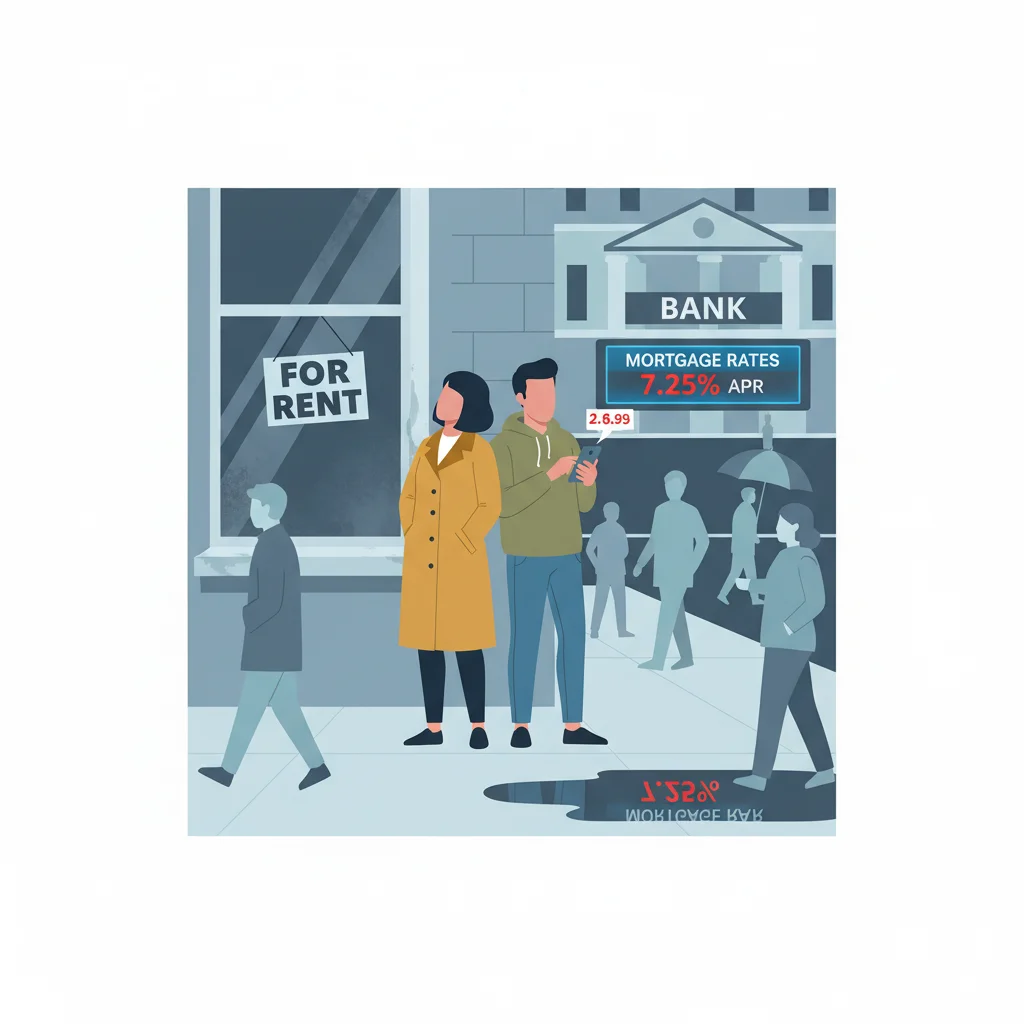
The decision to rent or buy a home has long been a cornerstone of personal finance, often viewed as a defining step towards the "American Dream." However, in today's economic landscape, characterized by persistently high interest rates and historically low housing inventory, this choice has become more complex and fraught with uncertainty. Many individuals and families are grappling with whether homeownership remains an attainable or even desirable goal. This article will thoroughly explore the multifaceted rent vs. buy dilemma, providing a detailed analysis of the financial, emotional, and lifestyle factors at play, particularly in the current volatile market conditions of April 2026. We will equip you with the knowledge to make an informed decision tailored to your unique circumstances.
Rent vs. Buy Dilemma Definition: The financial and lifestyle decision-making process individuals undertake to determine whether renting a home or purchasing one is the more advantageous option, considering current market conditions, personal finances, and long-term goals.
Understanding the Current Housing Market Landscape
The housing market in April 2026 presents a unique set of challenges that significantly impact the rent vs. buy decision. Unlike previous periods, prospective homeowners face a confluence of factors that make entry into homeownership particularly difficult. Understanding these dynamics is the first step in evaluating your options.
High Interest Rates and Their Impact on Affordability
Mortgage interest rates have seen a substantial increase over the past few years, moving away from the historically low levels experienced during the early 2020s. As of April 2026, the average 30-year fixed-rate mortgage hovers around 7.0% to 7.5%, depending on credit scores and specific lender offerings. This contrasts sharply with rates below 3% just a few years prior.
A higher interest rate directly translates to a significantly larger monthly mortgage payment for the same loan amount. For example, a $400,000 mortgage at 3% results in a principal and interest payment of approximately $1,686 per month. The same $400,000 mortgage at 7.25% jumps to about $2,729 per month—an increase of over $1,000. This dramatic rise in borrowing costs severely limits purchasing power and makes homeownership less accessible for many, especially first-time buyers.
Low Housing Inventory and Escalating Home Prices
Compounding the challenge of high interest rates is the persistent issue of low housing inventory. The supply of homes for sale across the United States remains well below historical averages. According to the National Association of Realtors (NAR), active listings in early 2026 were still down by approximately 30% compared to pre-pandemic levels. This scarcity of available homes creates intense competition among buyers, pushing home prices upward even in the face of higher borrowing costs.
When demand outstrips supply, sellers gain significant leverage, leading to bidding wars and offers well above asking price in many desirable markets. This environment not only makes it harder to find a suitable home but also drives up the initial cost of entry, requiring larger down payments and increasing the overall financial burden on buyers. The combination of high prices and high rates creates a "double whammy" for aspiring homeowners.
Rental Market Trends and Affordability
While homeownership costs have surged, the rental market has also seen significant increases, albeit with some regional variations. After rapid growth in 2021 and 2022, rental price increases have moderated in some areas, but overall, they remain elevated. As of early 2026, the median rent for a one-bedroom apartment in major U.S. cities averages around $1,800 to $2,200 per month, with significant variations based on location.
The rental market is influenced by many of the same factors affecting home sales, including population growth, job markets, and housing supply. In areas where homeownership is increasingly out of reach, more people are forced to rent, sustaining demand and keeping rental prices firm. This means that while renting might seem like a more flexible and less financially demanding option upfront, it also comes with its own set of rising costs and lack of long-term equity building.
The Financial Realities of Renting
Renting offers flexibility and predictable monthly costs, making it an attractive option for many, especially in a volatile housing market. However, it's crucial to understand the full financial implications, both short-term and long-term.
Advantages of Renting
One of the primary benefits of renting is flexibility. Renters are not tied down to a property and can easily relocate for job opportunities, family needs, or lifestyle changes once their lease term ends. This can be particularly valuable for younger individuals or those in transitional life stages. Leases typically range from 6 to 18 months, offering significant mobility.
Another key advantage is the predictability of monthly expenses. Renters generally pay a fixed amount each month, which covers housing costs. They are typically not responsible for property taxes, homeowners insurance, or major maintenance costs like roof repairs or appliance replacements. This simplifies budgeting and reduces unexpected financial burdens. Landlords handle these expenses, passing some of the cost on through rent, but the direct financial responsibility remains with the property owner.
Finally, renting requires a lower upfront financial commitment compared to buying. While security deposits and first/last month's rent can be substantial, they are usually far less than a down payment, closing costs, and moving expenses associated with purchasing a home. This allows renters to preserve their savings for other investments or emergencies.
Disadvantages of Renting
The most significant financial drawback of renting is the lack of equity building. Every rent payment goes towards someone else's mortgage or profit, rather than building wealth for the renter. This means renters do not benefit from potential property appreciation, which has historically been a significant driver of personal wealth. Over decades, this can represent a substantial opportunity cost.
Renters also face rent increases at the discretion of their landlord or market forces. While leases provide temporary stability, landlords can raise rents upon renewal, sometimes significantly. This can lead to budgeting uncertainty and the potential need to move if rent becomes unaffordable. According to data from the Bureau of Labor Statistics, average rents have increased by approximately 5-7% annually in many metropolitan areas over the past few years.
Furthermore, renters have limited control over their living space. They typically cannot make significant renovations or personalized changes to the property. This can be frustrating for those who desire to customize their home environment. Renters are also subject to landlord rules and regulations, which can impact lifestyle choices.
When Renting Makes Financial Sense
Renting can be the financially prudent choice in several scenarios. If you anticipate moving within the next three to five years, renting often makes more sense. The transaction costs associated with buying and selling a home (closing costs, real estate commissions) can easily outweigh any equity gained in a short timeframe. For instance, closing costs alone can range from 2-5% of the loan amount, and seller commissions typically run 5-6% of the sale price.
Additionally, if your debt-to-income ratio is high or you have limited savings for a down payment and emergency fund, renting allows you to improve your financial standing without the immediate pressure of homeownership. It provides an opportunity to pay down debt, build up savings, and potentially improve your credit score, positioning you better for a future home purchase.
Finally, in a market with extremely high home prices and interest rates, renting can be a strategic waiting game. If you believe home prices or interest rates will decrease in the near future, renting allows you to save money and observe market trends without committing to a potentially overvalued asset or an expensive mortgage. This strategy requires careful market monitoring and patience.
The Financial Realities of Buying
Homeownership is often seen as a cornerstone of financial stability and wealth building. However, the costs extend far beyond the monthly mortgage payment, especially in today's market. A thorough understanding of these expenses is vital.
Advantages of Buying
The most compelling financial advantage of buying a home is equity building. As you pay down your mortgage, you build equity in your home, which is the portion of the property you own outright. This equity can be a significant source of wealth, providing a financial cushion or a resource for future investments. Home values have historically appreciated over the long term, further increasing this equity. The average annual appreciation rate for U.S. homes has been around 4% to 5% over the last few decades, though this varies significantly by region and market cycle.
Homeownership also offers potential tax benefits. Homeowners can deduct mortgage interest and property taxes from their federal income taxes, subject to certain limitations. While the Tax Cuts and Jobs Act of 2017 limited the state and local tax (SALT) deduction to $10,000, and the mortgage interest deduction applies to up to $750,000 of mortgage debt, these deductions can still provide meaningful savings for many homeowners. Always consult a tax professional for personalized advice.
Finally, owning a home provides a sense of stability and control. You are not subject to a landlord's rules or rent increases, and you have the freedom to customize and improve your living space as you see fit. This can lead to a greater sense of community and personal investment in your home and neighborhood.
Disadvantages of Buying
The most significant disadvantage of buying is the high upfront costs. These include a down payment (typically 3-20% of the home's purchase price), closing costs (2-5% of the loan amount), and moving expenses. For a $400,000 home, a 10% down payment is $40,000, and closing costs could add another $8,000 to $20,000. This requires substantial savings.
Homeowners are also responsible for a range of ongoing and unexpected expenses. These include property taxes, homeowners insurance, and potentially private mortgage insurance (PMI) if your down payment is less than 20%. Beyond these, homeowners must budget for maintenance and repairs, which can be significant. Financial experts often recommend budgeting 1-3% of the home's value annually for maintenance, meaning a $400,000 home could require $4,000 to $12,000 per year for upkeep. Unexpected repairs, such as a furnace replacement or a burst pipe, can easily cost thousands of dollars.
Lastly, homeownership comes with reduced flexibility and liquidity. Selling a home is a complex and time-consuming process, often taking several months. This makes it difficult to move quickly if job opportunities or personal circumstances change. The capital invested in your home is also not readily accessible, unlike money in a savings account.
When Buying Makes Financial Sense
Buying a home generally makes financial sense if you plan to stay in the same location for at least five to seven years. This timeframe allows enough time for potential home appreciation and mortgage principal paydown to offset the significant transaction costs of buying and selling. It also allows you to build a meaningful amount of equity.
If you have a stable financial situation, including a steady income, a healthy emergency fund (typically 3-6 months of living expenses), and a manageable debt-to-income ratio, you are better positioned for homeownership. A strong credit score (typically 740+) can also help you secure the most favorable mortgage interest rates, reducing your monthly payments.
Finally, if your long-term goal is wealth building and financial stability, homeownership can be a powerful tool. While the market has its ups and downs, real estate has historically been a reliable long-term investment. The forced savings aspect of mortgage payments, combined with potential appreciation, can lead to substantial net worth growth over decades.
Comparing Renting vs. Buying: A Financial Breakdown
To make an informed decision, it's essential to directly compare the financial implications of renting versus buying. This involves looking beyond just the monthly payment and considering all associated costs and potential returns.
The "All-In" Monthly Cost Comparison
When comparing monthly costs, it's not just rent versus mortgage. For homeowners, the monthly payment includes principal and interest, property taxes, homeowners insurance, and potentially HOA fees and PMI. For renters, it's typically rent plus renters insurance.
Let's consider an example for a $400,000 home (assuming 10% down payment, 7.25% interest rate, $4,000 annual property taxes, $1,500 annual homeowners insurance, and $100/month PMI):
| Expense Category | Renting (Monthly) | Buying (Monthly) |
|---|---|---|
| Rent/P&I | $2,000 | $2,729 |
| Property Taxes | $0 | $333 |
| Home Insurance | $20 | $125 |
| PMI | $0 | $100 |
| HOA Fees | $0 | $150 (example) |
| Maintenance Fund | $0 | $250 (example) |
| Total Monthly | $2,020 | $3,687 |
This table illustrates that the "all-in" monthly cost of buying can be significantly higher than renting, even for a comparable property. This does not even account for potential utilities, which can also vary. This example highlights the importance of calculating all costs before deciding.
Opportunity Cost of Down Payment and Savings
A critical factor often overlooked is the opportunity cost of the down payment and closing costs. This substantial sum of money could otherwise be invested. For instance, if you have $60,000 saved for a down payment and closing costs, and you choose to rent instead, that $60,000 could be invested in a diversified portfolio that historically yields an average of 7-10% annually.
Over five years, $60,000 invested at a conservative 7% annual return would grow to approximately $84,150. This means by choosing to buy, you forgo this potential investment growth. Conversely, if you buy, the equity you build in your home could potentially outperform this investment, but it's not guaranteed, and the capital is less liquid. This trade-off requires careful consideration of your investment goals and risk tolerance.
Long-Term Wealth Building: Equity vs. Investments
Over the long term, both homeownership and strategic renting with investing can lead to wealth building.
- Homeownership: Builds wealth through mortgage principal reduction and potential home appreciation. While home values can fluctuate, the long-term trend has been upward. For example, a home purchased for $400,000 that appreciates by just 3% annually would be worth approximately $523,000 in 10 years, adding over $120,000 to your net worth (excluding mortgage paydown).
- Renting with Investing: If you rent, the money saved on down payment, closing costs, and potentially lower monthly housing expenses can be invested. If the $60,000 from our previous example, plus the difference in monthly housing costs (e.g., $1,000/month), were consistently invested, it could grow substantially. Over 10 years, $60,000 initially, plus $12,000 annually ($1,000/month) invested at 7% would grow to over $240,000.
The key takeaway is that wealth building is possible with either strategy, but it requires discipline. Homeowners build equity somewhat automatically through mortgage payments. Renters must be diligent about investing their savings and the difference in housing costs. The "better" option depends heavily on market conditions, individual financial discipline, and personal preferences.
Beyond the Numbers: Lifestyle and Emotional Factors
While financial calculations are paramount, the rent vs. buy decision is deeply personal and influenced by lifestyle, emotional desires, and future aspirations. These non-financial aspects often tip the scale for many individuals.
Lifestyle Flexibility vs. Stability
Renting offers unparalleled lifestyle flexibility. It's ideal for those who anticipate frequent job changes, desire to live in different cities, or simply prefer not to be tied down to a single location. The ability to move easily at the end of a lease without the burden of selling a property is a significant advantage. Renters also enjoy a relatively maintenance-free existence, as landlords are responsible for most repairs and upkeep. This frees up time and mental energy for other pursuits.
On the other hand, homeownership provides a profound sense of stability and permanence. For many, owning a home represents putting down roots, establishing a long-term community, and creating a stable environment for a family. This stability can be emotionally comforting and contribute to overall well-being. The freedom to personalize your living space, from painting walls to renovating kitchens, is also a powerful draw for homeowners.
The "American Dream" and Psychological Impact
For generations, homeownership has been synonymous with the "American Dream"—a symbol of success, financial independence, and upward mobility. This deeply ingrained cultural narrative exerts a powerful psychological pull. Owning a home can provide a sense of pride, accomplishment, and belonging. It's often seen as a tangible asset that can be passed down to future generations, embodying a legacy.
However, it's crucial to distinguish between the ideal and the reality. In today's high-cost market, the pursuit of this dream can lead to significant financial strain, stress, and even regret if not approached prudently. Some individuals may feel societal pressure to buy, even when it's not the best financial decision for them. It's important to redefine what the "American Dream" means for you personally, considering your unique circumstances and financial health.
Maintenance, Time Commitment, and Stress
One of the often-underestimated aspects of homeownership is the time commitment and stress associated with maintenance and repairs. Homes require constant upkeep, from routine tasks like yard work and cleaning gutters to unexpected emergencies like a leaky roof or a broken water heater. These tasks consume significant time, energy, and financial resources.
For many, the responsibility of home maintenance can be overwhelming, leading to stress and reducing leisure time. Renters, by contrast, typically only need to contact their landlord or property manager when issues arise, shifting the burden of repair and maintenance to someone else. This "hands-off" approach to housing can be a major lifestyle benefit for those with busy schedules or a preference for minimal home-related chores.
Making Your Decision: A Step-by-Step Guide
Navigating the rent vs. buy dilemma requires a structured approach, combining financial analysis with personal introspection. Here's a guide to help you make an informed decision.
Step 1: Assess Your Financial Health
Before anything else, take a candid look at your financial situation.
- Income Stability: Do you have a steady, reliable income? Is your job secure? Lenders look for consistent employment history.
- Credit Score: A higher credit score (generally 740+) will qualify you for the best mortgage rates. Check your score and work to improve it if needed.
- Debt-to-Income Ratio (DTI): Lenders typically prefer a DTI of 36% or less, though some may go up to 43-50%. This ratio compares your monthly debt payments to your gross monthly income.
- Savings: How much do you have saved for a down payment, closing costs, and an emergency fund? Remember, you'll need funds for both the purchase and at least 3-6 months of living expenses after moving in.
- Current Debts: High credit card debt or student loan payments can hinder your ability to afford a mortgage. Consider paying down high-interest debt first.
Step 2: Calculate All Potential Costs
Use online calculators and real-world estimates to determine the true cost of both renting and buying in your desired area.
- Renting Costs:
- Monthly rent
- Renters insurance
- Utilities (electricity, gas, water, internet)
- Pet fees (if applicable)
- Security deposit (upfront)
- Buying Costs:
- Upfront: Down payment, closing costs (appraisal, inspection, title insurance, loan origination fees), moving expenses.
- Monthly: Principal and interest, property taxes, homeowners insurance, PMI (if applicable), HOA fees (if applicable), estimated maintenance fund (1-3% of home value annually, divided by 12).
- Utilities: (often higher for homeowners due to larger spaces)
Step 3: Consider Your Time Horizon and Future Plans
Your expected length of stay in a location is a crucial determinant.
- Short-Term (Less than 3-5 years): Renting is almost always more financially advantageous due to high transaction costs of buying and selling.
- Medium-Term (5-7 years): This is a gray area. Buying might make sense if home appreciation is strong and you can secure a good rate. Otherwise, renting and investing the difference could yield better returns.
- Long-Term (7+ years): Buying typically becomes the more financially sound option over this timeframe, allowing you to build substantial equity and benefit from long-term appreciation.
Also, think about life events: Do you plan to start a family, change careers, or move to a different city? These factors influence your need for flexibility versus stability.
Step 4: Evaluate the Current Market Conditions
In today's high-interest, low-inventory market (April 2026), this step is more critical than ever.
- Interest Rates: Are current mortgage rates sustainable for your budget? Can you comfortably afford the monthly payment at these rates?
- Home Prices: Are prices in your desired area still appreciating rapidly, or are they stabilizing/declining? Overpaying in a hot market can erode future equity.
- Inventory: How competitive is the market? Are you prepared for bidding wars and potentially waiving contingencies?
- Future Outlook: While no one has a crystal ball, what are the general economic forecasts? Are interest rates expected to drop, or are they likely to remain elevated? If you believe rates will fall, you might consider renting now and refinancing later, or waiting to buy.
Step 5: Factor in Emotional and Lifestyle Preferences
Don't underestimate the non-financial aspects.
- Desire for Ownership: How strong is your desire to own your own space, customize it, and put down roots?
- Tolerance for Maintenance: Are you comfortable with the responsibilities of home maintenance, or do you prefer a hands-off approach?
- Flexibility Needs: How important is the ability to move easily?
- Stress Levels: Will the financial and maintenance burdens of homeownership cause undue stress?
By systematically working through these steps, you can gain clarity on whether renting or buying aligns better with your financial goals, lifestyle, and emotional well-being in the current market. Remember, there's no single "right" answer; it's about finding the best fit for you. For further guidance on financial planning, consider exploring resources on personal finance strategies.
Refinancing and Market Outlook
For those contemplating buying in a high-interest rate environment, the prospect of refinancing down the line is a common consideration. Understanding this strategy and the broader market outlook is crucial.
The "Buy Now, Refinance Later" Strategy
Many prospective homebuyers in 2026 are considering the "buy now, refinance later" strategy. The premise is to purchase a home at current, higher interest rates, with the expectation that rates will decrease in the future, allowing them to refinance into a lower rate and reduce their monthly payments. This strategy can make sense if you can comfortably afford the current higher payments and believe rates will indeed fall within a few years.
However, this strategy carries risks. There's no guarantee that interest rates will drop significantly or that you will qualify for a refinance. Refinancing also involves additional closing costs, typically 2-5% of the new loan amount, which can eat into potential savings. It's essential to ensure that your initial mortgage payment is affordable and that you have a strong financial buffer, rather than relying solely on a future refinance. Financial advisors often suggest that a refinance is only worthwhile if it lowers your interest rate by at least 0.75% to 1.0% and you plan to stay in the home long enough to recoup the closing costs.
Economic Forecasts and Interest Rate Projections
Economic forecasts for 2026 and beyond suggest a mixed bag for interest rates. The Federal Reserve has indicated a data-dependent approach to monetary policy. While inflation has shown signs of moderating, it remains above the Fed's target of 2%. This means that significant interest rate cuts might not materialize as quickly or as dramatically as some hope.
Many economists predict that mortgage rates will remain elevated, likely in the 6% to 7% range, for the foreseeable future, rather than returning to the sub-4% levels seen earlier in the decade. This outlook suggests that waiting indefinitely for much lower rates might be a prolonged endeavor. However, if a recession were to occur, the Fed might cut rates more aggressively, which could bring mortgage rates down. Staying informed about economic news and Federal Reserve announcements is key to understanding potential shifts.
The Impact of New Construction and Demographics
The long-term solution to the low inventory problem lies in increased new construction. While homebuilders have ramped up production, it takes time to build enough homes to meet demand. Supply chain issues, labor shortages, and rising material costs continue to be challenges. According to the U.S. Census Bureau, housing starts in early 2026 were still below the levels needed to keep up with population growth and household formation.
Demographics also play a significant role. The large millennial generation is still in its prime home-buying years, and Generation Z is beginning to enter the market. This sustained demand, coupled with insufficient supply, suggests that home prices may remain firm, even if the pace of appreciation slows. This demographic tailwind means that even with high rates, the underlying demand for housing is strong, supporting home values over the long term. Understanding these broader trends can help inform your decision-making process. For more on long-term financial planning, consider reviewing articles on retirement planning.
Frequently Asked Questions
Is it better to rent or buy in a high-interest rate market?
In a high-interest rate market, renting often offers more financial flexibility and lower upfront costs. If you plan to move within 3-5 years or have limited savings, renting can be the more prudent choice, allowing you to save and invest while waiting for market conditions to improve. However, if you plan to stay long-term and can comfortably afford the payments, buying still offers equity building and potential tax benefits.
How much should I have saved for a down payment in 2026?
While a 20% down payment is ideal to avoid Private Mortgage Insurance (PMI), many lenders offer options with as little as 3-5% down. For a $400,000 home, a 5% down payment would be $20,000. However, you also need funds for closing costs (2-5% of the loan amount) and an emergency fund, so aiming for at least 10-15% of the home's value plus closing costs in savings is a good target.
What is a good credit score to buy a house in 2026?
To qualify for the most competitive mortgage interest rates, a credit score of 740 or higher is generally recommended. While it's possible to get a mortgage with a lower score (e.g., FHA loans can accept scores as low as 580), you will likely pay a higher interest rate, significantly increasing your monthly payments over the life of the loan.
Will interest rates go down in 2026?
As of April 2026, the outlook for interest rates is uncertain. While some economists anticipate modest rate cuts later in the year, significant drops back to the historically low levels of the early 2020s are not widely expected. The Federal Reserve's decisions will depend on inflation data and economic conditions, suggesting rates may remain elevated in the 6-7% range for the foreseeable future.
How much does home maintenance cost per year?
Financial experts typically recommend budgeting 1% to 3% of your home's value annually for maintenance and repairs. For a $400,000 home, this means setting aside $4,000 to $12,000 per year. This covers routine upkeep, minor repairs, and saving for larger, infrequent expenses like roof replacement or HVAC system upgrades.
Is homeownership still the American Dream?
Homeownership remains a significant aspiration for many, but the definition of the "American Dream" is evolving. In today's high-cost market, achieving homeownership requires careful financial planning and may involve different timelines or locations than in previous generations. It's still a powerful tool for wealth building and stability, but it's crucial to ensure it aligns with your personal financial health and lifestyle goals, rather than pursuing it at any cost.
What are the hidden costs of buying a home?
Beyond the down payment and mortgage, hidden costs include closing costs (loan origination fees, appraisal, title insurance, attorney fees), property taxes, homeowners insurance, private mortgage insurance (PMI), homeowner association (HOA) fees, and ongoing maintenance and repair expenses. These can add tens of thousands of dollars upfront and hundreds to thousands monthly.
Common Personal Finance Myths — Debunked
Myth: Renting is always "throwing money away" because you don't build equity.
Fact: While renting doesn't build equity in a property, it frees up capital that can be invested elsewhere. If the money saved on a down payment, closing costs, property taxes, insurance, and maintenance is consistently invested, it can often outperform the equity gains of a home, especially in a short timeframe or a stagnant housing market. The key is disciplined investing, not just saving.
Myth: You should buy a home as soon as possible, regardless of market conditions, because homes always appreciate.
Fact: Homes do not always appreciate, and buying at the peak of a market or with high interest rates can lead to negative equity or significant financial strain. While long-term appreciation is common, short-term fluctuations and regional variations are significant. Buying when it's financially prudent for you, not just because of societal pressure, is the smarter move.
Myth: A large tax refund is a good thing because it means you get a big check back from the government.
Fact: A large tax refund actually means you overpaid your taxes throughout the year, essentially giving the government an interest-free loan. It's generally more financially advantageous to adjust your tax withholdings to receive more money in each paycheck, allowing you to invest, save, or pay down debt sooner, rather than waiting for a lump sum refund.
Key Takeaways
- Current Market Challenges: High interest rates (7.0-7.5% for 30-year fixed) and low housing inventory (down 30% from pre-pandemic levels) make homeownership particularly challenging in April 2026.
- Renting's Advantages: Offers flexibility, predictable monthly costs, lower upfront financial commitment, and no responsibility for maintenance.
- Buying's Advantages: Builds equity, offers potential tax benefits, and provides long-term stability and control over your living space.
- Hidden Costs of Buying: Beyond the mortgage, factor in property taxes, homeowners insurance, PMI, HOA fees, and 1-3% of home value annually for maintenance.
- Time Horizon is Crucial: Renting is often better for stays under 3-5 years; buying typically makes sense for 7+ years to offset transaction costs and build equity.
- "Buy Now, Refinance Later" Risk: While tempting, this strategy relies on future rate drops, which are not guaranteed, and involves additional refinancing costs.
- Personalized Decision: The best choice depends on your financial health, time horizon, market conditions, and lifestyle preferences; there's no universal answer.
Conclusion
The "Rent vs. Buy" dilemma in April 2026 is more intricate than ever, shaped by a unique convergence of high interest rates, scarce inventory, and elevated home prices. While the allure of homeownership as the "American Dream" remains potent, it's crucial to approach this decision with a clear understanding of both the financial realities and personal implications. Renting offers flexibility and reduced responsibility, freeing up capital for other investments, while buying provides the potential for long-term wealth building through equity and stability.
Ultimately, there is no one-size-fits-all answer. Your decision should be a thoughtful synthesis of your current financial health, future aspirations, risk tolerance, and lifestyle preferences. By thoroughly assessing all costs, considering your time horizon, and understanding the current market dynamics, you can make an informed choice that aligns with your personal finance goals. Whether you choose to rent or buy, the most important step is to make a deliberate decision that positions you for financial well-being and peace of mind.
Disclaimer: This article is for informational and educational purposes only and does not constitute financial, investment, or tax advice. Always consult a qualified financial advisor before making investment decisions.
The information provided in this article is for educational purposes only and does not constitute financial, investment, or legal advice. Always consult with a qualified financial advisor, tax professional, or legal counsel for personalized guidance tailored to your specific situation before making any financial decisions.
Comments
No comments yet. Be the first to comment!
More from Personal Finance



Explore Related Guides
Expert reviews of Gold IRA companies, rollover guides, fees, and IRS rules.
Comprehensive investment strategies covering stocks, bonds, ETFs, crypto, and real estate.
Compare banking products, interest rates, and strategies to maximize your savings.