Federal Reserve: Your Complete Personal Finance Guide
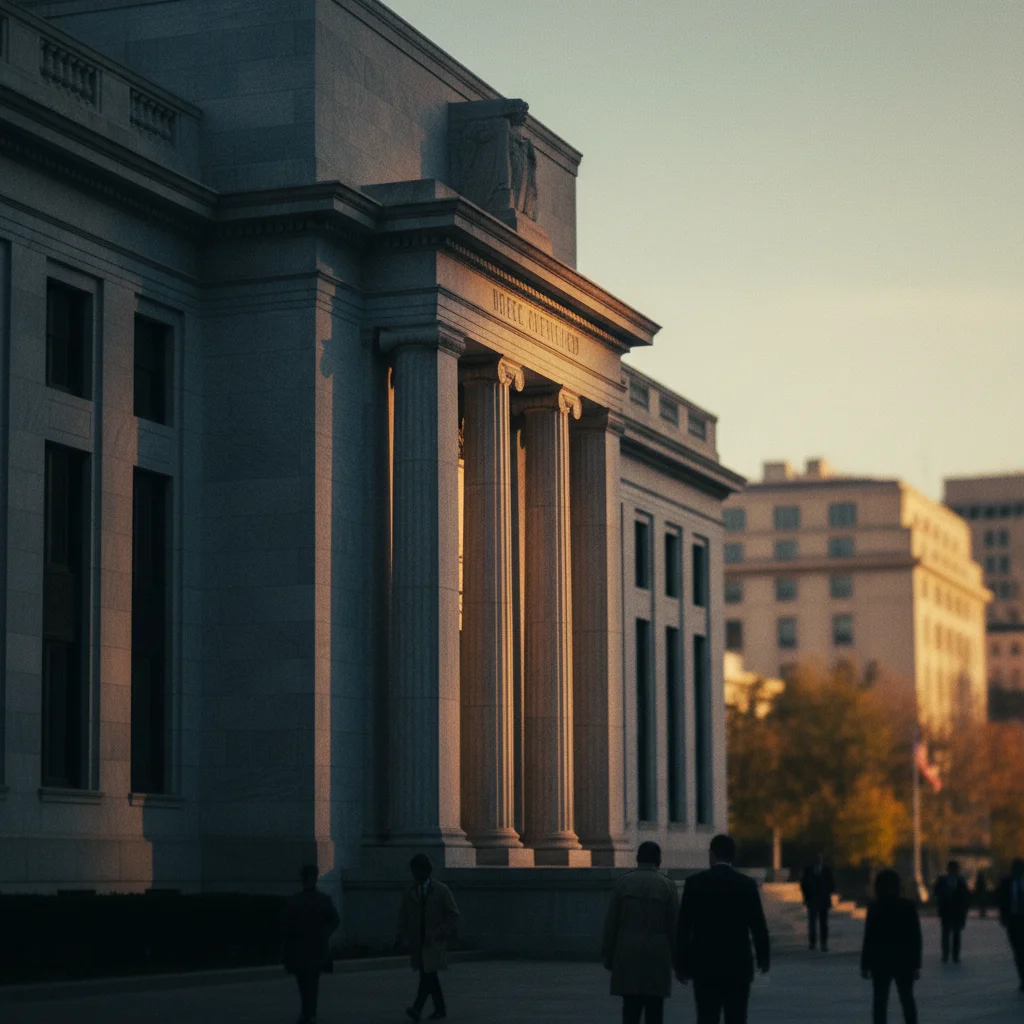
The Federal Reserve, often called "the Fed," plays a far more significant role in your daily financial life than you might realize. From the interest rate on your mortgage to the returns on your savings account and even the stability of your job, the Fed's decisions ripple through the entire economy, directly impacting your personal finances. Understanding how this powerful institution operates and influences economic conditions is crucial for making informed financial decisions.
Many individuals feel disconnected from the complex world of monetary policy, viewing it as something only economists or Wall Street professionals need to comprehend. However, the truth is that the Fed's actions directly affect everything from the cost of borrowing to the purchasing power of your money. Ignoring its influence means missing out on opportunities to optimize your budget, investments, and financial planning. This comprehensive guide will demystify the Federal Reserve, explain its functions, and illustrate how its policies translate into tangible impacts on your personal financial well-being. By the end, you'll have a clearer picture of how to navigate economic shifts influenced by the Fed and make smarter choices for your financial future.
Federal Reserve Definition: The Federal Reserve System is the central banking system of the United States, responsible for conducting monetary policy, supervising and regulating banks, and maintaining financial stability. Its actions directly influence interest rates, inflation, and economic growth, thereby impacting individual savings, borrowing costs, and investment returns.
Understanding the Federal Reserve System
The Federal Reserve System is the central bank of the United States. It was created by Congress in 1913 to provide the nation with a safer, more flexible, and more stable monetary and financial system. Unlike many other central banks, the Fed has a unique structure, combining public and private elements. It is designed to be independent within the government, meaning its decisions do not need to be ratified by the President or Congress. This independence is intended to insulate monetary policy from short-term political pressures.
The Fed's primary goals, often referred to as its "dual mandate," are to achieve maximum employment and stable prices. Maximum employment refers to the lowest unemployment rate that is sustainable without causing inflation. Stable prices mean keeping inflation at a low and predictable level, typically around 2% annually, as measured by the Personal Consumption Expenditures (PCE) price index. These goals are critical because high unemployment can devastate household incomes, while high inflation erodes purchasing power and makes financial planning difficult.
Structure and Governance of the Fed
The Federal Reserve System is composed of three key entities: the Board of Governors, the Federal Open Market Committee (FOMC), and 12 regional Federal Reserve Banks. This decentralized structure was a compromise designed to balance national interests with regional concerns, a reflection of the political climate at the time of its creation.
The Board of Governors is the main governing body, located in Washington, D.C. It consists of seven members appointed by the President and confirmed by the Senate for staggered 14-year terms. The President also designates a Chair and two Vice Chairs from among the members for four-year terms. The Board oversees the 12 District Banks, sets reserve requirements for banks, and plays a significant role in monetary policy. For instance, the current Chair, Jerome Powell, has been instrumental in guiding the Fed's response to recent economic challenges.
The Federal Open Market Committee (FOMC) is the Fed's principal monetary policymaking body. It consists of the seven members of the Board of Governors and five of the 12 Federal Reserve Bank presidents. The president of the Federal Reserve Bank of New York (FRBNY) is a permanent member, while the presidents of the other 11 Reserve Banks serve one-year terms on a rotating basis. The FOMC typically meets eight times a year to assess economic conditions and set the target range for the federal funds rate, which is the primary tool for influencing interest rates throughout the economy.
The 12 Federal Reserve Banks are located in major cities across the country, including New York, Chicago, and San Francisco. Each Reserve Bank serves its district by supervising banks, providing financial services to depository institutions and the U.S. government, and conducting economic research. They act as the operating arms of the central bank, connecting national policy to local economic realities. For example, the Federal Reserve Bank of St. Louis is well-known for its economic data and research publications.
The Fed's Dual Mandate: Employment and Price Stability
The Federal Reserve's dual mandate guides all its policy decisions. The goal of maximum employment means that the Fed aims for an economy where everyone who wants a job can find one, and where the unemployment rate is as low as possible without triggering excessive inflation. This is not a fixed number but rather a dynamic concept that changes with economic conditions and labor market structures. For example, in early 2026, the unemployment rate might be considered close to maximum employment if it hovers around 4%, assuming wage growth is stable.
Price stability refers to maintaining a low and stable rate of inflation. The Fed targets an inflation rate of 2% over the longer run, as measured by the Personal Consumption Expenditures (PCE) price index. This target is considered optimal because it avoids the negative effects of both high inflation (which erodes purchasing power) and deflation (which can stifle economic activity). When inflation rises above 2%, the Fed may tighten monetary policy, while persistent inflation below 2% might prompt easing measures. For instance, if the PCE price index shows inflation at 3.5% in early 2026, the Fed would likely continue to prioritize bringing it down.
These two goals can sometimes be in tension. For example, policies designed to stimulate employment might also lead to higher inflation, and vice-versa. The Fed must constantly balance these objectives, using its monetary policy tools to achieve the best possible outcome for the overall economy and, by extension, for individual financial well-being. This balancing act is a continuous challenge, requiring careful analysis of economic data and projections.
How Federal Reserve Policy Impacts Your Money
The Federal Reserve influences the economy primarily through monetary policy, which involves managing the supply of money and credit. Its decisions directly affect interest rates, inflation, and economic growth, all of which have profound implications for your personal finances. Understanding these connections allows you to anticipate changes and adjust your financial strategies accordingly.
When the Fed changes its policy, it sends signals throughout the financial system. These signals are picked up by banks, businesses, and consumers, influencing their decisions to borrow, lend, spend, and invest. For example, if the Fed raises interest rates, banks will charge more for loans, making it more expensive for you to buy a house or car. Conversely, if the Fed lowers rates, borrowing becomes cheaper, potentially stimulating economic activity.
Interest Rates and Your Borrowing Costs
The federal funds rate is the primary interest rate target of the FOMC. This is the rate at which commercial banks lend their excess reserves to other banks overnight. While you don't directly borrow at this rate, changes in the federal funds rate cascade through the financial system, influencing a wide array of other interest rates.
When the Fed raises the federal funds rate, it becomes more expensive for banks to borrow from each other. Banks then pass these higher costs on to consumers and businesses in the form of higher interest rates on loans. This directly impacts:
- Mortgages: Both fixed-rate and adjustable-rate mortgages (ARMs) are sensitive to Fed rate changes. A rise in rates means a higher monthly payment for new mortgages or for existing ARMs. For example, if the average 30-year fixed mortgage rate moves from 6.5% to 7.0% due to Fed tightening, a $300,000 loan would see its monthly payment increase by approximately $95.
- Credit Cards: Most credit cards have variable interest rates tied to the prime rate, which moves in lockstep with the federal funds rate. Higher Fed rates mean higher interest charges on your outstanding credit card balances. The average credit card APR in early 2026 could be around 21-22%, significantly impacted by Fed policy.
- Auto Loans and Personal Loans: These also become more expensive when the Fed raises rates, increasing your monthly payments and the total cost of borrowing for major purchases.
- Student Loans: While federal student loan rates are set by Congress, private student loans often have variable rates that are influenced by the prime rate.
Conversely, when the Fed lowers the federal funds rate, borrowing becomes cheaper. This can stimulate economic activity by making it more affordable for individuals to take out loans for homes, cars, or education, and for businesses to invest and expand. This is a key tool the Fed uses to combat economic slowdowns or recessions.
Savings and Investment Returns
While higher interest rates make borrowing more expensive, they can be beneficial for savers. When the Fed raises rates, banks typically offer higher interest rates on savings accounts, certificates of deposit (CDs), and money market accounts. This means your cash holdings can earn more interest, helping your savings grow faster.
Consider this comparison:
| Account Type | Fed Rate Environment | Typical Interest Rate (Example) | Impact on Savers |
|---|---|---|---|
| High-Yield Savings | High | 4.50% - 5.25% | Higher returns on cash, more incentive to save |
| High-Yield Savings | Low | 0.50% - 1.00% | Low returns, cash loses purchasing power |
| CDs (1-year) | High | 5.00% - 5.75% | Excellent short-term, low-risk returns |
| CDs (1-year) | Low | 1.00% - 1.50% | Minimal returns, often below inflation |
Note: These are illustrative rates for early 2026 based on current economic projections and Fed policy.
For investors, the impact is more nuanced:
- Bonds: Bond prices and interest rates move in opposite directions. When the Fed raises rates, new bonds are issued with higher yields, making existing lower-yield bonds less attractive and causing their prices to fall. Conversely, when rates fall, existing bonds with higher yields become more valuable.
- Stocks: Higher interest rates can be a mixed bag for the stock market. On one hand, they increase borrowing costs for companies, which can reduce corporate profits. On the other hand, they can signal a strong economy, which is generally good for corporate earnings. However, higher rates also make bonds more attractive relative to stocks, potentially drawing money out of the equity market. Lower rates generally make stocks more appealing as borrowing costs for companies decrease and the discount rate for future earnings falls.
- Real Estate: Beyond mortgage rates, higher interest rates can cool the housing market by making homeownership less affordable. This can lead to slower price appreciation or even price declines in some areas.
Inflation and Purchasing Power
Inflation is the rate at which the general level of prices for goods and services is rising, and subsequently, the purchasing power of currency is falling. The Fed's primary tool to combat high inflation is to raise interest rates. This makes borrowing more expensive, which slows down economic activity, reduces demand for goods and services, and ideally brings inflation back down to the target 2%.
When inflation is high, your money buys less than it did before. For example, if inflation is 5% annually, a basket of groceries that cost $100 last year will cost $105 this year. This directly erodes your purchasing power. Savers are particularly hit hard during periods of high inflation if their savings accounts are earning less than the inflation rate, resulting in a real loss of value. Retirees on fixed incomes are also vulnerable, as their income does not keep pace with rising costs.
Conversely, if the Fed fears deflation (a sustained decrease in prices), it might lower interest rates aggressively. Deflation sounds good in theory, but it can be very damaging to an economy. It encourages consumers to delay purchases, expecting prices to fall further, which stifles demand and can lead to economic stagnation or recession. The Fed's 2% inflation target is a sweet spot designed to avoid both extremes.
For example, if the inflation rate in 2025 was 4.5% and the Fed raised rates significantly throughout 2025 and into 2026, you would likely see your grocery bills still increasing, but perhaps at a slower pace, and your savings accounts would be earning more interest to help offset some of that loss in purchasing power. The Fed's actions are a constant battle to keep prices stable and protect the value of your money.
Key Monetary Policy Tools
The Federal Reserve employs several key tools to implement its monetary policy and achieve its dual mandate of maximum employment and price stability. These tools primarily influence the supply of money and credit in the economy, thereby affecting interest rates and economic activity. The most frequently used and impactful tool is the federal funds rate target, which is managed through open market operations.
Understanding these tools helps you grasp how the Fed steers the economy. When you hear news about the Fed, it's usually related to one of these mechanisms. The effectiveness of these tools can vary depending on the economic climate, requiring the Fed to adapt its approach as conditions change.
The Federal Funds Rate and Open Market Operations
The federal funds rate is the target interest rate set by the FOMC. It's the interest rate at which commercial banks lend and borrow their excess reserves from each other overnight. The Fed doesn't directly set this rate, but rather influences it through open market operations (OMOs). OMOs involve the buying and selling of government securities (like Treasury bonds) in the open market.
- To lower the federal funds rate (ease monetary policy): The Fed buys government securities from banks. This increases the banks' reserves, making it easier for them to lend to each other. With more supply of reserves, the price of borrowing (the interest rate) falls. This injects money into the financial system, encouraging lending and economic activity.
- To raise the federal funds rate (tighten monetary policy): The Fed sells government securities to banks. This reduces the banks' reserves, making it harder for them to lend to each other. With less supply of reserves, the price of borrowing (the interest rate) rises. This withdraws money from the financial system, discouraging lending and slowing down economic activity to combat inflation.
The federal funds rate is a benchmark for many other short-term interest rates in the economy, including the prime rate, which banks use to set rates for credit cards and other loans. Therefore, changes in the federal funds rate have a ripple effect on borrowing costs for consumers and businesses. For example, if the FOMC announces an increase in the federal funds rate target by 0.25% at its March 2026 meeting, you can expect credit card APRs and short-term loan rates to increase shortly thereafter.
The Discount Rate
The discount rate is the interest rate at which commercial banks can borrow money directly from the Federal Reserve through its "discount window." This is typically used by banks for short-term liquidity needs, not as a primary source of funding.
- Lowering the discount rate: Makes it cheaper for banks to borrow from the Fed, signaling an accommodative monetary policy and encouraging banks to lend more.
- Raising the discount rate: Makes it more expensive for banks to borrow, signaling a tighter monetary policy and potentially discouraging lending.
While the discount rate is less frequently used than open market operations to influence the federal funds rate, it serves as a backup source of liquidity for banks and can signal the Fed's stance on monetary policy. It also acts as a ceiling for the federal funds rate, as banks would not borrow from each other at a higher rate than they could borrow from the Fed.
Reserve Requirements
Reserve requirements are the fractions of deposits that commercial banks must hold in reserve, either as cash in their vaults or as deposits at a Federal Reserve Bank. Historically, changing reserve requirements was a powerful tool.
- Lowering reserve requirements: Frees up more funds for banks to lend, increasing the money supply and potentially lowering interest rates.
- Raising reserve requirements: Reduces the amount of money banks have available to lend, decreasing the money supply and potentially raising interest rates.
However, as of March 2020, the Board of Governors reduced reserve requirements for all depository institutions to zero percent. This change was made to simplify monetary policy and ensure that ample reserves are available in the banking system. Therefore, while historically important, reserve requirements are currently not an active tool for monetary policy. The Fed now primarily manages interest rates through open market operations and by adjusting the interest it pays on reserves held by banks.
Interest on Reserve Balances (IORB)
Since 2008, the Fed has been authorized to pay interest on reserve balances (IORB) that commercial banks hold at the Federal Reserve. This has become a crucial tool, especially after the financial crisis when the Fed significantly expanded its balance sheet through quantitative easing.
- Raising the IORB rate: Encourages banks to hold more reserves at the Fed rather than lending them out. This reduces the supply of funds available for lending in the interbank market, pushing the federal funds rate higher.
- Lowering the IORB rate: Makes it less attractive for banks to hold reserves at the Fed, potentially encouraging them to lend more and pushing the federal funds rate lower.
The IORB rate acts as a floor for the federal funds rate, as banks would not lend their reserves to other banks at a rate lower than what they could earn by simply holding them at the Fed. This tool, along with the overnight reverse repurchase agreement (ON RRP) facility, allows the Fed to effectively control the federal funds rate even when banks hold abundant reserves.
Navigating Economic Cycles and the Fed's Role
The economy moves in cycles, characterized by periods of growth (expansion), peak, contraction (recession), and trough. The Federal Reserve plays a critical role in attempting to smooth out these cycles, aiming to prevent severe recessions and runaway inflation. Its actions during different phases of the economic cycle directly influence your financial decisions and opportunities.
Understanding how the Fed responds to these cycles can help you anticipate market shifts and adjust your personal financial strategy. For instance, knowing that the Fed typically cuts rates during a recession might prompt you to refinance debt or consider certain investments.
The Fed During Economic Expansion
During an economic expansion, the economy is growing, unemployment is falling, and consumer and business spending are robust. As the economy heats up, there's a risk of inflation rising above the Fed's 2% target.
In this phase, the Fed typically adopts a tighter monetary policy. This means:
- Raising the federal funds rate: To make borrowing more expensive, which slows down spending and investment, thereby cooling off the economy and preventing overheating. This helps keep inflation in check. For example, if the economy is showing strong growth of 3-4% in 2026 with an unemployment rate below 4%, the Fed might implement several rate hikes.
- Reducing its balance sheet (quantitative tightening): If it had previously engaged in quantitative easing, the Fed might allow its bond holdings to mature without reinvesting the proceeds, effectively removing money from the financial system.
Impact on your personal finances during expansion (with Fed tightening):
- Borrowing: Mortgages, auto loans, and credit card rates will likely increase, making new debt more expensive.
- Savings: High-yield savings accounts and CDs will offer better returns, rewarding savers.
- Investments: Stock market growth might slow or even experience corrections as higher interest rates make borrowing for companies more expensive and bonds more attractive. Bond prices might fall.
- Employment: Job market remains strong, offering good opportunities for wage growth.
The Fed During Economic Contraction or Recession
During an economic contraction or recession, economic activity slows significantly, unemployment rises, and consumer spending declines. Inflation might fall or even turn into deflation.
In this phase, the Fed typically adopts an easier, or accommodative, monetary policy. This means:
- Lowering the federal funds rate: To make borrowing cheaper, encouraging consumers and businesses to spend and invest, thereby stimulating economic activity. The Fed might cut rates aggressively during a recession, potentially bringing the federal funds rate close to zero.
- Quantitative Easing (QE): If traditional rate cuts are insufficient (e.g., when rates are already near zero), the Fed might engage in QE. This involves buying large quantities of long-term government bonds and other securities to directly inject liquidity into the financial system, lower long-term interest rates, and encourage lending. This was a significant tool used during the 2008 financial crisis and the COVID-19 pandemic.
Impact on your personal finances during recession (with Fed easing):
- Borrowing: Mortgage rates, auto loan rates, and credit card rates will likely decrease, making new debt cheaper and potentially opening opportunities for refinancing existing debt.
- Savings: Returns on high-yield savings accounts and CDs will fall significantly, making it harder for cash to keep pace with even low inflation.
- Investments: Stock markets might be volatile initially but could recover as lower rates and QE stimulate the economy. Bond prices might rise as yields fall.
- Employment: Job market weakens, increasing unemployment risk.
Forward Guidance and Communication
Beyond its direct policy tools, the Fed also uses forward guidance and public communication to influence economic expectations. Forward guidance involves communicating the Fed's likely future path of monetary policy, such as indicating how long interest rates might stay low or high. This helps businesses and consumers plan more effectively.
For example, if the Fed states in early 2026 that it expects to keep interest rates steady for the foreseeable future, it can reduce uncertainty and encourage long-term investment. The Fed's public statements, speeches by its officials, and the minutes of FOMC meetings are closely watched by financial markets for clues about future policy. Clear communication is essential for the Fed to manage market expectations and ensure its policies are effective.
Personal Finance Strategies in a Fed-Influenced Economy
Understanding the Federal Reserve's actions and their potential impact on the economy is not just academic; it's a practical skill that can help you make smarter personal finance decisions. By aligning your strategies with the current and anticipated monetary policy environment, you can optimize your savings, investments, and debt management.
The key is to be proactive rather than reactive. Instead of being surprised by changes in interest rates or inflation, you can anticipate them and adjust your plan accordingly. This doesn't mean trying to "beat the market," but rather making informed choices that protect and grow your wealth over time.
Debt Management in Different Rate Environments
Your approach to debt should vary depending on the Fed's stance on interest rates.
When the Fed is raising rates (tightening policy):
- Prioritize paying down variable-rate debt: Credit cards, home equity lines of credit (HELOCs), and some private student loans have variable interest rates. As the Fed raises rates, the interest you pay on these debts will increase, making them more expensive. Focus on aggressively paying down these balances to minimize your interest costs.
- Lock in fixed rates: If you anticipate further rate hikes and need to borrow, consider locking in a fixed-rate loan for mortgages or auto loans. This insulates you from future rate increases. For example, if you're considering a mortgage in early 2026, and the Fed is signaling more hikes, a fixed-rate mortgage might be preferable to an ARM.
- Avoid new variable-rate debt: Be cautious about taking on new debt with variable rates, as the cost could quickly become prohibitive.
When the Fed is lowering rates (easing policy):
- Refinance existing debt: This is an opportune time to refinance mortgages, auto loans, or private student loans to a lower interest rate. A lower rate means lower monthly payments and less interest paid over the life of the loan. For instance, if the Fed cuts rates in late 2026 due to an economic slowdown, revisiting your mortgage rate could save you thousands.
- Consider new borrowing for investments: If you have a solid investment plan and a stable income, lower borrowing costs can make certain investments (like real estate or business expansion) more attractive. However, always borrow responsibly and ensure you can comfortably manage the payments.
- Beware of complacency: While lower rates are good for borrowers, they can also encourage excessive debt. Maintain a disciplined approach to borrowing.
Optimizing Savings and Investments
The Fed's actions also dictate where your savings and investments might best be placed.
When the Fed is raising rates (tightening policy):
- Boost your emergency fund: With higher rates, your emergency savings in a high-yield savings account or short-term CD will earn more. This is a great time to ensure you have 3-6 months of living expenses readily available. Many online banks offer competitive rates, potentially yielding 4.5-5.5% on savings in early 2026.
- Consider short-term bonds and CDs: These offer relatively low risk and higher yields in a rising rate environment. Avoid long-term bonds, as their prices tend to fall when rates rise.
- Re-evaluate stock portfolio: Growth stocks might face headwinds as higher rates make future earnings less valuable. Value stocks or dividend-paying stocks might perform relatively better. Diversification remains key.
- Review your cash holdings: Ensure any cash you're holding for short-term goals is in an account earning a competitive interest rate.
When the Fed is lowering rates (easing policy):
- Look beyond traditional savings: With low rates, high-yield savings accounts and CDs offer minimal returns, often below the rate of inflation. Your cash is losing purchasing power.
- Consider dividend stocks and real estate investment trusts (REITs): These can offer income streams that are more attractive than low-yield bonds or savings accounts.
- Long-term bonds might become attractive: As rates fall, existing long-term bonds with higher yields become more valuable. However, be mindful of interest rate risk if rates were to rise again.
- Focus on growth investments: Lower interest rates can be a tailwind for growth stocks, as borrowing costs for companies decrease and future earnings are discounted at a lower rate.
- Don't chase yield aggressively: While it's tempting to seek higher returns in a low-rate environment, avoid taking on excessive risk. Maintain a diversified portfolio that aligns with your risk tolerance and financial goals.
Planning for Inflation and Deflation
The Fed's primary goal is price stability, targeting 2% inflation. However, economic conditions can push inflation higher or lower, requiring adjustments to your financial planning.
During periods of high inflation (or when the Fed is fighting inflation):
- Invest in inflation-protected assets: Treasury Inflation-Protected Securities (TIPS) are government bonds designed to protect against inflation. Their principal value adjusts with the Consumer Price Index (CPI).
- Consider real assets: Real estate, commodities (like gold), and certain natural resource stocks can act as hedges against inflation, as their value tends to rise with prices.
- Review your budget: Identify areas where you can cut back to offset rising costs.
- Seek wage increases: Ensure your income keeps pace with inflation to maintain your purchasing power.
- Avoid holding too much cash: Cash loses value rapidly during high inflation.
During periods of low inflation or deflation (or when the Fed is fighting deflation):
- Focus on income-generating assets: In a deflationary environment, cash becomes more valuable as prices fall. However, deflation can also lead to economic stagnation. Income-generating assets can provide steady returns.
- Long-term fixed-income investments: If deflation is a concern, long-term bonds with fixed interest payments can be attractive, as the real value of those payments increases.
- Maintain a strong emergency fund: In a deflationary recession, job security might be at risk, making a robust emergency fund even more critical.
By staying informed about the Federal Reserve's policies and understanding their implications, you can make more strategic and effective decisions for your personal finances, whether you're saving for retirement, buying a home, or managing debt. Financial literacy regarding the Fed is a powerful tool for building long-term wealth.
Frequently Asked Questions
What is the Federal Reserve and what does it do?
The Federal Reserve, often called "the Fed," is the central bank of the United States. Its main responsibilities include conducting monetary policy to achieve maximum employment and stable prices, supervising and regulating banks, and maintaining the stability of the financial system. It also provides financial services to the U.S. government and depository institutions.
How does the Federal Reserve affect my mortgage rate?
The Federal Reserve directly influences the federal funds rate, which is a benchmark for other interest rates. When the Fed raises the federal funds rate, it typically leads to higher interest rates on mortgages (both fixed and adjustable-rate), making it more expensive to borrow for a home. Conversely, when the Fed lowers rates, mortgage rates tend to fall, making homeownership more affordable.
What is the Fed's target inflation rate, and why is it important?
The Federal Reserve targets an inflation rate of 2% over the longer run, as measured by the Personal Consumption Expenditures (PCE) price index. This target is important because it provides a clear benchmark for price stability. An inflation rate of 2% is considered optimal to avoid the negative effects of both high inflation (which erodes purchasing power) and deflation (which can stifle economic activity).
How do changes in the federal funds rate impact my savings account?
When the Federal Reserve raises the federal funds rate, banks typically respond by offering higher interest rates on savings accounts, certificates of deposit (CDs), and money market accounts. This means your cash savings will earn more interest. Conversely, when the Fed lowers rates, the interest earned on these savings vehicles will generally decrease.
What is quantitative easing (QE) and how does it work?
Quantitative easing (QE) is a monetary policy tool where the Federal Reserve buys large quantities of long-term government bonds and other securities from the open market. This action injects money into the financial system, aims to lower long-term interest rates directly, and increases the money supply. QE is typically used when the federal funds rate is already near zero and further rate cuts are not possible, to stimulate economic activity during severe downturns.
Should I change my investment strategy based on Fed announcements?
While it's important to understand the Fed's actions, it's generally not advisable to make drastic, short-term changes to your investment strategy based solely on Fed announcements. Long-term financial planning and a diversified portfolio aligned with your risk tolerance are usually more effective. However, understanding the Fed's direction can help you anticipate broader economic trends and make informed decisions about debt management and asset allocation over the medium to long term.
What is the difference between the federal funds rate and the discount rate?
The federal funds rate is the target rate for overnight lending between commercial banks, influenced by the Fed's open market operations. The discount rate is the interest rate at which commercial banks can borrow directly from the Federal Reserve through its "discount window." The federal funds rate is the primary policy tool, while the discount rate serves as a backup liquidity source and a signal of the Fed's policy stance.
Key Takeaways
The Federal Reserve's Dual Mandate: The Fed aims for maximum employment and stable prices (2% inflation), guiding all its monetary policy decisions.
Interest Rates Impact Borrowing: When the Fed raises rates, borrowing costs for mortgages, credit cards, and loans increase; when it lowers rates, borrowing becomes cheaper.
Interest Rates Impact Savings: Higher Fed rates mean better returns on savings accounts and CDs, while lower rates lead to minimal earnings on cash.
Inflation Erodes Purchasing Power: High inflation, often fought by the Fed with rate hikes, reduces what your money can buy, making financial planning challenging.
Monetary Tools Influence Economy: The Fed uses the federal funds rate (managed via open market operations), discount rate, and interest on reserve balances to control the money supply and credit.
Adapt Debt Strategies: Pay down variable-rate debt during rising rates; consider refinancing during falling rates.
Optimize Investments: Seek higher-yield savings in rising rate environments; explore growth assets or inflation hedges in low-rate or high-inflation periods.
Conclusion
The Federal Reserve is a cornerstone of the U.S. economy, and its influence extends directly to your personal financial landscape. From the interest you pay on your credit card to the returns you earn on your savings and the stability of your job, the Fed's monetary policy decisions are constantly at play. Understanding its structure, its dual mandate of maximum employment and stable prices, and its key policy tools empowers you to navigate economic cycles with greater confidence.
By staying informed about the Fed's actions and their potential ripple effects, you can make more strategic decisions regarding your debt, savings, and investments. Whether the Fed is tightening policy to combat inflation or easing to stimulate growth, adapting your financial strategies accordingly can help protect and grow your wealth. Don't let the complexity of central banking deter you; recognizing the Fed's role is a vital step toward becoming a more financially savvy individual. Take the time to regularly review your financial plan in light of current economic conditions and the Federal Reserve's outlook, ensuring your money works as hard as it can for you.
Disclaimer: This article is for informational and educational purposes only and does not constitute financial, investment, or tax advice. Always consult a qualified financial advisor before making investment decisions.
The information provided in this article is for educational purposes only and does not constitute financial, investment, or legal advice. Always consult with a qualified financial advisor, tax professional, or legal counsel for personalized guidance tailored to your specific situation before making any financial decisions.
Comments
No comments yet. Be the first to comment!
More from Personal Finance


Explore Related Guides
Expert reviews of Gold IRA companies, rollover guides, fees, and IRS rules.
Comprehensive investment strategies covering stocks, bonds, ETFs, crypto, and real estate.
Compare banking products, interest rates, and strategies to maximize your savings.