
The Enduring History of Silver: Ancient Currency to Modern Investment
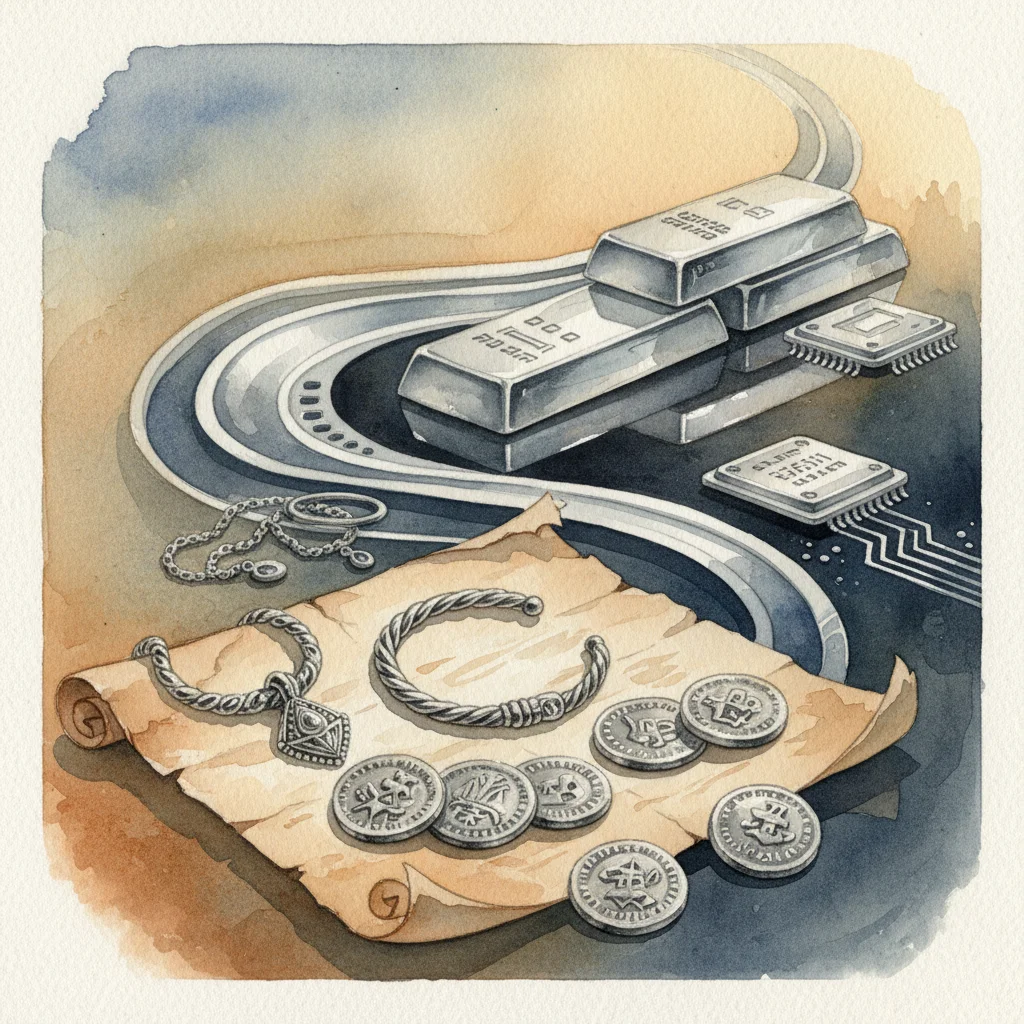
Silver, a precious metal revered for its lustrous beauty and intrinsic value, has played a pivotal role in human civilization for millennia. From its earliest uses as ornamentation and currency to its modern applications in technology and investment portfolios, the history of silver is a rich tapestry interwoven with economic shifts, technological advancements, and cultural significance. Understanding this long and varied journey is crucial for anyone seeking to grasp silver's enduring appeal and its potential as a store of value and a hedge against economic uncertainty.
History of Silver Definition: The history of silver traces its continuous use by humanity over thousands of years, encompassing its roles as a precious metal for currency, jewelry, and industrial applications, reflecting its consistent economic and cultural importance across civilizations.
Silver's Ancient Roots: Early Discoveries and Cultural Significance
The story of silver begins not in bustling financial markets, but in ancient mines and early human settlements. Its discovery predates written history, with evidence suggesting its use as far back as 5,000 BCE. Unlike gold, which often appears in its native form, silver is more commonly found in ores, requiring more sophisticated extraction techniques. This made its discovery and processing a testament to early human ingenuity and metallurgical skill.
The Dawn of Silver: Mining and Metallurgy
The earliest known silver artifacts date back to around 3,000 BCE in Anatolia (modern-day Turkey), where rudimentary mining and refining techniques were developed. These early methods involved heating silver-bearing ores to high temperatures, a process known as cupellation, to separate the silver from lead and other base metals. This labor-intensive process made refined silver a rare and highly valued commodity.
Ancient civilizations, particularly those in the Near East and the Mediterranean, quickly recognized silver's unique properties. Its malleability made it ideal for crafting intricate jewelry and decorative objects, while its natural luster and resistance to tarnish gave it an undeniable allure. The development of sophisticated mining operations, such as those in Laurion, Greece, which flourished from the 6th to the 3rd century BCE, allowed for a more consistent supply, further cementing silver's role in the burgeoning economies of the ancient world. These mines, worked by thousands of slaves, were instrumental in funding the Athenian democracy and its military might, particularly during the Persian Wars.
Silver as a Symbol of Wealth and Power
Beyond its practical applications, silver quickly became a powerful symbol of wealth, status, and divine favor. In ancient Egypt, silver was sometimes considered more valuable than gold due to its relative scarcity in the region. Pharaohs and nobles adorned themselves with silver jewelry, and the metal was used in religious rituals and offerings. The "Tomb of Tutankhamun," for example, contained numerous silver artifacts, including trumpets and ceremonial vessels, highlighting its esteemed status.
In Mesopotamia, silver was widely used for weights and measures, establishing an early form of commodity money. The Code of Hammurabi, dating back to around 1754 BCE, references silver as a medium of exchange for various transactions, from loans to wages. This widespread acceptance underscored silver's role as a trusted and universally recognized store of value, laying the groundwork for its eventual transformation into standardized coinage. The aesthetic appeal and inherent value of silver meant that owning it conveyed significant social standing, a tradition that would persist for millennia.
Silver's Monetary Dominance: From Coinage to Bimetallism
The transition of silver from a mere commodity to a primary form of currency was a pivotal moment in its history, profoundly shaping global economies and political landscapes. Its inherent value, durability, and divisibility made it an ideal medium of exchange, leading to its widespread adoption as coinage across empires.
The Birth of Coinage: Lydian Staters and Roman Denarii
The concept of standardized coinage, backed by a government or ruling authority, emerged in ancient Lydia (modern-day Turkey) around the 7th century BCE. The Lydians were among the first to strike coins from electrum, a natural alloy of gold and silver. Soon after, pure silver coins began to circulate, offering a reliable and portable form of wealth. The earliest known pure silver coins were likely minted in Aegina, Greece, around 600 BCE, featuring a sea turtle emblem.
The use of silver coinage rapidly spread throughout the Greek city-states, and later, the Roman Empire. The Roman denarius, first issued around 211 BCE, became a dominant silver coin, facilitating trade and taxation across a vast empire. The purity and weight of these coins were initially carefully controlled, instilling confidence in their value. However, as empires faced financial pressures, the practice of debasing coinage – reducing the silver content and replacing it with cheaper base metals – became common. This debasement often led to inflation and economic instability, demonstrating the critical link between currency purity and economic health. For instance, the Roman denarius, which started with nearly 4.5 grams of pure silver, had its silver content reduced to less than 5% by the end of the 3rd century CE.
The Age of Bimetallism: Gold and Silver Standards
For centuries, many major economies operated under a bimetallic standard, where both gold and silver were recognized as legal tender, with their values fixed in relation to each other by law. This system provided greater flexibility in coinage and allowed for different denominations to be struck in either metal, catering to various transaction sizes. Silver was often preferred for everyday transactions due to its lower value per unit weight compared to gold.
The Spanish Empire, following its conquest of the Americas in the 16th century, became the world's leading producer of silver. The vast silver mines of Potosí (in modern-day Bolivia) and Zacatecas (in Mexico) poured immense quantities of silver into the global economy. This influx of New World silver, particularly the Spanish dollar (or "piece of eight"), became a de facto international currency, facilitating trade routes across the Atlantic and Pacific. This period, sometimes referred to as the "Silver Age," dramatically increased the global supply of silver, influencing prices and economic policies worldwide.
However, bimetallism often faced challenges due to fluctuations in the market price of gold and silver. If the market ratio diverged significantly from the legally fixed ratio, it led to Gresham's Law, where "bad money drives out good." For example, if silver became undervalued relative to gold at the fixed legal ratio, people would hoard gold and spend silver, leading to a shortage of gold coins in circulation. This inherent instability eventually led many nations to abandon bimetallism in favor of a single gold standard in the late 19th century.
Silver's Decline and Resurgence: From Demonetization to Industrial Demand
The late 19th and early 20th centuries marked a significant shift in silver's role, as it moved away from its primary monetary function towards a more industrial and investment-focused identity. This period saw its demonetization in many countries, followed by a gradual resurgence driven by new technological applications.
The End of Silver's Monetary Reign: The Gold Standard Era
The late 19th century witnessed a global movement towards the gold standard, effectively demonetizing silver in many leading economies. Germany's adoption of the gold standard in 1871, following its victory in the Franco-Prussian War and the acquisition of French gold indemnities, triggered a domino effect. Other European nations, including the United Kingdom, which had been on a de facto gold standard since the early 19th century, formally adopted it. The United States, after a period of bimetallic debate, officially adopted the gold standard in 1900 with the Gold Standard Act.
This shift was driven by several factors:
- Increased Gold Production: New gold discoveries in California, Australia, and South Africa in the mid-19th century increased the global gold supply, making a gold-backed currency more feasible.
- Stability: A single standard was seen as more stable and less prone to the issues of Gresham's Law that plagued bimetallism.
- International Trade: A common gold standard facilitated international trade and financial transactions.
The demonetization of silver led to a significant decline in its price relative to gold and a reduction in its perceived monetary importance. Silver coins, while still circulating, became token coinage, their value no longer directly tied to their intrinsic silver content but to the fiat decree of the government. This period saw massive sales of government silver reserves, further depressing prices.
The Rise of Industrial Demand: Photography, Electronics, and Medicine
Despite its diminished monetary role, silver found new purpose in the burgeoning industrial age. Its unique physical and chemical properties made it indispensable for a wide array of technological applications, leading to a steady increase in industrial demand throughout the 20th century.
Key industrial uses included:
- Photography: For much of the 20th century, silver halides were the essential light-sensitive component in photographic film and paper. The demand from the photographic industry was a dominant factor in the silver market, peaking in the 1990s before the advent of digital photography.
- Electronics: Silver's exceptional electrical conductivity makes it vital in electrical contacts, switches, and conductors in various electronic devices, from circuit boards to high-end audio equipment. It is used in everything from solar panels to RFID chips.
- Medicine and Dentistry: Silver has long been recognized for its antimicrobial properties. Colloidal silver and silver compounds are used in wound dressings, medical coatings, and some dental alloys.
- Jewelry and Silverware: Traditional uses in luxury goods continued, maintaining a steady demand for aesthetic and decorative purposes.
- Brazing Alloys and Solders: Silver alloys are used for joining metal components due to their strength and ductility.
The diversification of silver's demand base meant that even as its monetary role waned, its utility and economic importance endured. This industrial demand provided a crucial floor for silver prices and set the stage for its re-evaluation as a strategic metal in the 21st century. According to the Silver Institute's 2023 World Silver Survey, industrial demand reached a record high of 632.4 million ounces in 2022, representing over half of total silver demand.
Silver in the Modern Era: Investment, Technology, and Volatility
Today, silver occupies a unique position as both a precious metal and an industrial commodity. Its market dynamics are influenced by a complex interplay of investment demand, technological innovation, and macroeconomic factors, often leading to significant price volatility.
Silver as an Investment Asset
In the modern financial landscape, silver is widely regarded as an investment asset, often seen as a "poor man's gold" due to its lower price point and similar safe-haven characteristics. Investors turn to silver for several reasons:
- Store of Value: Like gold, silver has historically maintained its purchasing power over long periods, making it an attractive hedge against inflation and currency debasement.
- Safe Haven Asset: During times of economic uncertainty, geopolitical instability, or market downturns, investors often flock to precious metals, including silver, as a perceived safe haven.
- Diversification: Including silver in a diversified investment portfolio can help reduce overall risk, as its price movements do not always correlate directly with stocks or other traditional assets.
- Leverage to Gold: Silver often outperforms gold during bull markets for precious metals, exhibiting higher volatility. This can offer greater potential returns but also higher risk.
Investors can gain exposure to silver through various avenues:
- Physical Silver: Owning silver bullion (bars and coins) provides direct ownership and protection against counterparty risk.
- Silver ETFs/ETNs: Exchange-Traded Funds (ETFs) or Exchange-Traded Notes (ETNs) that track the price of silver offer a convenient way to invest without holding physical metal. Examples include SLV and SIVR.
- Silver Mining Stocks: Investing in companies that mine silver provides exposure to the metal's price, along with potential for growth from mining operations.
- Silver Futures and Options: More advanced investors can use derivatives to speculate on silver price movements or hedge existing positions.
According to the Silver Institute, global investment demand for physical silver (bars and coins) reached 252.8 million ounces in 2022, marking the second-highest level on record, demonstrating robust investor interest.
Technological Frontier: Solar Panels and Electric Vehicles
The 21st century has ushered in new and rapidly growing sources of demand for silver, particularly from the green energy transition. Silver's unique properties make it indispensable for key technologies driving sustainability.
- Solar Photovoltaics (PV): Silver paste is a critical component in the manufacturing of solar panels. It forms the conductive grid lines that collect electricity generated by the silicon cells. As global efforts to combat climate change accelerate, the demand for solar energy is skyrocketing, directly increasing the demand for silver. The Silver Institute reported that solar demand for silver reached a record 140.3 million ounces in 2022, a significant increase from previous years.
- Electric Vehicles (EVs): Electric vehicles, along with charging infrastructure, require significantly more silver per unit than traditional internal combustion engine vehicles. Silver is used in numerous electrical contacts, connectors, and components within the EV battery, motor, and control systems due to its superior conductivity and reliability. As the automotive industry shifts towards electrification, this sector is poised to become a substantial driver of silver demand.
These emerging technological applications are transforming silver from primarily a precious metal into a crucial industrial commodity with strategic importance. The dual nature of silver — its role as both a safe-haven asset and an essential industrial input — contributes to its price volatility but also its long-term demand potential.
Price Volatility and Market Dynamics
Silver's price history is characterized by significant volatility, often moving more dramatically than gold. This volatility stems from several factors:
- Dual Demand Drivers: Silver's price is influenced by both investment demand (which tends to increase during economic uncertainty) and industrial demand (which often correlates with economic growth). These opposing forces can create complex market dynamics.
- Smaller Market Size: The silver market is considerably smaller than the gold market, making it more susceptible to large price swings from relatively smaller capital flows.
- Supply Constraints: While silver is more abundant than gold, its supply is often a byproduct of mining other metals like copper, lead, and zinc. This means that silver production is not always directly responsive to silver prices alone, leading to potential supply inelasticity.
- Speculative Trading: The relatively lower price per ounce and higher volatility attract speculative traders, which can amplify price movements.
Historically, silver has seen periods of dramatic price increases, such as the late 1970s when it briefly touched nearly $50 per ounce (driven by the Hunt brothers' attempt to corner the market), and again in 2011, when it approached the same level amidst global financial instability. Conversely, it has also experienced prolonged periods of stagnation and decline. Understanding these market dynamics is crucial for investors considering silver, as its price can be influenced by a wide range of global economic, political, and technological developments.
The Future of Silver: Sustainability, Scarcity, and Strategic Importance
As the world grapples with resource scarcity and the imperative for sustainable development, silver's future role appears increasingly critical. Its unique properties position it at the forefront of technological innovation, while its finite supply raises questions about long-term availability and value.
Recycling and Sustainable Practices
Given the growing demand for silver in high-tech applications and its finite nature, recycling is becoming an increasingly important aspect of the silver supply chain. Silver is highly recyclable, and efforts are being made to recover it from electronic waste, photographic materials, and industrial catalysts.
- E-Waste Recycling: As the volume of electronic devices grows, so does the potential for recovering silver from discarded phones, computers, and other gadgets. However, the complex nature of e-waste and the small amounts of silver per device make efficient recovery challenging but increasingly vital.
- Industrial Scrap: Silver used in industrial processes, such as brazing alloys or catalysts, is often recovered and refined for reuse.
- Photographic and Jewelry Scrap: Traditional sources of recycled silver, such as spent photographic chemicals and old jewelry, continue to contribute to the secondary supply.
According to the Silver Institute's 2023 World Silver Survey, global silver recycling reached 180.9 million ounces in 2022, a significant portion of the total supply. While recycling helps mitigate some supply pressures, it cannot fully meet the ever-growing demand, especially for new applications. Enhancing recycling efficiency and developing new recovery technologies will be crucial for the long-term sustainability of silver supply.
The Debate on Silver Scarcity
Despite being more abundant than gold, silver is still a finite resource. Concerns about peak silver production – the point at which the maximum rate of global silver extraction is reached – have been raised by some analysts. While new discoveries and improved mining techniques can extend the life of existing reserves, the overall trend suggests that easily accessible, high-grade silver deposits are becoming rarer.
- Depleting Reserves: Many of the world's largest silver mines have been in operation for decades, and their reserves are gradually being depleted.
- Byproduct Mining: A significant portion of silver production comes as a byproduct of mining other metals. This means that silver supply is often dependent on the economics of copper, lead, and zinc mining, rather than direct silver demand. If demand for these base metals declines, it could inadvertently impact silver supply.
- Rising Costs: As miners extract silver from deeper or lower-grade ores, the cost of production tends to increase, potentially affecting profitability and future investment in new mines.
The long-term implications of potential scarcity, coupled with rising industrial demand, could lead to sustained upward pressure on silver prices. This makes silver a metal of strategic importance, not just for investors but also for governments and industries reliant on its unique properties for critical technologies.
Silver's Enduring Strategic Importance
Looking ahead, silver's role as a strategic metal is set to intensify. Its indispensable nature in renewable energy, electric vehicles, and advanced electronics positions it at the heart of the global transition towards a more sustainable and technologically advanced future.
- Green Technology Backbone: As nations commit to decarbonization and invest heavily in solar power, wind energy, and electric vehicle infrastructure, silver's demand from these sectors is projected to continue its strong growth trajectory.
- Medical Advancements: Silver's antimicrobial properties are being explored for new applications in healthcare, from advanced wound care to combating antibiotic-resistant bacteria.
- Future Innovations: Ongoing research into nanotechnology, catalysts, and other high-tech fields could uncover even more uses for silver, further cementing its role as a metal of the future.
The history of silver demonstrates its remarkable adaptability and enduring value. From ancient adornments to modern microchips, silver has consistently proven its worth. Its future appears bright, driven by both its traditional appeal as a store of wealth and its indispensable role in shaping the technological and environmental landscape of the 21st century. Investors and policymakers alike will need to pay close attention to the dynamics of this versatile metal. For those looking to diversify their portfolio, understanding the history of silver provides valuable context for its potential as a long-term asset. You can also explore options like a gold IRA companies for precious metals diversification.
Frequently Asked Questions
What was silver primarily used for in ancient times?
In ancient times, silver was primarily used for ornamentation, jewelry, and as a form of early currency or commodity money. Its luster, malleability, and resistance to tarnish made it highly valued for crafting intricate objects and as a symbol of wealth and status.
When did silver stop being used as official currency?
Silver's role as official currency began to decline significantly in the late 19th century when many major economies adopted the gold standard. While silver coins continued to circulate, their value became tokenized, no longer directly tied to their intrinsic silver content, effectively ending its primary monetary function.
What are the main industrial uses of silver today?
Today, the main industrial uses of silver include solar panels (photovoltaics), electronics (electrical contacts, conductors), brazing alloys and solders, and various medical applications due to its antimicrobial properties. It is also still used in jewelry and silverware.
Is silver considered a good investment?
Many investors consider silver a good investment for portfolio diversification, as a hedge against inflation, and as a safe-haven asset during economic uncertainty. It also has significant industrial demand, particularly from green technologies, which can drive its value. However, silver prices can be highly volatile.
How does silver's price compare to gold's?
Silver's price per ounce is significantly lower than gold's, often making it more accessible for smaller investors. Historically, silver tends to be more volatile than gold, with larger percentage swings in price, often outperforming gold during precious metals bull markets but also falling more sharply during downturns.
What is the future outlook for silver demand?
The future outlook for silver demand is strong, particularly from industrial applications. The rapid growth of solar power and electric vehicles is expected to drive significant demand for silver due to its essential role in these technologies. Investment demand is also likely to remain robust as a hedge against economic instability.
How much silver is recycled annually?
According to the Silver Institute's 2023 World Silver Survey, global silver recycling reached approximately 180.9 million ounces in 2022. This figure represents a substantial portion of the total silver supply, highlighting the importance of secondary sources in meeting demand.
Key Takeaways
- Ancient Origins: Silver has been valued for millennia, first as ornamentation and later as a primary form of currency, with early mining and metallurgical techniques dating back to 3,000 BCE.
- Monetary Evolution: It transitioned from commodity money to standardized coinage, dominating global commerce for centuries, notably with the Roman denarius and Spanish dollar.
- Demonetization: The late 19th century saw silver largely demonetized as nations adopted the gold standard, shifting its primary role away from currency.
- Industrial Indispensability: Despite demonetization, silver found new life in industrial applications, becoming crucial for photography, electronics, and medicine throughout the 20th century.
- Modern Investment: Today, silver is a key investment asset, sought for portfolio diversification, inflation hedging, and its safe-haven properties, often exhibiting higher volatility than gold.
- Technological Driver: Silver is critical for green technologies like solar panels and electric vehicles, with industrial demand reaching a record 632.4 million ounces in 2022.
- Future Strategic Importance: Its finite supply and increasing demand from essential technologies position silver as a strategic metal with growing importance for sustainable development and future innovations.
Conclusion
The history of silver is a compelling narrative of human ingenuity, economic evolution, and enduring value. From its earliest discovery in ancient Anatolia to its indispensable role in modern technology and finance, silver has consistently adapted and maintained its significance. It has served as the backbone of economies, fueled empires, and adorned royalty, only to reinvent itself as a critical component in the digital and green revolutions of the 21st century.
Understanding the multifaceted history of silver provides invaluable context for its current market dynamics and future potential. As global economies navigate inflationary pressures, geopolitical uncertainties, and the urgent transition to sustainable energy, silver stands out as a metal with both intrinsic value and vital industrial utility. For investors seeking diversification and a hedge against economic volatility, or simply those interested in the fascinating journey of a precious metal, silver's story is far from over. Consider exploring how precious metals like silver might fit into your long-term financial strategy for a resilient portfolio.
Disclaimer: This article is for informational and educational purposes only and does not constitute financial, investment, or tax advice. Always consult a qualified financial advisor before making investment decisions.
The information provided in this article is for educational purposes only and does not constitute financial, investment, or legal advice. Always consult with a qualified financial advisor, tax professional, or legal counsel for personalized guidance tailored to your specific situation before making any financial decisions.
Comments
No comments yet. Be the first to comment!
More from Investing



Explore Related Guides
Expert reviews of Gold IRA companies, rollover guides, fees, and IRS rules.
Compare banking products, interest rates, and strategies to maximize your savings.
Master budgeting, debt management, taxes, and financial planning for your situation.