
The Enduring Allure: History of Gold and Why It Remains So Valuable

For millennia, gold has captivated humanity, serving as a symbol of wealth, power, and divine favor. From ancient civilizations minting the first gold coins to modern investors safeguarding their portfolios, its lustrous appeal and inherent properties have cemented its status as a premier asset. Yet, in an age of digital currencies and complex financial instruments, many wonder: why does gold continue to hold such profound value? Understanding the history of gold is crucial to appreciating its enduring significance. This article will delve into gold's remarkable journey through human civilization, explore the fundamental reasons behind its persistent value, and examine its role in today's global economy, particularly as a cornerstone of financial stability and a potential component of a diversified retirement strategy like a Gold IRA.
Gold Valuation: Gold's value is derived from a unique combination of its physical properties (scarcity, durability, malleability, non-reactivity), its historical role as money and a store of wealth, and its psychological appeal as a symbol of prestige and security, making it a reliable asset across diverse economic conditions.
The Ancient History of Gold: From Adornment to Currency
Gold's story begins not in a bank vault, but in riverbeds and ancient mines, where its shimmering presence first caught the human eye. Its early uses were primarily aesthetic and symbolic, deeply intertwined with culture, religion, and power. Over time, its practical advantages led to its adoption as a medium of exchange, fundamentally shaping economic systems for centuries.
Early Discoveries and Symbolic Significance
The earliest known use of gold dates back over 6,000 years, with artifacts found in the Varna Necropolis in Bulgaria from around 4500-4000 BCE. These elaborate gold ornaments, including rings, bracelets, and ceremonial weapons, indicate that gold was highly prized for its beauty and rarity even in prehistoric times. Unlike other metals, gold often appears in its native, metallic form, making it easy to discover and work with using primitive tools. Its natural luster, resistance to tarnish, and malleability made it ideal for crafting intricate jewelry and religious artifacts.
Ancient Egyptians, for instance, considered gold the "flesh of the gods" and used it extensively in their tombs, temples, and pharaohs' regalia. The famous burial mask of Tutankhamun, crafted around 1323 BCE, is a prime example of gold's symbolic association with divinity and immortality. Similarly, the Incas referred to gold as the "sweat of the sun," reserving its use for religious ceremonies and the adornment of their ruling class. This early association with deities and royalty solidified gold's status as a symbol of power, prestige, and enduring value, a perception that persists even today.
The Emergence of Gold as Money
While gold's aesthetic appeal was undeniable, its consistent weight, divisibility, and resistance to corrosion made it an ideal candidate for monetary use. The first known gold coins were struck in Lydia (modern-day Turkey) around 600 BCE under King Alyattes. These early coins, called electrum (a natural alloy of gold and silver), standardized the process of exchange and facilitated trade across vast distances. The introduction of pure gold coins soon followed, revolutionizing commerce.
The Roman Empire, among others, relied heavily on gold coinage, such as the Aureus, to manage its vast economy and military expenditures. The stability and universal acceptance of gold meant that a coin minted in Rome could be used to purchase goods in distant provinces. This intrinsic value, backed by the physical metal itself, provided a level of trust and consistency that paper currencies could not match for millennia. The gold standard, a monetary system where a country's currency or paper money has a value directly linked to gold, would later emerge, dominating global finance from the 19th century until the mid-20th century. This historical role as the ultimate form of money is a foundational reason why gold is so valuable.
The Economic and Geopolitical Impact of Gold
Gold's journey through history is not merely one of adornment and currency; it's a saga of empires rising and falling, of economic booms and busts, and of geopolitical power shifts. Its scarcity and universal acceptance have made it a coveted resource, often driving exploration, conquest, and international relations.
Gold Rushes and Global Exploration
The lure of gold has spurred some of the most significant migrations and explorations in human history. The California Gold Rush of 1848-1855, for example, saw hundreds of thousands flock to California, transforming the region and accelerating America's westward expansion. Similar rushes occurred in Australia (1850s), South Africa (1880s), and the Yukon (1890s), each leaving an indelible mark on the economic and demographic landscape of these nations. These events underscore gold's power to motivate vast human endeavors and reshape societies.
Beyond individual prospectors, the pursuit of gold was a primary driver of European colonialism. Spanish conquistadors, driven by tales of El Dorado, plundered vast quantities of gold and silver from the Americas, enriching the Spanish crown but devastating indigenous civilizations. This influx of precious metals had profound effects on the European economy, fueling inflation but also financing further expansion and trade. The quest for gold thus became intertwined with the very fabric of global power dynamics and the formation of modern nation-states.
The Gold Standard Era and Its Decline
The late 19th and early 20th centuries marked the zenith of the gold standard, a system where the value of a national currency was fixed to a specific weight of gold. This system provided monetary stability and facilitated international trade by ensuring convertibility. For instance, under the classical gold standard, the U.S. dollar was convertible to gold at a fixed rate of $20.67 per troy ounce from 1834 to 1934. This fixed exchange rate eliminated currency fluctuations, fostering predictable economic conditions.
However, the gold standard proved inflexible during times of economic crisis. During the Great Depression, many countries, including the United States in 1933, abandoned or modified the gold standard to allow for greater monetary policy flexibility, such as increasing the money supply to stimulate the economy. The final nail in the coffin came in 1971 when President Richard Nixon unilaterally ended the convertibility of the U.S. dollar to gold, effectively dismantling the Bretton Woods system and moving the world to a system of fiat currencies. While no longer directly backing currencies, gold's historical role as the ultimate measure of value continues to influence its perception and demand in financial markets.
Why is Gold So Valuable Today? Intrinsic Properties and Market Dynamics
Even without a direct link to national currencies, gold's value has not diminished. Its unique physical and chemical properties, combined with complex market dynamics and psychological factors, ensure its continued prominence in the global financial landscape.
Scarcity and Durability
One of the most fundamental reasons for gold's value is its scarcity. Gold is a finite resource, primarily formed through cosmic events like supernovae and concentrated in the Earth's crust through geological processes. The total amount of gold ever mined throughout history is estimated to be around 208,874 metric tons as of 2023, with approximately two-thirds of that mined since 1950. Annual gold production is relatively small compared to the existing stock, typically ranging from 3,000 to 3,500 metric tons per year. This limited supply, coupled with consistent demand, naturally supports its high value.
Furthermore, gold is virtually indestructible. It does not corrode, rust, or tarnish, making it incredibly durable. Unlike paper money or other commodities that can degrade, gold retains its physical integrity almost indefinitely. This durability means that nearly all the gold ever mined still exists in some form, whether in jewelry, central bank reserves, or industrial applications. This permanence contributes significantly to its status as a reliable store of value, capable of preserving wealth across generations.
Malleability, Conductivity, and Non-Reactivity
Beyond its aesthetic appeal and scarcity, gold possesses a remarkable set of physical and chemical properties that make it invaluable for various industrial applications. It is the most malleable and ductile of all metals, meaning it can be hammered into incredibly thin sheets (gold leaf) or drawn into extremely fine wires. This property makes it ideal for intricate jewelry and decorative arts.
Gold is also an excellent conductor of electricity and heat, second only to silver and copper. Crucially, it is highly non-reactive, meaning it does not corrode or tarnish when exposed to air, moisture, or most chemicals. This chemical inertness is vital for its use in electronics, where reliable, corrosion-free connections are paramount. For instance, gold is used in connectors, switch contacts, and bonding wires in computers, smartphones, and other high-tech devices. According to the World Gold Council, electronics accounted for approximately 7% of total gold demand in 2023. These industrial uses, while not the primary driver of its investment value, create a consistent baseline demand that further underpins its price.
Safe Haven Asset and Inflation Hedge
Historically, gold has served as a safe haven asset during times of economic and geopolitical uncertainty. When stock markets are volatile, currencies are devalued, or international conflicts arise, investors often flock to gold as a reliable store of value. This is because gold's value is not tied to the performance of any single government or corporation. Its universal acceptance and liquidity make it a trusted asset when other investments falter. For example, during the global financial crisis of 2008, the price of gold surged as investors sought refuge from collapsing markets. Similarly, during periods of high inflation, gold is often seen as an effective inflation hedge. As the purchasing power of fiat currencies erodes, gold tends to maintain or even increase its value, protecting wealth from inflationary pressures. This is because gold has an intrinsic value that is not subject to the same inflationary forces as paper money, which can be printed in unlimited quantities. Many financial advisors recommend allocating a portion of a portfolio to gold, especially for long-term wealth preservation, as a hedge against systemic risks.
Central Bank Reserves and Investment Demand
Central banks globally hold significant gold reserves as part of their foreign exchange holdings. These reserves serve multiple purposes: they diversify national assets, act as a hedge against currency fluctuations, and provide a buffer during economic crises. According to the World Gold Council, central banks purchased a record 1,037 tonnes of gold in 2022, and continued strong buying in 2023, demonstrating a renewed interest in gold as a strategic reserve asset. This institutional demand provides a strong foundation for gold prices.
Beyond central banks, investment demand from individuals and institutions is a major driver of gold's value. This includes purchases of physical gold (bullion, coins), gold-backed exchange-traded funds (ETFs), and derivatives. Investors are drawn to gold for portfolio diversification, wealth preservation, and its potential for capital appreciation. The global investment demand for gold reached 1,263 tonnes in 2023, reflecting its continued appeal as a key component of investment strategies. The ability to hold physical gold in a tax-advantaged account, such as a Gold IRA, further enhances its appeal for long-term retirement planning, allowing investors to diversify their portfolios with tangible assets.
Gold in the Modern Financial Landscape
In the 21st century, gold's role has evolved from a direct monetary standard to a sophisticated financial asset. It acts as a barometer of global economic health, a tool for diversification, and a crucial component of long-term financial planning.
Gold as a Portfolio Diversifier
Modern portfolio theory emphasizes the importance of diversification to mitigate risk. Gold often exhibits a low or negative correlation with traditional assets like stocks and bonds, making it an excellent portfolio diversifier. When equity markets experience downturns, gold prices frequently move in the opposite direction, helping to cushion overall portfolio losses. For example, during the dot-com bubble burst in the early 2000s and the 2008 financial crisis, gold performed strongly while stock markets declined significantly.
This inverse relationship provides a hedge against market volatility and economic shocks. Financial advisors often recommend allocating a percentage of a portfolio, typically 5% to 15%, to gold to enhance stability and reduce overall risk. This strategic allocation helps investors weather economic storms and preserve capital, making gold a valuable component of a well-rounded investment strategy.
The Rise of Gold IRAs and Retirement Planning
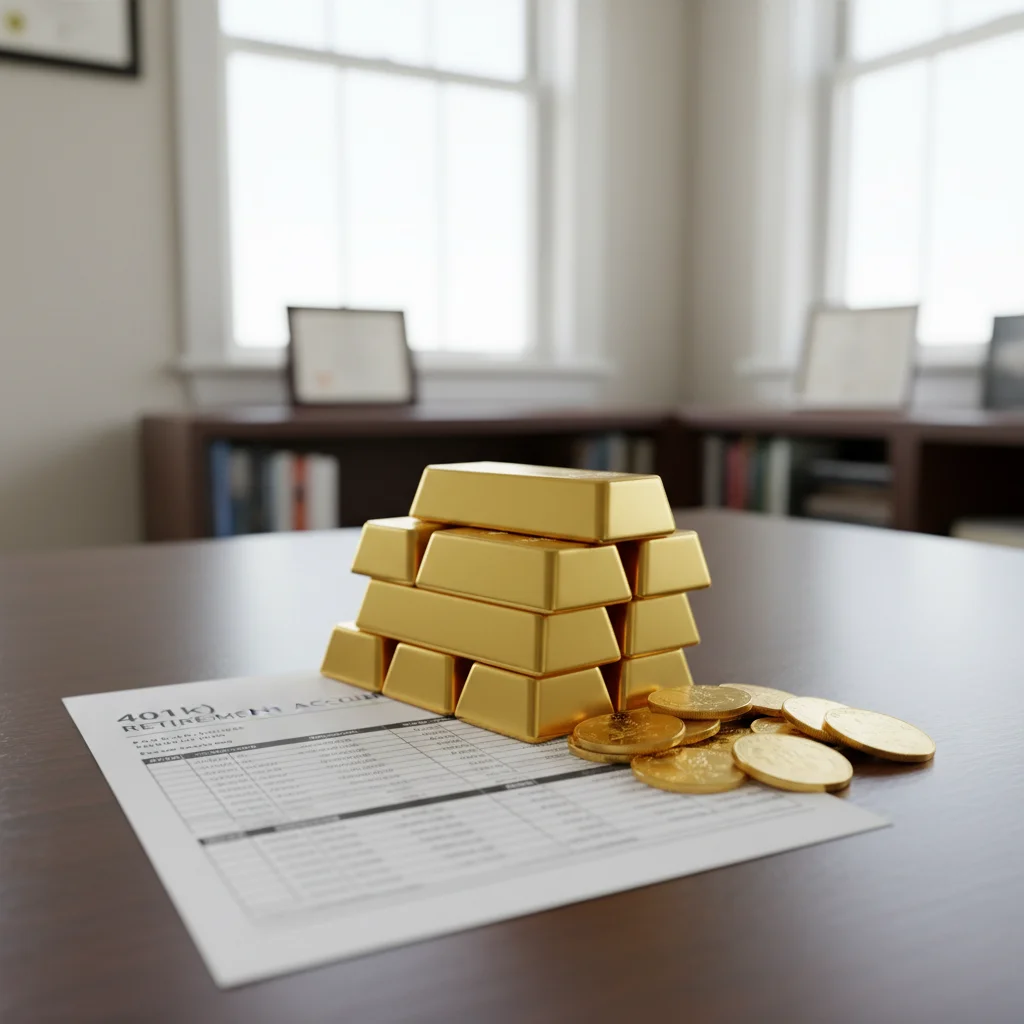
For individuals planning for retirement, the stability and wealth preservation characteristics of gold have led to the increasing popularity of Gold IRAs (Individual Retirement Accounts). A Gold IRA allows investors to hold physical gold, silver, platinum, and palladium bullion within a tax-advantaged retirement account, similar to how traditional IRAs hold stocks or bonds. This provides a unique opportunity to diversify retirement savings beyond conventional paper assets.
The primary benefit of a Gold IRA is the ability to hedge against inflation, currency devaluation, and market volatility within a tax-deferred or tax-free framework (for Roth Gold IRAs). As of 2025, the contribution limit for Traditional and Roth IRAs is $7,000, or $8,000 if age 50 or over. These accounts typically involve purchasing IRS-approved precious metals, which must meet specific fineness standards (e.g., 0.995 fine for gold bullion) and be stored in an approved depository. This allows investors to secure their future with a tangible asset that has historically maintained its value over the long term, offering peace of mind amidst economic uncertainties. Understanding the benefits of a Gold IRA is essential for those considering this investment vehicle.
Geopolitical Influence and Market Sentiment
Gold's value is also significantly influenced by geopolitical events and market sentiment. Political instability, trade wars, and military conflicts often trigger a flight to safety, driving up gold prices. For instance, tensions in the Middle East or major global events can cause immediate spikes in gold demand. This reaction is rooted in gold's historical role as a universal currency and a reliable asset when trust in national currencies or governments wavers.
Beyond immediate crises, long-term shifts in global power dynamics, such as the rise of emerging economies or changes in international trade agreements, can also impact gold's appeal. Central banks in countries seeking to reduce their reliance on the U.S. dollar, for example, may increase their gold holdings. Furthermore, investor sentiment, driven by news cycles, economic forecasts, and even social media trends, can create short-term volatility in gold prices. Understanding these complex interactions is crucial for anyone looking to invest in gold. Learn more about investing strategies to navigate these market forces.
The Future of Gold: Enduring Relevance
Despite the advent of new financial technologies and evolving economic landscapes, gold's fundamental appeal and utility are unlikely to diminish. Its role as a store of value, a hedge against uncertainty, and a tangible asset remains as relevant as ever.
Continued Demand from Emerging Markets
As emerging economies continue to grow and their middle classes expand, demand for gold, both for jewelry and investment, is expected to remain robust. Countries like India and China have deep cultural connections to gold, viewing it not only as an investment but also as a traditional gift and a symbol of prosperity. These regions represent significant and growing consumer bases that consistently drive a substantial portion of global gold demand. According to the World Gold Council, China and India together accounted for approximately 50% of global consumer gold demand in 2023. This sustained demand from populous and economically expanding nations will continue to underpin gold's value.
Moreover, central banks in these regions are increasingly diversifying their reserves, often adding gold to reduce reliance on the U.S. dollar and other fiat currencies. This strategic buying by national institutions in emerging markets further solidifies gold's position as a critical global asset.
Technological Advancements and New Applications
While traditional uses dominate, technological advancements are continually finding new applications for gold. Its unique properties make it indispensable in cutting-edge fields. For example, gold nanoparticles are being explored in medicine for drug delivery systems, cancer therapy, and diagnostic tools due to their biocompatibility and optical properties. In space exploration, gold's reflective and non-corrosive qualities make it ideal for coating spacecraft components and astronaut visors to protect against radiation and extreme temperatures.
The ongoing miniaturization of electronics and the demand for high-performance, reliable components in sectors like artificial intelligence, quantum computing, and renewable energy will likely sustain, and potentially increase, industrial demand for gold. These niche but high-value applications contribute to the overall utility and demand for the metal, ensuring its continued relevance beyond its financial role.
Gold's Role in a Digital Age
In an increasingly digital world, gold's tangible nature offers a unique counterpoint to purely digital assets. While cryptocurrencies like Bitcoin are often touted as "digital gold," they lack gold's millennia-long history of value, universal acceptance, and physical properties. Gold provides a tangible asset that is not susceptible to cyberattacks, server failures, or the regulatory uncertainties that still plague the nascent cryptocurrency market.
Furthermore, innovations like tokenized gold, which represent physical gold on a blockchain, are emerging, bridging the gap between traditional assets and digital finance. These developments could potentially increase gold's accessibility and liquidity for a new generation of investors, integrating it further into the digital economy while preserving its core attributes. Gold's enduring appeal lies in its ability to adapt and maintain its fundamental value regardless of technological shifts or monetary policy changes.
Frequently Asked Questions
What makes gold a safe haven asset?
Gold is considered a safe haven asset because its value tends to remain stable or even increase during periods of economic uncertainty, political instability, or market volatility. It is not tied to the performance of any single government or corporation, offering a reliable store of value when other investments falter.
How much gold has been mined in history?
As of 2023, it is estimated that approximately 208,874 metric tons of gold have been mined throughout human history. A significant portion of this, about two-thirds, has been extracted since 1950, reflecting advancements in mining technology.
Can I hold physical gold in my retirement account?
Yes, you can hold physical gold in a special type of Individual Retirement Account called a Gold IRA. This allows you to diversify your retirement savings with IRS-approved precious metals, which must meet specific fineness standards and be stored in an approved depository.
What is the gold standard?
The gold standard was a monetary system where a country's currency or paper money had a value directly linked to gold. Governments promised to convert paper money into a fixed amount of gold, providing stability and facilitating international trade. Most countries abandoned the gold standard by the mid-20th century.
How does gold act as an inflation hedge?
Gold acts as an inflation hedge because its intrinsic value is not subject to the same inflationary pressures as fiat currencies, which can be printed in unlimited quantities. When the purchasing power of paper money declines due to inflation, gold tends to maintain or increase its value, protecting wealth.
What are the main industrial uses of gold?
Beyond jewelry and investment, gold is highly valued in industry for its excellent electrical conductivity, malleability, and non-reactivity. It is extensively used in electronics (e.g., connectors in computers and smartphones), dentistry, and specialized applications in medicine and aerospace.
Is gold a good investment for diversification?
Yes, gold is considered an excellent investment for portfolio diversification because it often has a low or negative correlation with traditional assets like stocks and bonds. This means that when other parts of a portfolio decline, gold may perform well, helping to reduce overall portfolio risk and volatility.
Key Takeaways
Historical Significance: Gold has been a symbol of wealth, power, and currency for over 6,000 years, shaping economies and civilizations.
Scarcity and Durability: Its limited supply and virtually indestructible nature make it a reliable and enduring store of value.
Unique Properties: Gold's malleability, conductivity, and non-reactivity make it indispensable for both jewelry and high-tech industrial applications.
Safe Haven Asset: Gold serves as a critical safe haven during economic uncertainty, geopolitical instability, and periods of high inflation.
Portfolio Diversifier: Its low correlation with traditional assets makes it an effective tool for reducing overall portfolio risk.
Modern Investment Vehicle: Gold IRAs allow investors to diversify retirement savings with physical gold, offering long-term wealth preservation within a tax-advantaged framework.
Enduring Demand: Continued demand from emerging markets, technological advancements, and its unique position in a digital age ensure gold's lasting relevance.
Conclusion
The history of gold is a testament to its enduring power and universal appeal. From its earliest discovery as a shimmering adornment to its modern role as a sophisticated financial asset, gold has consistently held a unique place in human civilization. Its inherent physical properties—scarcity, durability, malleability, and non-reactivity—provide a fundamental basis for its value. Coupled with its historical significance as a monetary standard, its role as a safe haven asset during crises, and its effectiveness as an inflation hedge, gold remains an indispensable component of a well-diversified financial strategy. As global economies navigate complex challenges, the timeless allure of gold continues to offer stability and security, making it a wise consideration for investors seeking to preserve and grow their wealth, particularly through vehicles like a Gold IRA. Understanding its past is key to appreciating its enduring value in the future.
Disclaimer: This article is for informational and educational purposes only and does not constitute financial, investment, or tax advice. Always consult a qualified financial advisor before making investment decisions.
The information provided in this article is for educational purposes only and does not constitute financial, investment, or legal advice. Always consult with a qualified financial advisor, tax professional, or legal counsel for personalized guidance tailored to your specific situation before making any financial decisions.
Comments
No comments yet. Be the first to comment!
More from Gold IRA


Explore Related Guides
Comprehensive investment strategies covering stocks, bonds, ETFs, crypto, and real estate.
Compare banking products, interest rates, and strategies to maximize your savings.
Master budgeting, debt management, taxes, and financial planning for your situation.