Credit vs. Debt: Understanding the Financial Fundamentals
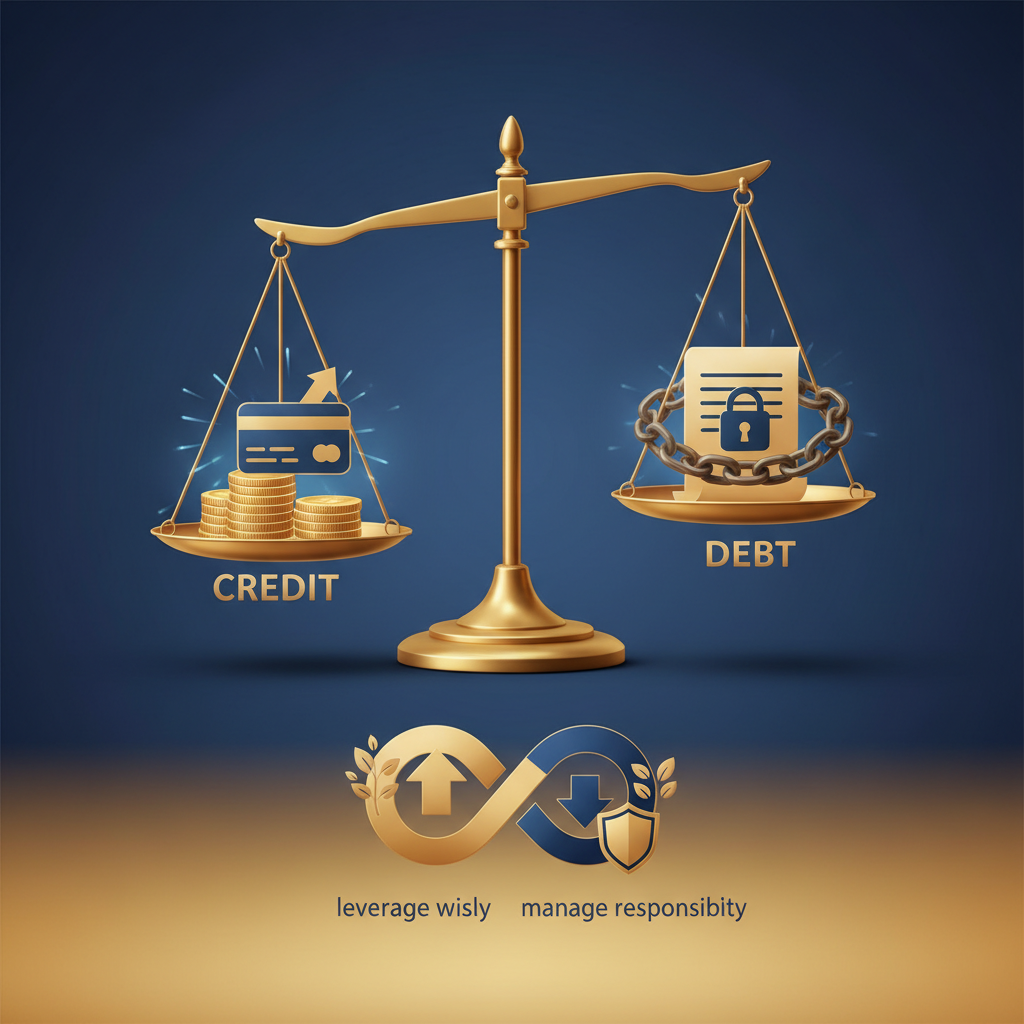
Many people use the terms "credit" and "debt" interchangeably, often leading to confusion and poor financial decisions. While intrinsically linked, credit and debt represent distinct financial concepts with different implications for your financial health. Understanding the fundamental differences between them, how they function, and how to manage each effectively is crucial for building a strong financial future. This article will demystify these core components of personal finance, explain their roles, and provide actionable strategies for leveraging credit wisely while managing debt responsibly.
Credit vs. Debt Definition: Credit is the ability to borrow money or access goods/services with the promise of future repayment, often with interest. Debt is the money or obligation owed as a result of borrowing credit, which must be repaid to the lender.
The Fundamental Differences Between Credit and Debt
While often used synonymously, credit and debt are distinct financial concepts. Credit is the potential to borrow, a privilege granted by a lender based on your perceived ability to repay. Debt, on the other hand, is the actual obligation that arises once you exercise that credit privilege and borrow money. Understanding this core distinction is the first step toward mastering your personal finances.
What is Credit?
Credit refers to a contractual agreement in which a borrower receives money or resources with the promise to repay the lender at a later date, usually with interest. It's essentially a lender's trust in your ability and willingness to fulfill your financial obligations. When you apply for a credit card, a loan, or a mortgage, you are applying for credit. The lender assesses your creditworthiness – your financial history, income, existing debts, and payment patterns – to determine if they should extend credit to you and under what terms.
A strong credit history demonstrates to lenders that you are a reliable borrower, making it easier to secure loans, rent apartments, and even get certain jobs. Your credit score, a three-digit number, is a numerical representation of this creditworthiness. According to the Fair Isaac Corporation (FICO), the average FICO score in the U.S. reached 718 in 2023, indicating a generally healthy credit landscape for many consumers.
What is Debt?
Debt is the money or obligation that you owe to another party, typically as a result of borrowing credit. Once you use your credit card to make a purchase, take out a car loan, or sign a mortgage, you have incurred debt. This debt represents a financial liability that must be repaid according to the agreed-upon terms, which usually includes the principal amount borrowed plus any accrued interest and fees.
Debt can be a powerful tool for achieving financial goals, such as buying a home or pursuing higher education. However, it can also become a significant burden if not managed carefully. The Federal Reserve's 2023 report on household debt and credit indicated that total household debt in the U.S. reached $17.06 trillion, highlighting the pervasive nature of debt in modern economies. This figure includes mortgages, auto loans, credit card balances, and student loans, each representing a distinct type of debt.
The Interplay and Relationship
Credit and debt are two sides of the same coin. You cannot have debt without first being extended credit, and using credit inevitably leads to incurring debt. Credit is the mechanism that allows you to access funds, while debt is the result of utilizing that mechanism.
Think of it this way: a credit card is a line of credit that allows you to borrow up to a certain limit. When you swipe that card, you are creating debt that you must repay. Your ability to get more credit, and at what interest rates, is heavily influenced by how well you manage your existing debt. Paying your debts on time and keeping your credit utilization low helps build a positive credit history, which in turn can lead to access to more favorable credit terms in the future. Conversely, failing to manage debt can damage your credit score, making it harder and more expensive to borrow in the future.
Types of Credit and Their Uses
Credit comes in various forms, each designed for different purposes and with distinct repayment structures. Understanding these types is crucial for choosing the right credit product for your needs and managing it effectively.
Revolving Credit
Revolving credit allows you to borrow money repeatedly up to a certain limit, repay a portion, and then borrow again. There's no fixed end date for the loan, and payments are typically based on a percentage of the outstanding balance. The most common example of revolving credit is a credit card. With a credit card, you have a credit limit, say $5,000. You can spend up to that amount, and as you repay the balance, that credit becomes available again.
Key characteristics of revolving credit include:
Flexible borrowing: You can borrow as much or as little as you need, up to your limit.
Variable payments: Minimum payments are usually a small percentage of the balance, but paying only the minimum can lead to high interest charges and a longer repayment period.
Interest accrual: Interest is typically charged on the outstanding balance if not paid in full by the due date.
Credit utilization: The amount of revolving credit you use relative to your total available credit (your credit utilization ratio) is a significant factor in your credit score. Lenders generally prefer to see this ratio below 30%.
Other examples include lines of credit, such as a home equity line of credit (HELOC), which allows homeowners to borrow against the equity in their home.
Installment Credit
Installment credit involves borrowing a fixed amount of money that is repaid in a series of regular, fixed payments (installments) over a predetermined period. Once the loan is fully repaid, the account is closed. Unlike revolving credit, you cannot re-borrow from an installment loan once it's paid off; you would need to apply for a new loan.
Common examples of installment credit include:
Mortgages: Loans used to purchase real estate, typically repaid over 15 to 30 years.
Auto loans: Loans for purchasing vehicles, usually repaid over 3 to 7 years.
Student loans: Loans for educational expenses, often with deferred payments until after graduation.
Personal loans: Unsecured loans that can be used for various purposes, like debt consolidation or home improvements.
Installment credit is often used for larger purchases because it provides a predictable repayment schedule. The interest rate is usually fixed for the life of the loan, offering stability in monthly payments. Successfully managing installment credit by making on-time payments contributes positively to your credit history.
Open-Ended Credit
While often grouped with revolving credit, open-ended credit is a broader category that encompasses any credit arrangement where the borrower can repeatedly draw funds up to a certain limit. Revolving credit is a specific type of open-ended credit. The key feature is that the credit line remains open for future use after repayment.
Examples include:
Credit cards: As discussed, these are the most common form.
Home equity lines of credit (HELOCs): These allow you to borrow against your home's equity, often with a draw period followed by a repayment period.
Personal lines of credit: Similar to HELOCs but typically unsecured and with lower limits, offering flexible access to funds for various needs.
The main benefit of open-ended credit is its flexibility and convenience. It can serve as an emergency fund or a way to manage fluctuating expenses. However, the ease of access can also lead to overspending and accumulating excessive debt if not managed with discipline.
| Credit Type | Description | Typical Use Cases | Key Feature |
|---|
| Revolving | Borrow, repay, and re-borrow up to a limit. | Everyday purchases, emergencies, building credit | Flexible borrowing, variable payments |
| Installment | Fixed amount borrowed, repaid in fixed installments. | Home, car, education, large personal expenses | Fixed payments, set repayment period, closed |
| Open-Ended | Broad category allowing repeated borrowing up to a limit. | Flexible access to funds, emergencies | Continuous access to credit line |
Common Forms of Debt and Their Characteristics
Just as there are different types of credit, there are various forms of debt, each with its own characteristics, risks, and benefits. Understanding these distinctions is vital for effective debt management.
Secured vs. Unsecured Debt
A critical distinction in debt is whether it is secured or unsecured. This classification refers to whether the debt is backed by collateral.
Secured debt is backed by an asset, known as collateral, which the lender can seize if the borrower defaults on the loan. This collateral reduces the risk for the lender, often resulting in lower interest rates for the borrower.
Examples of secured debt include:
Mortgages: The home itself serves as collateral. If you stop making payments, the lender can foreclose on the property.
Auto loans: The vehicle purchased acts as collateral. Default can lead to repossession of the car.
Secured personal loans: Some personal loans can be secured by assets like savings accounts or certificates of deposit (CDs).
Unsecured debt, conversely, is not backed by any collateral. The lender relies solely on the borrower's creditworthiness and promise to repay. Because there's no asset to seize in case of default, unsecured debt typically carries higher interest rates to compensate the lender for the increased risk.
Examples of unsecured debt include:
Credit card debt: The most common form of unsecured debt.
Student loans: While some are federally backed, they are generally considered unsecured as there's no asset to repossess.
Personal loans: Many personal loans are unsecured, based purely on your credit score and income.
Medical debt: Bills owed for healthcare services.
While secured debt generally comes with lower interest rates, the risk of losing a valuable asset like your home or car in case of default is significant. Unsecured debt, while not risking physical assets, can still lead to severe consequences like damaged credit, collections, and even lawsuits.
Good Debt vs. Bad Debt
Financial experts often categorize debt as "good" or "bad" based on its potential to generate future value or income. This distinction is not absolute, as even "good" debt can become problematic if mismanaged.
Good debt is typically associated with investments that have the potential to increase your net worth or future earning capacity. It's debt that helps you acquire an appreciating asset or improve your skills.
Examples of good debt:
Mortgage for a primary residence: While not guaranteed, real estate often appreciates over time, and a home provides shelter and builds equity.
Student loans for education: A degree or specialized training can lead to higher-paying jobs and increased earning potential. According to the Bureau of Labor Statistics, individuals with a bachelor's degree earned a median of $1,334 per week in 2022, compared to $809 per week for those with only a high school diploma.
Business loans: Debt taken to start or expand a profitable business can generate significant returns.
Bad debt is typically associated with depreciating assets or consumption that does not generate future value. It's debt incurred for things that lose value quickly or for expenses that could have been paid with cash.
Examples of bad debt:
Credit card debt for everyday expenses: High-interest debt on consumables like groceries, clothes, or entertainment provides no long-term financial benefit and can quickly spiral out of control. The average credit card interest rate in the U.S. was over 20% in late 2023, making it one of the most expensive forms of debt.
Auto loans for luxury vehicles: While a car is often necessary, financing an overly expensive vehicle that depreciates rapidly can be a significant financial drain.
Payday loans: These are extremely high-interest, short-term loans designed to be repaid on your next payday, often trapping borrowers in a cycle of debt due to exorbitant fees.
The key takeaway is that "good" debt is an investment, while "bad" debt is a consumption expense. Financial advisors recommend carefully evaluating the purpose of any debt and its potential return before taking it on.
Navigating Different Debt Types
Managing different types of debt requires different strategies. For instance, a mortgage payment is a long-term commitment, often with tax benefits, and typically has a lower interest rate. Credit card debt, on the other hand, demands immediate attention due to its high interest rates. Student loans might offer income-driven repayment plans, providing flexibility during periods of lower income.
A diversified debt portfolio, if managed well, can be beneficial. For example, having a mortgage and a car loan (installment debts) alongside a credit card (revolving debt) can help build a robust credit history. However, an excessive amount of any debt type, particularly high-interest unsecured debt, can quickly become overwhelming. The goal is to minimize bad debt and strategically utilize good debt to achieve financial growth.
Building and Maintaining a Healthy Credit Profile
Your credit profile is a critical component of your financial identity. It influences everything from loan approvals and interest rates to insurance premiums and even employment opportunities. Building and maintaining a healthy credit profile is an ongoing process that requires diligence and strategic financial habits.
Understanding Your Credit Score
Your credit score is a three-digit number that summarizes your creditworthiness. The most widely used scoring models are FICO (Fair Isaac Corporation) and VantageScore. While the exact algorithms are proprietary, they generally consider five main factors, though their weighting may vary slightly:
Payment History (35%): This is the most crucial factor. Consistently paying your bills on time demonstrates reliability. Late payments, bankruptcies, and collections significantly harm your score.
Amounts Owed / Credit Utilization (30%): This refers to how much credit you're using compared to your total available credit. Keeping your credit utilization ratio (total balances / total credit limits) below 30% is generally recommended. For example, if you have a total credit limit of $10,000 across all cards, keeping your balances below $3,000 is ideal.
Length of Credit History (15%): The longer your credit accounts have been open and in good standing, the better. This shows a track record of responsible borrowing.
New Credit (10%): Opening too many new credit accounts in a short period can be seen as risky, as it suggests you might be in financial distress or taking on too much debt. Each "hard inquiry" for new credit can temporarily ding your score.
Credit Mix (10%): Having a healthy mix of different types of credit (e.g., credit cards, installment loans like a mortgage or car loan) can positively impact your score, showing you can manage various forms of debt responsibly.
Understanding these factors empowers you to take targeted actions to improve or maintain your score.
Strategies for Building Good Credit
Building good credit takes time and consistent effort. Here are actionable strategies:
- Pay All Bills On Time, Every Time: This is the single most important factor. Set up automatic payments or reminders to ensure you never miss a due date, not just for credit cards but also for utilities, rent, and other recurring expenses that can sometimes be reported to credit bureaus.
- Keep Credit Utilization Low: Aim to keep your credit card balances below 30% of your credit limit. If you have a $5,000 limit, try to keep your balance below $1,500. Paying down balances before the statement closing date can help keep reported utilization low.
- Maintain a Long Credit History: Don't close old credit accounts, especially those with no annual fees, even if you don't use them frequently. The length of your oldest account contributes to your score.
- Diversify Your Credit Mix (Responsibly): Once you have a solid credit card history, consider adding an installment loan (like a small personal loan or car loan) if you genuinely need it and can afford the payments. Avoid taking on debt solely to "improve your credit mix."
- Become an Authorized User: If you're new to credit, a trusted family member with excellent credit can add you as an authorized user on their credit card. Their positive payment history can then reflect on your credit report, helping you build a history.
- Consider a Secured Credit Card: If you have no credit history or poor credit, a secured credit card requires a cash deposit that acts as your credit limit. This is a low-risk way to demonstrate responsible credit behavior.
- Review Your Credit Report Regularly: Check your credit report from all three major bureaus (Equifax, Experian, TransUnion) at least once a year for errors. You can get a free copy annually from AnnualCreditReport.com. Correcting errors can significantly boost your score.
Monitoring and Protecting Your Credit
Proactive monitoring is essential for maintaining a healthy credit profile and protecting yourself from fraud.
- Regularly Check Your Credit Reports: As mentioned, use AnnualCreditReport.com to get your free reports. Look for unfamiliar accounts, incorrect payment statuses, or inaccurate personal information. The Federal Trade Commission (FTC) reported that identity theft was the most common type of fraud in 2022, with credit card fraud being a significant component.
- Monitor Your Credit Score: Many credit card companies and banks offer free credit score monitoring services. These can provide alerts to significant changes in your score.
- Be Wary of Identity Theft: Protect your personal information. Use strong, unique passwords, be cautious of phishing scams, and shred sensitive documents. Consider placing a credit freeze or fraud alert on your credit reports if you suspect identity theft. A credit freeze restricts access to your credit report, preventing new accounts from being opened in your name.
- Understand the Impact of Hard vs. Soft Inquiries: A hard inquiry occurs when a lender checks your credit report when you apply for new credit, potentially lowering your score slightly. A soft inquiry happens when you check your own credit or when a lender pre-approves you for an offer; it does not affect your score.
By diligently building and protecting your credit, you establish a foundation for greater financial opportunities and security.
Effective Strategies for Debt Management and Reduction
Managing debt effectively is paramount to achieving financial stability and freedom. Without a clear strategy, debt can quickly become overwhelming, impacting your credit score, mental well-being, and future financial goals.
Creating a Debt Repayment Plan
The first step to tackling debt is to develop a structured repayment plan. This involves understanding your total debt, interest rates, and monthly cash flow.
- List All Your Debts: Create a comprehensive list of all your debts, including:
Lender name
Current balance
Interest rate (APR)
Minimum monthly payment
Due date
Secured or unsecured status
Example Debt List:
Lender Balance APR Min. Payment Due Date Type Credit Card A $5,000 24.99% $125 15th Unsecured Credit Card B $3,000 19.99% $75 20th Unsecured Personal Loan $10,000 12.00% $250 5th Unsecured Auto Loan $15,000 5.00% $300 10th Secured
- Choose a Repayment Strategy: Two popular methods are the debt snowball and debt avalanche methods.
Debt Snowball Method: You pay the minimum on all debts except the smallest balance, which you attack with extra payments. Once the smallest debt is paid off, you roll that payment amount into the next smallest debt. This method provides psychological wins, keeping you motivated.
Debt Avalanche Method: You pay the minimum on all debts except the one with the highest interest rate, which you prioritize with extra payments. This method saves you the most money on interest over time.
Financial advisors often recommend the debt avalanche method for its mathematical efficiency, but the debt snowball can be more effective for individuals who need consistent motivation.
Create a Budget: A detailed budget is essential to free up extra cash for debt repayment. Track your income and expenses to identify areas where you can cut back. Even small savings, like reducing dining out or canceling unused subscriptions, can add up to significant extra payments.
Automate Payments: Set up automatic minimum payments for all debts to avoid late fees and protect your credit score. Then, manually make additional payments to your prioritized debt.
Debt Consolidation and Refinancing
For those with multiple high-interest debts, debt consolidation or refinancing can be powerful tools to simplify payments and potentially reduce interest costs.
- Debt Consolidation Loan: This involves taking out a new loan, typically a personal loan, to pay off several smaller debts. The goal is to get a lower interest rate and combine multiple monthly payments into one, simpler payment. This can be effective for credit card debt, but requires a good credit score to qualify for favorable terms.
- Balance Transfer Credit Card: If you have good credit, you might qualify for a balance transfer card with a 0% introductory APR for a period (e.g., 12-18 months). This allows you to transfer high-interest credit card balances and pay them down without accruing interest during the promotional period. Be aware of balance transfer fees (typically 3-5% of the transferred amount) and ensure you can pay off the balance before the introductory period ends.
- Home Equity Loan or HELOC: If you own a home and have significant equity, you can use a home equity loan (fixed sum, fixed payments) or a Home Equity Line of Credit (revolving credit) to consolidate debt. These typically have much lower interest rates than unsecured debt because your home serves as collateral. However, this also puts your home at risk if you default.
- Refinancing: This usually applies to specific types of loans, like mortgages or auto loans. You take out a new loan with a lower interest rate or different terms to pay off your existing loan. For example, refinancing a mortgage from a 30-year to a 15-year term can save substantial interest, but will increase your monthly payments. According to Freddie Mac, the average 30-year fixed mortgage rate fluctuated between 6% and 7% in 2023, making refinancing attractive for those with older, higher-rate mortgages.
Before pursuing consolidation or refinancing, carefully compare interest rates, fees, and terms. Ensure that the new loan genuinely saves you money and doesn't just extend your repayment period.
Avoiding Common Debt Traps
Preventing debt accumulation is as important as managing existing debt.
- Live Within Your Means: The most fundamental principle. Spend less than you earn.
- Build an Emergency Fund: Aim for 3-6 months of living expenses in a readily accessible savings account. This prevents you from relying on high-interest credit cards when unexpected expenses arise, which is a common trigger for debt.
- Be Cautious with "Buy Now, Pay Later" (BNPL) Services: While convenient, these services can encourage overspending and make it harder to track your overall debt obligations. Missing payments can lead to fees and negative impacts on your credit score.
- Avoid Payday Loans and Title Loans: These loans come with extremely high interest rates (often 300-400% APR) and are designed to be short-term solutions but often trap borrowers in a cycle of debt. Explore alternatives like personal loans from credit unions, community assistance programs, or negotiating with creditors.
- Understand Loan Terms: Always read the fine print before signing any loan agreement. Know the interest rate, fees, repayment schedule, and consequences of default.
- Don't Co-Sign Lightly: Co-signing a loan makes you equally responsible for the debt. If the primary borrower defaults, you are on the hook, and your credit score will suffer.
By implementing these strategies, you can take control of your debt, reduce financial stress, and pave the way for a more secure financial future.
The Long-Term Impact of Credit and Debt on Financial Health
The way you manage credit and debt today has profound and lasting effects on your financial health, shaping your ability to build wealth, achieve financial freedom, and secure your future. It's not just about immediate payments; it's about the cumulative impact over decades.
Wealth Accumulation and Investment
Your approach to credit and debt directly influences your capacity for wealth accumulation.
- Interest Paid vs. Interest Earned: Every dollar you spend on interest payments for debt is a dollar that cannot be invested to earn returns. High-interest debt, like credit card balances, acts as a significant drag on your financial progress. For example, if you have $5,000 in credit card debt at 20% APR, you're paying $1,000 in interest annually, money that could have been invested. Conversely, wisely used credit (like a mortgage) can free up capital for other investments.
- Opportunity Cost: The money tied up in debt repayment, especially high-interest debt, represents an opportunity cost. This is the potential gain you miss out on by not investing that money. If you're paying down a high-interest credit card, you're missing out on the potential growth of that money in a retirement account or other investments.
- Leverage for Growth: "Good debt," such as a mortgage or a business loan, can be a form of leverage to acquire appreciating assets or generate income. A well-managed mortgage allows you to own a home that can appreciate in value, while a business loan can fuel growth that far exceeds the cost of borrowing. However, excessive leverage can also amplify losses if investments underperform.
Ultimately, minimizing bad debt and strategically using good debt frees up more of your income for savings and investments, accelerating your journey towards financial independence.
Financial Freedom and Stress Reduction
The psychological and emotional impact of debt is often underestimated. High levels of debt, particularly unsecured and high-interest debt, can lead to significant stress, anxiety, and even health problems.
- Reduced Stress and Improved Well-being: Being debt-free, or having manageable debt, contributes significantly to peace of mind. Without the constant worry of payments and accruing interest, individuals can focus on other aspects of their lives and enjoy greater financial security. A 2023 survey by the American Psychological Association found that money and the economy were the top sources of stress for Americans.
- Increased Flexibility and Choices: Lower debt obligations mean more disposable income, which translates to greater financial flexibility. You have more choices about how to spend, save, or invest your money. This can mean taking a dream vacation, changing careers, or retiring earlier, without the burden of looming payments.
- Building a Financial Safety Net: By reducing debt, you strengthen your financial safety net. A robust emergency fund, combined with low debt, makes you more resilient to unexpected financial shocks like job loss or medical emergencies.
Achieving financial freedom isn't just about having a lot of money; it's about having control over your finances and the ability to make choices without being constrained by debt obligations.
Future Borrowing Power
Your current credit and debt management practices directly influence your ability to borrow in the future and the terms you'll receive.
- Credit Score Impact: As discussed, your payment history, credit utilization, and overall debt levels are major determinants of your credit score. A higher credit score signals to lenders that you are a low-risk borrower.
- Access to Favorable Terms: A strong credit score and low debt-to-income ratio (the percentage of your gross monthly income that goes towards debt payments) qualify you for the best interest rates on mortgages, auto loans, and other forms of credit. This can save you tens of thousands of dollars over the life of a loan. For example, a difference of just one percentage point on a $300,000, 30-year mortgage can mean over $60,000 in interest savings.
- Loan Approval: Lenders use your credit profile to assess risk. If your credit score is low or your debt-to-income ratio is too high, you may be denied loans or only offered loans with predatory interest rates.
- Other Financial Opportunities: Beyond loans, a good credit history can affect your ability to rent an apartment, get better car insurance rates, and even secure certain jobs that require financial responsibility.
In essence, responsible credit and debt management is an investment in your future self. It paves the way for greater financial opportunities, reduced stress, and the ability to build substantial wealth over the long term.
Frequently Asked Questions
What is the main difference between credit and debt?
The main difference is that credit is the ability to borrow money or access goods/services with a promise to repay, while debt is the actual money or obligation that you owe as a result of using that credit. Credit is the potential, debt is the reality of borrowing.
Is all debt bad, or can some debt be good?
Not all debt is bad. Good debt is typically an investment that has the potential to increase your net worth or future earning capacity, such as a mortgage for a home that appreciates or student loans for education leading to higher income. Bad debt is usually for depreciating assets or consumption, like high-interest credit card debt for everyday expenses.
How does my credit score impact my debt?
Your credit score significantly impacts the cost of your debt. A higher credit score indicates lower risk to lenders, allowing you to qualify for lower interest rates on loans and credit cards. Conversely, a low credit score means higher interest rates, making your debt more expensive and harder to repay.
What is a healthy credit utilization ratio?
A healthy credit utilization ratio is generally considered to be 30% or less. This means you should aim to use no more than 30% of your total available credit across all your credit cards and lines of credit. Keeping it lower, ideally below 10%, is even better for your credit score.
What are the best strategies for paying off high-interest debt?
The two most common strategies are the debt avalanche method (paying off debts with the highest interest rates first to save the most money) and the debt snowball method (paying off the smallest debts first for psychological motivation). Both require making minimum payments on all other debts while aggressively attacking the prioritized one.
Can debt consolidation help me manage my debt?
Yes, debt consolidation can be an effective strategy for managing debt, especially high-interest credit card debt. It involves combining multiple debts into a single new loan, often with a lower interest rate and a single monthly payment, which can simplify repayment and save on interest costs. However, it requires a good credit score to qualify for favorable terms and doesn't eliminate the debt itself.
How often should I check my credit report?
You should check your credit report from all three major bureaus (Equifax, Experian, and TransUnion) at least once a year. You can get free copies at AnnualCreditReport.com. Regularly reviewing your reports helps you spot errors, identify potential fraud, and monitor your credit health.
Key Takeaways
Credit vs. Debt Distinction: Credit is the ability to borrow, while debt is the obligation to repay what you've borrowed.
Types of Credit: Understand revolving (credit cards), installment (mortgages, auto loans), and open-ended credit to choose appropriate financial tools.
Debt Classification: Differentiate between secured (backed by collateral) and unsecured debt, and between "good" debt (investments) and "bad" debt (consumption).
Credit Score Importance: Your credit score is a critical measure of financial trustworthiness, influencing interest rates and loan approvals.
Building Good Credit: Prioritize on-time payments, keep credit utilization low (below 30%), and maintain a long credit history.
Debt Management Strategies: Implement a clear repayment plan (snowball or avalanche), consider consolidation or refinancing for high-interest debts, and avoid common debt traps like payday loans.
Long-Term Impact: Responsible credit and debt management are crucial for wealth accumulation, financial freedom, reduced stress, and future borrowing power.
Conclusion
Navigating the financial landscape requires a clear understanding of the fundamental concepts of credit and debt. While often intertwined, recognizing credit as the potential to borrow and debt as the resulting obligation is the cornerstone of sound financial decision-making. By strategically utilizing different types of credit, such as revolving credit for flexibility and installment credit for major purchases, individuals can build a robust credit profile. Simultaneously, effectively managing debt, whether through smart repayment strategies like the avalanche method or by consolidating high-interest balances, is paramount to avoiding financial pitfalls.
The long-term implications of your credit and debt choices are profound, impacting your ability to accumulate wealth, achieve financial freedom, and secure favorable terms for future borrowing. By committing to responsible financial habits – paying bills on time, keeping utilization low, and making informed borrowing decisions – you empower yourself to leverage credit as a tool for growth rather than letting debt become a burden. Take control of your financial future by mastering the crucial relationship between credit and debt today.
Disclaimer: This article is for informational and educational purposes only and does not constitute financial, investment, or tax advice. Always consult a qualified financial advisor before making investment decisions.
The information provided in this article is for educational purposes only and does not constitute financial, investment, or legal advice. Always consult with a qualified financial advisor, tax professional, or legal counsel for personalized guidance tailored to your specific situation before making any financial decisions.
Comments
No comments yet. Be the first to comment!
More from Personal Finance



Explore Related Guides
Expert reviews of Gold IRA companies, rollover guides, fees, and IRS rules.
Comprehensive investment strategies covering stocks, bonds, ETFs, crypto, and real estate.
Compare banking products, interest rates, and strategies to maximize your savings.