Online Savings vs. Traditional Banks: The Complete Comparison
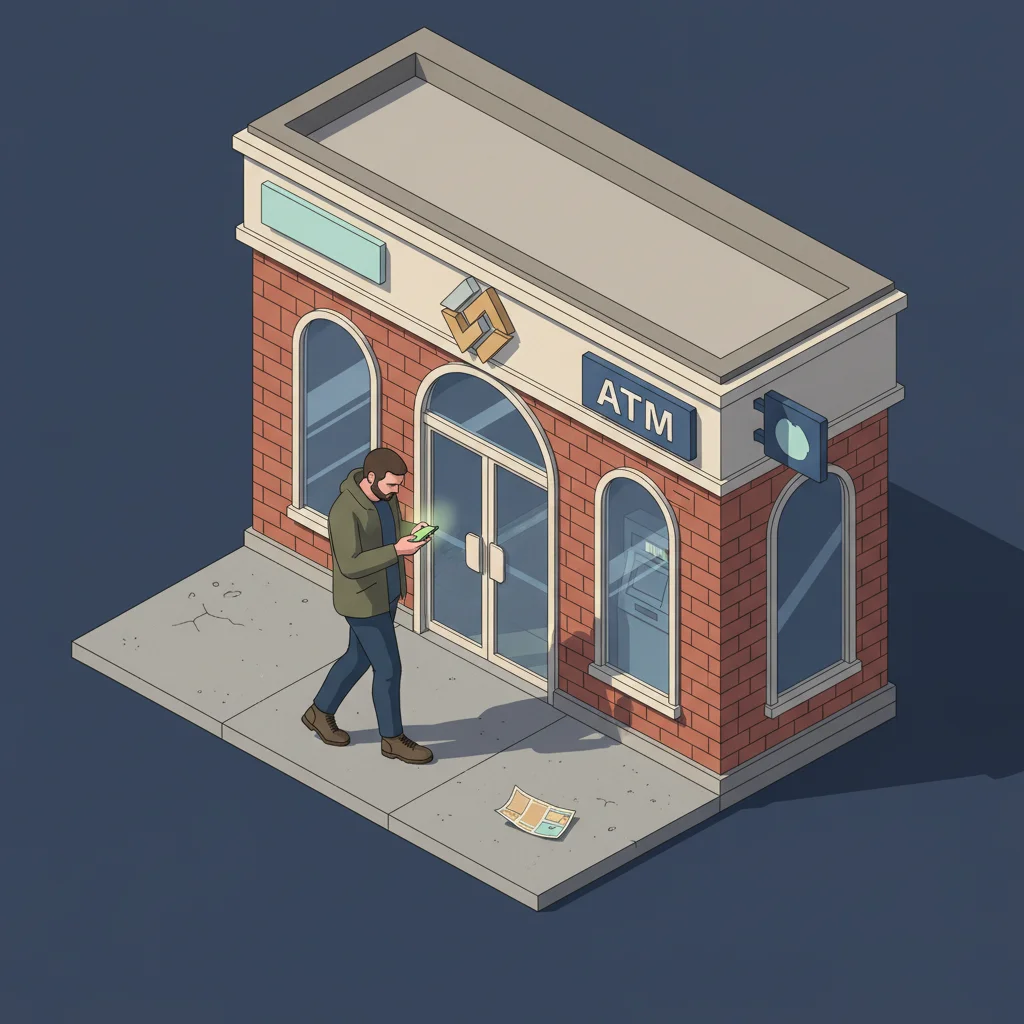
Choosing where to keep your hard-earned money is a fundamental financial decision, yet many individuals overlook the significant differences between online savings accounts and traditional banks. While both offer a place to store funds, their features, benefits, and drawbacks can dramatically impact your financial growth and convenience. For years, traditional banks were the only option, but the rise of digital banking has introduced powerful alternatives. Understanding these distinctions is crucial for optimizing your savings strategy in 2026.
Online Savings Account Definition: A savings account offered exclusively by an internet-based financial institution, typically characterized by higher interest rates and lower fees due to reduced overhead costs compared to brick-and-mortar banks.
The Core Differences: Rates, Fees, and Access
The primary distinctions between online savings accounts and traditional banks revolve around interest rates, associated fees, and access to services. These factors directly influence how much your money grows and the cost of managing it.
Online savings accounts are renowned for offering significantly higher Annual Percentage Yields (APYs) on deposits. As of March 2026, many leading online banks offer APYs ranging from 4.50% to 5.25%, sometimes even higher for promotional periods. This contrasts sharply with the average traditional bank savings account, which typically hovers around 0.01% to 0.10% APY. This difference can translate into hundreds or even thousands of dollars in earned interest over time, especially on larger balances. For instance, a $10,000 balance earning 5.00% APY would yield $500 in interest annually, while a 0.05% APY would only earn $5.
Traditional banks, with their extensive branch networks and ATM infrastructure, incur substantial operational costs. These costs are often passed on to consumers through various fees, including monthly maintenance fees, overdraft fees, and out-of-network ATM fees. While many traditional banks offer ways to waive monthly fees (e.g., maintaining a minimum balance or setting up direct deposit), online savings accounts typically have no monthly maintenance fees and fewer ancillary charges. This makes them a cost-effective option for savers.
Access to funds and services also differs. Traditional banks provide in-person support, which can be invaluable for complex transactions or when you prefer face-to-face interaction. They also offer a wider range of services under one roof, such as loans, mortgages, and investment advice. Online banks, while lacking physical branches, offer 24/7 digital access through robust mobile apps and websites. Funds can be easily transferred electronically, and many online banks partner with ATM networks for cash withdrawals and deposits.
Choosing the Right Fit for Your Financial Goals
Deciding between an online savings account and a traditional bank depends heavily on your personal financial habits, priorities, and specific needs. There isn't a universally "better" option; rather, it's about finding the best fit.
If your primary goal is to maximize interest earnings on your savings, an online savings account is almost always the superior choice. The higher APYs mean your money works harder for you, accelerating your progress towards financial goals like a down payment, emergency fund, or retirement. The convenience of managing your account entirely online, from anywhere, also appeals to digitally-savvy individuals. However, be aware that while online banks are FDIC-insured up to $250,000 per depositor, per institution, just like traditional banks, they may not be ideal if you frequently need to deposit cash or require in-person assistance.
Traditional banks, conversely, excel in providing a comprehensive banking experience and personal service. If you frequently handle cash, prefer to speak with a teller, or require a full suite of integrated financial products (checking, savings, loans, investments) from a single institution, a traditional bank might be more suitable. They offer the peace of mind of a physical presence and established relationships. For instance, according to a 2025 survey by the American Bankers Association, 68% of consumers still value the option of visiting a physical branch, even if they primarily bank online. The trade-off, however, is often lower interest rates on savings and potentially higher fees.
Many financially savvy individuals adopt a hybrid approach, leveraging the strengths of both. They might maintain a checking account at a traditional bank for everyday transactions, cash deposits, and bill payments, while keeping their primary savings in a high-yield online savings account to maximize growth. This strategy allows them to benefit from high APYs without sacrificing the convenience of local branch services when needed. Consider your transaction frequency, cash needs, and comfort level with digital platforms when making your decision.
Frequently Asked Questions
What is the average interest rate for online savings accounts in 2026?
As of March 2026, the average interest rate (APY) for leading online savings accounts typically ranges from 4.50% to 5.25%, significantly higher than traditional bank savings accounts.
Are online savings accounts safe and FDIC-insured?
Yes, reputable online savings accounts are just as safe as traditional bank accounts. They are insured by the Federal Deposit Insurance Corporation (FDIC) up to the standard $250,000 per depositor, per institution, protecting your funds in case the bank fails.
Can I deposit cash into an online savings account?
Depositing cash directly into an online savings account can be challenging since they lack physical branches. Common methods include linking an external checking account for electronic transfers, using money orders, or depositing cash at an ATM network partner if the online bank offers that feature.
Do online savings accounts have monthly fees?
Most online savings accounts do not charge monthly maintenance fees, which is one of their key advantages over many traditional bank accounts. This helps savers keep more of their earned interest.
How quickly can I access money from an online savings account?
Funds transferred electronically from an online savings account to a linked checking account typically take 1-3 business days to become available. Some online banks offer instant transfers to their own checking accounts or expedited options for a fee.
Key Takeaways
Higher APYs: Online savings accounts offer significantly higher interest rates (4.50%-5.25% in 2026) compared to traditional banks (0.01%-0.10%).
Lower Fees: Most online savings accounts have no monthly maintenance fees, reducing the cost of saving.
Digital Convenience: Online banks provide 24/7 access through robust apps and websites, ideal for managing funds remotely.
Traditional Bank Benefits: Brick-and-mortar banks offer in-person service, cash handling, and a wider range of integrated financial products.
Hybrid Approach: Many find success by using a traditional bank for checking and an online savings account for maximizing interest on savings.
Conclusion
The landscape of personal banking has evolved, offering consumers more choices than ever before. While traditional banks continue to provide valuable in-person services and comprehensive financial solutions, online savings accounts have emerged as a powerful tool for maximizing your savings growth. By offering significantly higher interest rates and lower fees, online options can dramatically accelerate your financial progress. In 2026, the smartest approach for many is to combine the strengths of both: leveraging the convenience of a local branch for everyday needs while entrusting your long-term savings to a high-yield online account. Evaluate your personal banking habits and financial goals to make an informed decision that puts your money to work most effectively.
Disclaimer: This article is for informational and educational purposes only and does not constitute financial, investment, or tax advice. Always consult a qualified financial advisor before making investment decisions.
Common Myths Debunked
Myth: A regular savings account at your local bank is a safe, effective place to grow your money.
Fact: Traditional savings accounts at big banks often pay 0.01–0.10% APY — far below inflation. High-yield savings accounts (HYSAs) at online banks regularly offer 4–5% APY, meaning your money grows 40–50x faster.
Myth: FDIC insurance only covers $250,000 total across all your accounts at a bank.
Fact: FDIC insurance covers $250,000 per depositor, per institution, per account ownership category. A couple can have up to $1 million insured at a single bank by using individual and joint accounts correctly.
Myth: Credit unions are just smaller, less capable versions of banks.
Fact: Credit unions are member-owned nonprofits that typically offer lower loan rates, higher savings rates, and lower fees than commercial banks. They are federally insured by the NCUA up to $250,000 — the same protection as FDIC.
The information provided in this article is for educational purposes only and does not constitute financial, investment, or legal advice. Always consult with a qualified financial advisor, tax professional, or legal counsel for personalized guidance tailored to your specific situation before making any financial decisions.
Comments
No comments yet. Be the first to comment!
More from Banking



Explore Related Guides
Expert reviews of Gold IRA companies, rollover guides, fees, and IRS rules.
Comprehensive investment strategies covering stocks, bonds, ETFs, crypto, and real estate.
Master budgeting, debt management, taxes, and financial planning for your situation.