Ethereum and Altcoins: Diversifying Your Crypto Portfolio
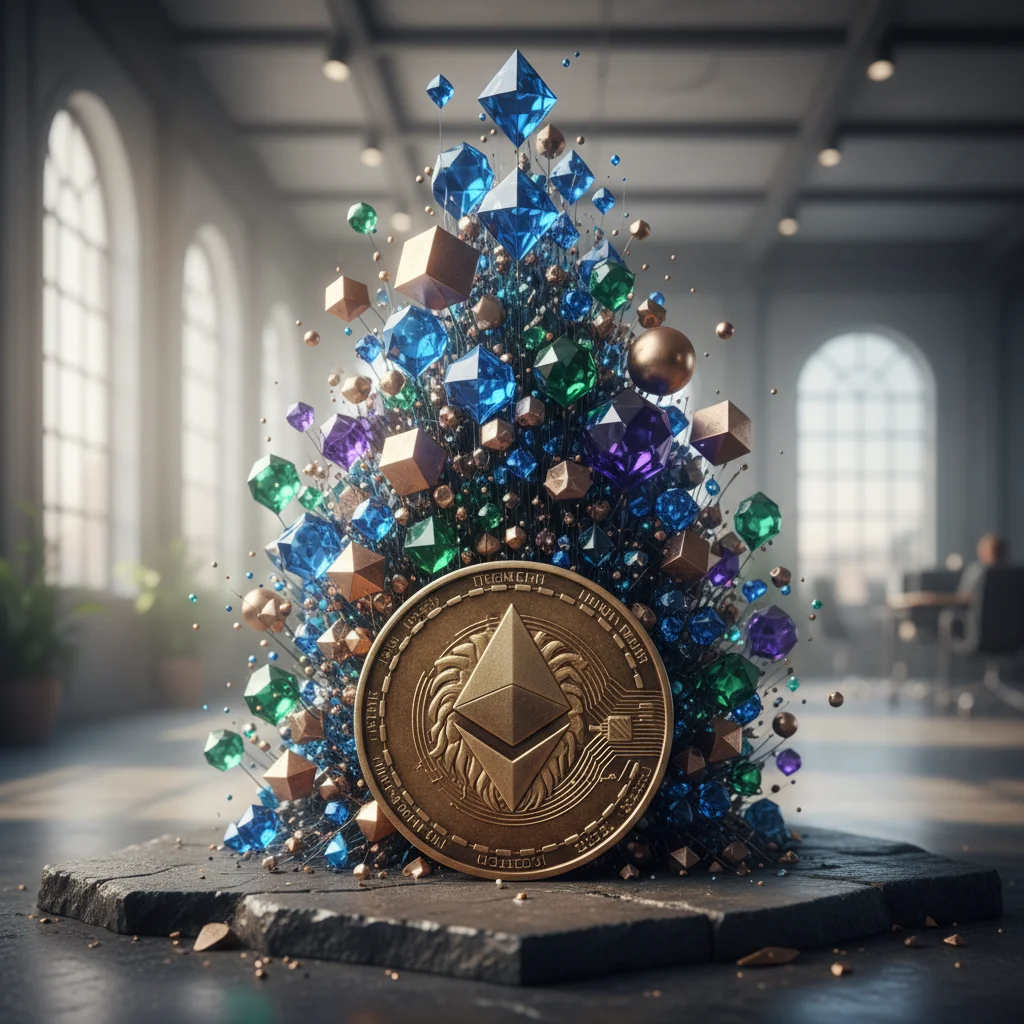
In the rapidly evolving landscape of digital assets, the conversation often begins and ends with Bitcoin. While Bitcoin undeniably holds its place as the pioneering cryptocurrency and a foundational store of value, a truly robust and resilient crypto portfolio extends far beyond BTC. For investors seeking to navigate the inherent volatility of this market while aiming for substantial growth, a strategic allocation that includes Ethereum and a carefully curated selection of altcoins is not just advisable, it's increasingly essential. This approach, often termed diversification, is a cornerstone of traditional finance that finds unique and powerful applications within the cryptocurrency domain.
The Foundation: Understanding the Crypto Market Structure Before diving into specific assets, it's crucial to understand the hierarchical structure of the crypto market.
Bitcoin (BTC): The Digital Gold Standard Bitcoin, the first and largest cryptocurrency by market capitalization, is often likened to "digital gold." Its primary value proposition lies in its scarcity (capped at 21 million coins), censorship resistance, decentralized nature, and role as a hedge against inflation and traditional financial system instability. For many, Bitcoin serves as the bedrock of their crypto holdings, offering a relatively more stable (though still volatile) anchor compared to the broader altcoin market. Its established network effect, institutional adoption, and robust security make it a prime candidate for a significant portion of any long-term crypto portfolio.
Ethereum (ETH): The World Computer and DeFi Engine Ethereum, the second-largest cryptocurrency, represents a paradigm shift beyond simple digital currency. It's a decentralized, open-source blockchain with smart contract functionality. This innovation allows developers to build and deploy decentralized applications (dApps) on its network, giving rise to an entire ecosystem of decentralized finance (DeFi), non-fungible tokens (NFTs), Web3 applications, and more. Ethereum's vision is to be the "world computer," a global, permissionless platform for innovation.
Altcoins: The Innovators and Disruptors The term "altcoin" simply refers to any cryptocurrency other than Bitcoin. This vast category encompasses thousands of digital assets, each with its own unique technology, use case, and community. Altcoins range from established Layer 1 blockchains like Solana, Cardano, and Avalanche, to Layer 2 scaling solutions such as Polygon and Arbitrum, to DeFi protocols, metaverse tokens, privacy coins, and meme coins. They represent the bleeding edge of innovation, attempting to solve various problems, improve upon existing blockchain technologies, or create entirely new digital economies.
The Case for Diversification: Beyond Bitcoin While a Bitcoin-only strategy might appeal to purists, it inherently limits potential upside and concentrates risk. Diversification, in the context of crypto, means spreading your investment across different digital assets to reduce overall portfolio risk while capturing growth opportunities from various sectors of the crypto economy.
Why Diversify?
Risk Mitigation: No single asset is immune to market downturns, technological obsolescence, or regulatory challenges. If one asset performs poorly, the impact on your overall portfolio is lessened if you hold others that might be performing better or are less correlated.
Capturing Broader Market Growth: The crypto market is dynamic, with different sectors and narratives gaining prominence at various times. A diversified portfolio allows you to participate in the growth of multiple areas, such as DeFi, NFTs, gaming, or specific Layer 1 ecosystems.
Innovation Exposure: The pace of innovation in crypto is staggering. New projects emerge regularly, offering novel solutions and potentially disruptive technologies. Diversification allows you to gain exposure to these emerging trends without betting your entire capital on a single unproven venture.
Enhanced Returns Potential: While Bitcoin offers a relatively stable growth trajectory, many altcoins, particularly those with strong fundamentals and early adoption, have demonstrated significantly higher percentage gains during bull markets. Diversification allows you to capture some of this amplified growth potential.
Reduced Volatility (to an extent): While crypto is inherently volatile, a well-diversified portfolio can sometimes exhibit less extreme swings than a portfolio heavily concentrated in a single, highly volatile altcoin. Different assets may react differently to market news or macroeconomic shifts.
Ethereum: The Cornerstone of Altcoin Diversification Ethereum's position in a diversified portfolio is unique. It's not quite a "safe" asset like Bitcoin, given its higher beta and ongoing technological evolution (e.g., the transition to Proof-of-Stake, known as "The Merge" and subsequent upgrades). However, it's far more established and less speculative than the vast majority of altcoins.
Why Ethereum is Crucial:
Dominant Smart Contract Platform: Ethereum remains the leading platform for decentralized applications. Its first-mover advantage, robust developer community, and extensive ecosystem give it a significant moat.
DeFi and NFT Hub: The vast majority of DeFi protocols and high-value NFT collections are built on Ethereum. Holding ETH provides direct exposure to the growth of these burgeoning sectors. When DeFi thrives, Ethereum often benefits directly through increased network usage and transaction fees.
Ecosystem Play: Many altcoins are either ERC-20 tokens (built on Ethereum) or Layer 2 solutions designed to scale Ethereum. Investing in ETH is, in a way, investing in the foundational layer of a massive interconnected digital economy.
Deflationary Mechanism (Post-Merge): With the implementation of EIP-1559 and the transition to Proof-of-Stake, a portion of transaction fees are burned, and ETH issuance has significantly decreased. This can lead to a deflationary supply over time, potentially increasing its scarcity and value.
Institutional Interest: Ethereum has garnered significant institutional interest, with many major financial players viewing it as a critical infrastructure asset for the future of finance and the internet.
A Typical Allocation: 70% Bitcoin, 20% Ethereum, 10% Altcoins This allocation model is a common starting point for many long-term crypto investors, particularly those with a moderate risk tolerance. Let's break down the rationale behind the 70% Bitcoin, 20% Ethereum, 10% Altcoins split:
70% Bitcoin: Provides a strong, stable base. It's the most liquid, most adopted, and generally considered the least risky crypto asset. This portion acts as the primary store of value and the anchor of the portfolio.
20% Ethereum: Offers exposure to the smart contract revolution, DeFi, and NFTs, providing higher growth potential than Bitcoin while still being a highly established and critical piece of the crypto infrastructure. It acts as a bridge between the stability of Bitcoin and the higher growth potential of smaller altcoins.
10% Altcoins: This is where the aggressive growth potential lies. This smaller percentage allows investors to participate in the innovation and potentially explosive returns of emerging projects without exposing a large portion of their capital to extreme risk. This segment requires the most research and active management.
Important Caveat: This is a template, not a rigid rule. Your ideal allocation will depend on several factors:
Risk Tolerance: Higher risk tolerance might justify a larger altcoin allocation.
Investment Horizon: Long-term investors might lean more into foundational assets like BTC and ETH, while short-term traders might have a more dynamic altcoin strategy.
Capital Available: Smaller portfolios might find it harder to diversify effectively across many altcoins due to minimum trade sizes and gas fees.
Knowledge and Research Capability: A larger altcoin allocation demands a deeper understanding of individual projects and market trends.
Diving Deeper into Altcoins: Higher Growth Potential, Higher Risk The 10% allocated to altcoins is where the real art of crypto investing comes into play. This segment offers the potential for exponential returns but comes with significantly elevated risk. Many altcoins will fail, become obsolete, or simply not gain traction. Therefore, a disciplined and well-researched approach is paramount.
Categories of Altcoins to Consider:
Layer 1 Blockchains (Ethereum Competitors/Alternatives): These are independent blockchains that host dApps and have their own consensus mechanisms. They often aim to improve upon Ethereum's scalability, transaction costs, or specific functionalities.
Examples: Solana (high throughput, low fees), Cardano (research-driven, formal verification), Avalanche (subnets, high performance), Polkadot (interoperability, parachains), BNB Chain (large user base, low fees). Insight: When evaluating Layer 1s, look for strong developer activity, growing ecosystems, clear competitive advantages, and robust security models. Consider their roadmap for scalability and decentralization.
Layer 2 Scaling Solutions: These protocols are built on top of existing Layer 1 blockchains (primarily Ethereum) to increase transaction throughput and reduce costs. They inherit the security of the underlying Layer 1.
Examples: Polygon (sidechain, ZK solutions), Arbitrum (optimistic rollup), Optimism (optimistic rollup), zkSync (ZK rollup). Insight: Layer 2s are critical for Ethereum's long-term viability. Investing in them is a bet on Ethereum's continued dominance and the need for scalable solutions. Look for adoption by dApps, TVL (Total Value Locked), and technological superiority.
Decentralized Finance (DeFi) Protocols: These are applications that recreate traditional financial services (lending, borrowing, trading, insurance) on the blockchain, without intermediaries.
Examples: Aave (lending/borrowing), Uniswap (decentralized exchange), MakerDAO (stablecoin issuance), Compound (lending/borrowing). Insight: DeFi tokens often derive value from protocol fees, governance rights, or staking rewards. Evaluate TVL, user base, security audits, and the sustainability of their economic model.
Non-Fungible Tokens (NFTs) & Metaverse Projects: These assets represent digital ownership of unique items (art, collectibles, in-game assets) or virtual land/experiences in metaverse platforms.
Examples: Decentraland (MANA), The Sandbox (SAND), Axie Infinity (AXS), Flow (blockchain for NFTs). Insight: This sector is highly speculative. Look for projects with strong communities, clear utility, established partnerships, and a compelling vision for digital ownership or virtual worlds.
Privacy Coins: Cryptocurrencies designed to offer enhanced anonymity for transactions.
Examples: Monero (XMR), Zcash (ZEC). Insight: While offering a strong use case, privacy coins often face regulatory scrutiny. Evaluate their technological implementation and adoption.
Decentralized Storage/Computing: Projects aiming to decentralize cloud storage or computing power.
Examples: Filecoin (FIL), Arweave (AR), RenderToken (RNDR). Insight: These projects address critical infrastructure needs for Web3. Look for adoption by developers and clear advantages over centralized alternatives.
Gaming/GameFi Tokens: Cryptocurrencies integrated into blockchain-based games, often used for in-game purchases, rewards, or governance.
Examples: ImmutableX (IMX), Gala (GALA), Enjin Coin (ENJ). Insight: The "play-to-earn" model is evolving. Evaluate the quality of the game, the tokenomics, and the long-term vision for player engagement.
Actionable Insights for Altcoin Selection Given the inherent risks, a structured approach to altcoin selection is vital.
Do Your Own Research (DYOR): This cannot be stressed enough. Never invest based solely on hype or social media recommendations.

    Whitepaper Analysis: Understand the project's problem statement, proposed solution, technology, and tokenomics.
    Team & Advisors: Research the team's experience, track record, and credibility. Are they doxxed? Do they have relevant expertise?
    Community & Adoption: A strong, engaged community and growing user base are positive signs. Look at social media activity, developer forums, and on-chain metrics (active addresses, transaction volume).
    Use Case & Market Need: Does the project solve a real problem? Is there a clear demand for its service or product? How large is the addressable market?
    Tokenomics: How is the token distributed? What is its supply schedule? What are its utility and value accrual mechanisms (staking, governance, burning)? Is it inflationary or deflationary?
    Competitors: Who are the project's competitors? What are its competitive advantages?
    Roadmap & Development: Is the project actively developing and meeting its roadmap milestones? Check GitHub activity.
    Security Audits: Has the code been audited by reputable third parties? This is especially critical for DeFi protocols.

Risk Management:

    Position Sizing: Allocate only a small percentage of your overall portfolio to any single altcoin, especially smaller-cap ones. Remember the 10% total altcoin allocation from our template.
    Diversify Within Altcoins: Don't put all your 10% altcoin allocation into one project. Spread it across 3-5 (or more, depending on capital) promising projects from different categories.
    Invest What You Can Afford to Lose: This is fundamental for all crypto investments, but especially for altcoins.
    Set Stop-Losses (for active traders): If you're actively trading altcoins, consider using stop-loss orders to limit potential losses. For long-term investors, this might be less relevant, but having a "cut-loss" strategy if fundamentals change drastically is wise.

Long-Term vs. Short-Term:

    Long-Term (HODLing): Focus on projects with strong fundamentals, clear utility, and a long-term vision. Be prepared to weather significant volatility.
    Short-Term (Trading): This requires advanced technical analysis skills, deep market understanding, and significant time commitment. It's generally not recommended for beginners.

Stay Informed: The crypto space moves at lightning speed. Follow reputable news sources, project updates, and thought leaders. Be wary of echo chambers and biased information.
Consider Staking/Yield Farming: Many altcoins offer staking rewards or opportunities in DeFi protocols to earn additional yield. This can be a way to grow your holdings passively, but always understand the risks involved (impermanent loss, smart contract risk).
Building Your Portfolio: A Practical Example Let's revisit the 70/20/10 model and flesh it out with specific examples for the 10% altcoin allocation.
Hypothetical Portfolio (Moderate Risk, Long-Term Horizon):
70% Bitcoin (BTC): The core holding, providing a foundational store of value and exposure to the broader crypto market's institutional adoption.
20% Ethereum (ETH): Exposure to the smart contract revolution, DeFi, NFTs, and the Web3 ecosystem.
10% Altcoins (Spread across 3-5 projects):

        3% Solana (SOL): A high-performance Layer 1 blockchain, offering an alternative to Ethereum with lower fees and faster transactions, attracting a growing ecosystem of dApps and NFTs.
        3% Polygon (MATIC): A leading Layer 2 scaling solution for Ethereum, vital for increasing Ethereum's transaction capacity and reducing costs, making it a strong bet on Ethereum's future.
        2% Chainlink (LINK): A decentralized oracle network, providing real-world data to smart contracts. It's a critical piece of infrastructure for virtually all DeFi and Web3 applications, acting as a "picks and shovels" play.
        2% Decentraland (MANA): Exposure to the metaverse and virtual real estate sector, representing a speculative bet on the future of digital social interaction and economies.
This example illustrates how the 10% altcoin allocation can be diversified across different categories (Layer 1, Layer 2, Infrastructure, Metaverse) to capture various growth narratives while managing risk.
The Evolving Landscape: Future Considerations The crypto market is constantly evolving. What is considered a "safe" altcoin today might be challenged tomorrow. Investors must remain adaptable.
Regulatory Environment: Regulations are a major factor influencing crypto markets. Stay informed about potential changes in your jurisdiction and globally.
Technological Advancements: New breakthroughs can disrupt existing projects. Always keep an eye on emerging technologies and their potential impact.
Macroeconomic Factors: Global economic conditions, interest rates, and inflation can significantly influence crypto prices.
Security: The risk of hacks, scams, and rug pulls remains prevalent, especially in the altcoin space. Always prioritize security practices (hardware wallets, strong passwords, verifying addresses).
Conclusion: A Balanced Approach to Crypto Investing Diversifying your crypto portfolio beyond Bitcoin, specifically by including Ethereum and a carefully selected basket of altcoins, is a sophisticated strategy for navigating this dynamic market. Ethereum offers smart contract capabilities and a thriving DeFi ecosystem, acting as a crucial bridge between Bitcoin's stability and the higher growth potential of the broader altcoin market. While altcoins offer the promise of exponential returns, they come with significantly higher risk. By adopting a structured allocation model, conducting thorough due diligence, and practicing robust risk management, investors can position themselves to benefit from the innovation and growth across the entire cryptocurrency landscape. Remember, the goal is not just to maximize returns, but to build a resilient portfolio that can withstand the inevitable volatility and emerge stronger over the long term. The journey into crypto is a marathon, not a sprint, and a well-diversified portfolio is your best companion for the road ahead.
The information provided in this article is for educational purposes only and does not constitute financial, investment, or legal advice. Always consult with a qualified financial advisor, tax professional, or legal counsel for personalized guidance tailored to your specific situation before making any financial decisions.
Comments
No comments yet. Be the first to comment!
More from Investing



Explore Related Guides
Expert reviews of Gold IRA companies, rollover guides, fees, and IRS rules.
Compare banking products, interest rates, and strategies to maximize your savings.
Master budgeting, debt management, taxes, and financial planning for your situation.