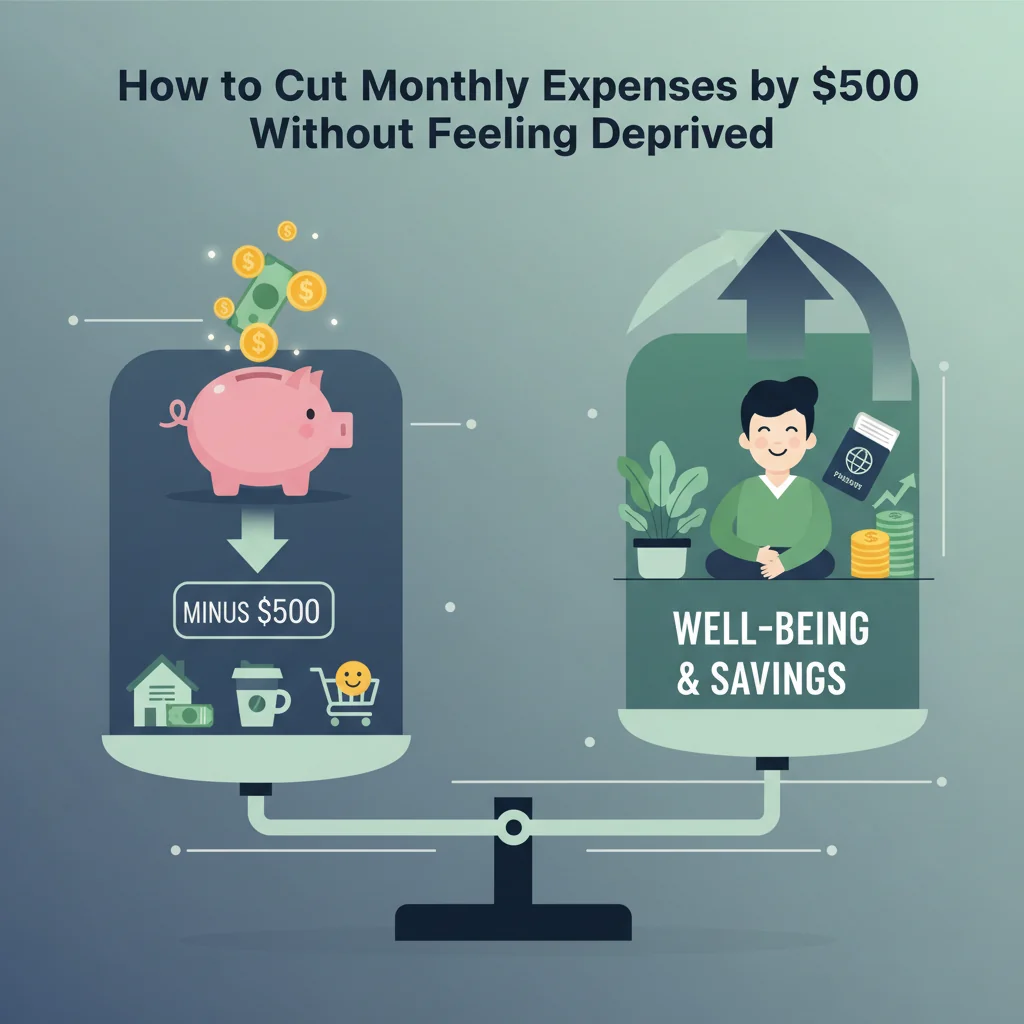
How to Cut Monthly Expenses by $500 Without Feeling Deprived
Editor's note: Names, images, and identifying details have been changed to protect the privacy of individuals featured in this article.
Ashley, a 36-year-old dental hygienist in Charlotte, NC, found herself in a challenging financial position. Widowed three years ago, she was living alone, managing a $198,000 mortgage, and had $22,000 in a Roth IRA. While her checking account held a healthy $4,100 and she had a three-month emergency fund, a recent scare hit home. After her late husband was laid off last year, she realized how close they came to financial instability due to a lack of substantial savings beyond their retirement accounts. This experience ignited a powerful desire to build a more robust financial safety net and increase her investment contributions. Her goal: find a way to consistently save an extra $500 each month without feeling like she was sacrificing her quality of life. Many people face similar dilemmas, wanting to improve their financial health but fearing deprivation. This article will show you how to cut monthly expenses by $500, offering practical strategies and actionable steps to achieve your savings goals without feeling like you're missing out.
Cutting Monthly Expenses: The strategic process of identifying and reducing recurring expenditures to free up cash flow for savings, debt repayment, or investment, often achievable without significant lifestyle deprivation through mindful spending and optimization.
Understanding Your Spending: The Foundation of Savings
Before you can effectively cut monthly expenses, you need to understand where your money is currently going. Many people underestimate their spending in certain categories, leading to budget shortfalls and frustration. The first step towards saving an extra $500 a month is to gain clarity and control over your financial outflows. This foundational work is crucial for identifying areas where you can make meaningful adjustments without feeling deprived.
Tracking Your Spending Habits
The adage "what gets measured gets managed" holds particularly true for personal finance. Spending tracking is the act of recording every dollar you spend over a set period, typically a month. This isn't about judgment; it's about awareness. According to a 2023 survey by the National Financial Educators Council, only 41% of U.S. adults regularly track their spending, yet those who do are significantly more likely to feel confident about their financial future.
To begin, choose a method that works for you. This could be a simple spreadsheet, a dedicated budgeting app (like Mint, YNAB, or Personal Capital), or even just reviewing your bank and credit card statements manually. The goal is to categorize every transaction. For Ashley, who was accustomed to simply glancing at her bank balance, this was an eye-opening exercise. She started by downloading her last three months of bank and credit card statements, meticulously categorizing each expense into groups like "Groceries," "Dining Out," "Utilities," "Entertainment," and "Subscriptions." This detailed review allowed her to see patterns she hadn't noticed before, such as frequent small purchases that added up quickly.
Creating a Realistic Budget
Once you have a clear picture of your spending, the next step is to create a budget. A budget is essentially a spending plan that allocates your income to various expenses, savings, and debt repayment. It's not a straitjacket; it's a roadmap to your financial goals. Financial advisors often recommend the 50/30/20 rule: 50% of your income for needs, 30% for wants, and 20% for savings and debt repayment. While this is a good guideline, your personal budget should reflect your unique circumstances and goals.
Start by listing your net monthly income. Then, list all your fixed expenses (rent/mortgage, loan payments, insurance premiums). Next, estimate your variable expenses based on your tracking data (groceries, utilities, transportation, entertainment). The difference between your income and your expenses is your discretionary income, which you can then intentionally allocate. For Ashley, her tracking revealed that her "wants" category was significantly higher than the recommended 30%, eating into her potential savings. This insight gave her a concrete starting point for where to cut monthly expenses.
Identifying Areas for Reduction
With your spending tracked and a budget in place, you can now pinpoint specific areas for reduction. Look for categories where your spending is high relative to your income or where you feel you're not getting enough value. Common areas include dining out, entertainment, subscriptions, and impulse purchases.
Consider the "value for money" principle. Is that daily coffee truly worth $5, or could a homemade brew suffice? Is every streaming service essential, or could you rotate them? For Ashley, her tracking showed she was spending nearly $400 a month on dining out and another $150 on various streaming services and apps. These were significant "wants" that, while enjoyable, were also her biggest opportunities to save. Identifying these areas isn't about eliminating joy but about optimizing where your money goes to align with your larger financial goals.
Strategic Savings: Targeting Major Expense Categories
Once you have a handle on your current spending, it's time to implement strategic changes. Focusing on larger expense categories often yields the most significant savings without requiring drastic day-to-day sacrifices. By making informed choices in these areas, you can free up substantial cash flow.
Housing Costs: Optimizing Your Largest Expense
For many, housing is the single largest monthly expense. Even small adjustments here can lead to substantial savings. While moving to a cheaper area might be a long-term solution, there are immediate steps you can take. Refinancing your mortgage can lower your monthly payments if interest rates have dropped since you secured your loan. According to Freddie Mac, a typical refinance can save homeowners hundreds of dollars a month, depending on the loan amount and interest rate difference. Ashley, with her $198,000 mortgage, checked current rates and found that refinancing could potentially shave $70 off her monthly payment, a worthwhile consideration.
Another strategy is to reduce utility bills. This involves energy-efficient habits like adjusting your thermostat, unplugging electronics, and using energy-efficient appliances. Simple changes, such as switching to LED light bulbs or sealing drafty windows, can collectively reduce your electricity bill by 10-20%. A 2023 report by the U.S. Energy Information Administration (EIA) indicates that heating and cooling account for about half of a typical home's energy consumption. By being mindful of her thermostat settings and using smart plugs, Ashley aimed to cut her utility costs by $30-$50.
| Housing Cost Reduction Strategy | Potential Monthly Savings | Effort Level |
|---|---|---|
| Refinance Mortgage (if rates drop) | $50 - $200+ | High |
| Reduce Utility Consumption | $20 - $75 | Medium |
| Negotiate Rent (if applicable) | $0 - $100+ | Medium |
| Rent out Spare Room | $300 - $800+ | High |
Transportation: Driving Down Costs
Transportation is another significant expense, especially for those who commute daily. Optimizing your commute can lead to considerable savings on gas, maintenance, and even insurance. Consider carpooling, using public transportation, biking, or even walking if feasible. For Ashley, who lived in Charlotte, public transport wasn't always convenient for her work schedule, but she realized she could consolidate errands to fewer trips, saving on gas.
Maintaining your vehicle properly can prevent costly repairs down the line, but also consider negotiating your car insurance premiums. Many people pay too much for car insurance because they don't shop around. Get quotes from at least three different providers annually. According to a 2024 report by Bankrate, switching car insurance providers can save drivers an average of $650 per year, or about $54 per month. Ashley decided to get new quotes and found she could save $45 a month by switching to a different insurer with comparable coverage. Additionally, reviewing her driving habits and considering a higher deductible (if her emergency fund could cover it) could further reduce her premiums.
Food: Eating Smart and Saving Big
Food expenses are often a "leaky bucket" in many budgets. While essential, there's significant room for optimization without feeling deprived. Meal planning is a powerful tool to reduce grocery waste and impulse buys. Plan your meals for the week, create a shopping list, and stick to it. This prevents multiple trips to the store and reduces the likelihood of buying unnecessary items.
Cooking at home is almost always cheaper and healthier than dining out. The average cost of a restaurant meal is significantly higher than a home-cooked one. For example, a 2023 analysis by LendingTree found that cooking at home is nearly five times cheaper than eating out. If Ashley cut her dining out from $400 to $150 a month, she would save $250. She decided to challenge herself to cook at home five nights a week and pack her lunch for work, allowing her to enjoy dining out occasionally without it derailing her budget.
Furthermore, shopping smart can significantly reduce grocery bills. Look for sales, use coupons, buy generic brands, and purchase in bulk for non-perishable items. Avoid shopping when hungry, as this often leads to impulse purchases. By implementing these strategies, Ashley aimed to reduce her grocery bill by $50-$75 a month, on top of her dining out savings.
Everyday Savings: Small Changes, Big Impact
While targeting major expenses provides large chunks of savings, don't underestimate the power of small, consistent changes in your daily habits. These "everyday savings" often add up quickly and can help you reach your $500 goal without feeling like you're making huge sacrifices.
Cutting Back on Subscriptions and Services
In the age of digital convenience, it's easy to accumulate numerous monthly subscriptions for streaming services, apps, gym memberships, and more. These small recurring charges can quickly erode your budget. Auditing your subscriptions is a crucial step. Go through your bank and credit card statements and list every recurring charge. Ask yourself: Do I use this regularly? Is it providing significant value? Can I get a similar service for free or cheaper?
Many financial experts advise reviewing subscriptions quarterly. For Ashley, her initial audit revealed she was paying for three streaming services she rarely watched, a meditation app she used sporadically, and a gym membership she hadn't utilized in months. By canceling two streaming services ($20/month), the meditation app ($10/month), and pausing her gym membership ($45/month) in favor of outdoor runs and home workouts, she immediately freed up $75 per month. This is a classic example of how to cut monthly expenses without feeling deprived, as she wasn't actively using these services anyway.
Mindful Shopping and Impulse Control
Impulse purchases are budget killers. Whether it's that extra item at the checkout, a spontaneous online order, or a sale item you don't truly need, these unplanned expenditures add up. A 2023 survey by Slickdeals found that Americans spend an average of $314 on impulse purchases each month. Developing mindful shopping habits can significantly reduce this.
Strategies include:
- The 24-hour rule: For any non-essential purchase over a certain amount (e.g., $20 or $50), wait 24 hours before buying it. Often, the urge passes.
- Shopping with a list: Stick strictly to your list, especially for groceries.
- Unsubscribing from marketing emails: Reduce temptation by not seeing constant sales alerts.
- Avoiding shopping as entertainment: Find other hobbies or activities that don't involve spending money.
Ashley realized she often bought new clothes or home decor items on a whim. By implementing the 24-hour rule and unfollowing several retail brands on social media, she estimated she could reduce her discretionary shopping by at least $60-$80 a month.
Reducing Entertainment and Leisure Costs
Entertainment doesn't have to be expensive. There are countless ways to enjoy your leisure time without breaking the bank. Finding free or low-cost activities can significantly reduce your entertainment budget. This could include visiting local parks, libraries, free museums, hiking trails, or attending free community events.
Instead of going to the movies, consider a movie night at home. Instead of expensive concerts, look for local bands playing at free venues. For Ashley, who enjoyed socializing, she started suggesting potluck dinners with friends instead of expensive restaurant outings. She also discovered free yoga classes in a local park and began exploring new hiking trails nearby. By making these shifts, she aimed to reduce her entertainment spending by $50-$70 a month, finding new ways to connect and relax that were kinder to her wallet.
| Category | Potential Monthly Savings | Example Action |
|---|---|---|
| Subscriptions | $20 - $100+ | Cancel unused streaming services, gym memberships, apps. |
| Impulse Buys | $50 - $150+ | Implement 24-hour rule, unsubscribe from retail emails, shop with a list. |
| Entertainment | $30 - $100+ | Opt for free/low-cost activities, potlucks, home movie nights. |
| Daily Coffee/Snacks | $20 - $80 | Brew coffee at home, pack snacks, bring water bottle. |
| Personal Care | $10 - $50 | DIY manicures, fewer salon visits, shop for generic beauty products. |
Advanced Strategies: Maximizing Your Savings Potential
Once you've tackled the more obvious areas, consider some advanced strategies that can further boost your savings and help you consistently cut monthly expenses. These often require a bit more effort upfront but can yield significant long-term benefits.
Negotiating Bills and Services
Many of your recurring bills are negotiable. Don't assume the price you're paying is fixed. Negotiating with service providers can save you hundreds of dollars annually. This applies to internet, cable, cell phone plans, and even insurance. Call your providers and ask for a better deal. Mention competitor offers or inquire about loyalty discounts. Often, simply threatening to switch providers is enough to get a better rate.
For example, Ashley called her internet provider and, after explaining she was considering switching to a competitor, was offered a new promotional rate that saved her $20 a month. She also reviewed her cell phone plan and found a slightly cheaper option with a different carrier that offered similar data and coverage, saving her another $15. These small wins add up and require minimal effort once you make the call.
Optimizing Debt Payments
If you carry any high-interest debt, such as credit card balances, prioritizing its repayment can be one of the most effective ways to save money long-term. The interest you pay on debt is essentially money you're losing. Debt consolidation or refinancing high-interest debt can lower your monthly payments and reduce the total interest paid over time.
Consider the debt avalanche or debt snowball method. The debt avalanche method prioritizes paying off debts with the highest interest rates first, saving you the most money in interest. The debt snowball method focuses on paying off the smallest balances first, providing psychological wins. While the primary goal here is to cut monthly expenses, freeing up money from interest payments directly contributes to your savings potential. For Ashley, whose only debt was her mortgage, optimizing her interest rate through a potential refinance was her main debt-related strategy.
Embracing Frugality and Minimalism
Beyond specific cuts, adopting a mindset of frugality or minimalism can fundamentally change your relationship with money and consumption. Frugality isn't about deprivation; it's about being resourceful and intentional with your spending, prioritizing value and necessity over impulse and excess. Minimalism focuses on owning fewer things, reducing clutter, and valuing experiences over possessions.
This could mean embracing second-hand shopping, repairing items instead of replacing them, borrowing instead of buying, or simply being more conscious about every purchase. For Ashley, this meant thinking twice before buying new decor for her home, opting to re-arrange existing items or DIY small projects. It also meant being more intentional about gifts, focusing on experiences or thoughtful, handmade items rather than expensive material goods. This shift in mindset not only saves money but can also reduce stress and increase overall satisfaction.
| Advanced Strategy | Description | Potential Monthly Savings |
|---|---|---|
| Negotiate Bills | Call internet, cable, cell providers for better rates. | $10 - $50+ |
| Optimize Debt Payments | Refinance high-interest debt, use avalanche/snowball method. | $50 - $200+ |
| Embrace Frugality/Minimalism | Buy second-hand, repair items, borrow, prioritize experiences over possessions. | $50 - $150+ |
| Sell Unused Items | Declutter and sell items you no longer need. | Variable |
| DIY Projects | Tackle home repairs or personal care tasks yourself. | $20 - $100 |
Maintaining Momentum and Avoiding Deprivation
Cutting expenses by $500 a month is an ambitious but achievable goal. The key to long-term success is to maintain momentum and ensure that your new habits don't lead to feelings of deprivation, which can cause you to abandon your efforts. It's about finding a sustainable balance.
Automating Your Savings
One of the most powerful strategies for consistent saving is automating your savings. Once you've identified where you can cut expenses, set up an automatic transfer from your checking account to your savings or investment account (like Ashley's Roth IRA) each payday. This ensures that the money is moved before you have a chance to spend it. "Pay yourself first" is a cornerstone of personal finance.
For example, if you aim to save $500 a month, set up a transfer of $250 every two weeks (if paid bi-weekly) or $500 once a month. This makes saving a non-negotiable expense, just like your rent or mortgage. Ashley set up an automatic transfer of $500 to her emergency fund and an additional $100 to her Roth IRA each month. This ensured her savings goal was met consistently, taking the decision-making out of her hands.
Building a "Fun Money" Buffer
To avoid feelings of deprivation, it's crucial to include a "fun money" buffer in your budget. This is a small, guilt-free amount you allocate specifically for discretionary spending – whether it's for a coffee, a movie, or a small treat. Knowing you have this money set aside can prevent you from feeling restricted and make your budget more sustainable.
The amount will vary based on your income and goals, but even $50-$100 a month for guilt-free spending can make a big difference. Ashley, after cutting back significantly on dining out and subscriptions, still allocated $100 a month for "fun money," which she could use for an occasional dinner with friends or a new book. This small allowance helped her stay motivated and avoid feeling overly restricted.
Regular Budget Review and Adjustment
Your budget is not a static document; it's a living tool that needs regular review and adjustment. Life changes, and so should your financial plan. Review your budget monthly or quarterly to see if your spending aligns with your goals. Are you consistently overspending in one category? Are there new opportunities to save?
Be flexible and forgiving with yourself. If you overspend one month, don't give up. Learn from it and adjust your plan for the next month. Perhaps your initial cuts were too aggressive in one area, or an unexpected expense arose. The goal is progress, not perfection. Ashley found that her first few months of budgeting required more frequent adjustments, but as she got better at predicting her spending and finding sustainable cuts, her budget became easier to manage and stick to. This iterative process is key to long-term financial success and helps you continually optimize how to cut monthly expenses.
Frequently Asked Questions
What is the easiest way to cut $500 from my monthly budget?
The easiest way to cut $500 from your monthly budget is often by targeting your largest variable expenses first, such as dining out, subscriptions, and entertainment. Reviewing your bank statements to identify recurring charges you no longer use or overspending in specific categories can quickly reveal significant savings opportunities.
How can I save money on groceries without feeling deprived?
To save money on groceries without feeling deprived, focus on meal planning, cooking at home more often, making a shopping list and sticking to it, and buying generic brands. You can still enjoy favorite foods by cooking them yourself and strategically shopping for deals, rather than eliminating them entirely.
Is it possible to cut expenses without sacrificing my social life?
Yes, it's entirely possible to cut expenses without sacrificing your social life. Instead of expensive outings, suggest free or low-cost activities like potlucks, park visits, hiking, or game nights at home. Communicate your financial goals to friends; true friends will understand and support your efforts to save money.
How often should I review my budget and spending?
You should review your budget and spending at least once a month. This allows you to track your progress, identify areas where you might be overspending, and make necessary adjustments to ensure you stay on track with your financial goals. Quarterly in-depth reviews are also beneficial.
What are some common "hidden" expenses that add up?
Common "hidden" expenses that add up include unused subscriptions (streaming services, apps, gym memberships), impulse purchases (small items at checkout, online shopping), daily coffee or snack habits, and bank fees. These small, often overlooked charges can significantly impact your monthly budget.
Should I cut "wants" or "needs" first when trying to save money?
When trying to save money, always prioritize cutting "wants" before "needs." Needs are essential for living (housing, utilities, basic food, transportation), while wants are discretionary expenses that enhance your lifestyle. Focus on optimizing your wants first to avoid feeling deprived and ensure your basic necessities are covered.
What is the "24-hour rule" for spending?
The "24-hour rule" for spending involves waiting 24 hours before making any non-essential purchase, especially for items above a certain dollar amount you set (e.g., $20 or $50). This pause allows you to consider whether the item is truly needed or if the desire is just an impulse, often leading to wiser spending decisions.
Key Takeaways
- Understand Your Spending: Track every dollar to identify where your money is truly going before attempting to cut expenses.
- Target Major Categories: Focus on housing, transportation, and food, as these often offer the largest opportunities to cut monthly expenses.
- Audit Subscriptions: Regularly review and cancel unused or undervalued recurring services to free up significant cash.
- Embrace Mindful Habits: Practice impulse control, meal planning, and finding free/low-cost entertainment to save daily.
- Automate Savings: Set up automatic transfers to ensure you consistently meet your savings goals without conscious effort.
- Include "Fun Money": Allocate a small, guilt-free amount for discretionary spending to prevent feelings of deprivation and maintain motivation.
- Regularly Review: Your budget is a living document; review and adjust it monthly or quarterly to stay on track and adapt to life changes.
Conclusion
Successfully cutting $500 from your monthly expenses without feeling deprived is not just a dream; it's an achievable goal with the right strategies and mindset. By understanding your spending, strategically targeting major categories like housing, transportation, and food, and implementing everyday savings habits, you can free up significant cash flow. The key lies in mindful choices, automation, and a commitment to your financial well-being, rather than drastic, unsustainable cuts.
Ashley, by diligently tracking her spending, cutting back on dining out and unused subscriptions, optimizing her car insurance, and embracing smarter grocery shopping, was able to consistently save an extra $500 each month. This allowed her to significantly boost her emergency fund and increase her contributions to her Roth IRA, giving her the financial security and peace of mind she craved after her past experiences. You, too, can achieve similar results. Take the first step today: track your spending, identify your opportunities, and start building a more secure financial future.
Disclaimer
Disclaimer: This article is for informational and educational purposes only and does not constitute financial, investment, or tax advice. Always consult a qualified financial advisor before making investment decisions.
The information provided in this article is for educational purposes only and does not constitute financial, investment, or legal advice. Always consult with a qualified financial advisor, tax professional, or legal counsel for personalized guidance tailored to your specific situation before making any financial decisions.
Comments
No comments yet. Be the first to comment!
More from Personal Finance



Explore Related Guides
Expert reviews of Gold IRA companies, rollover guides, fees, and IRS rules.
Comprehensive investment strategies covering stocks, bonds, ETFs, crypto, and real estate.
Compare banking products, interest rates, and strategies to maximize your savings.